
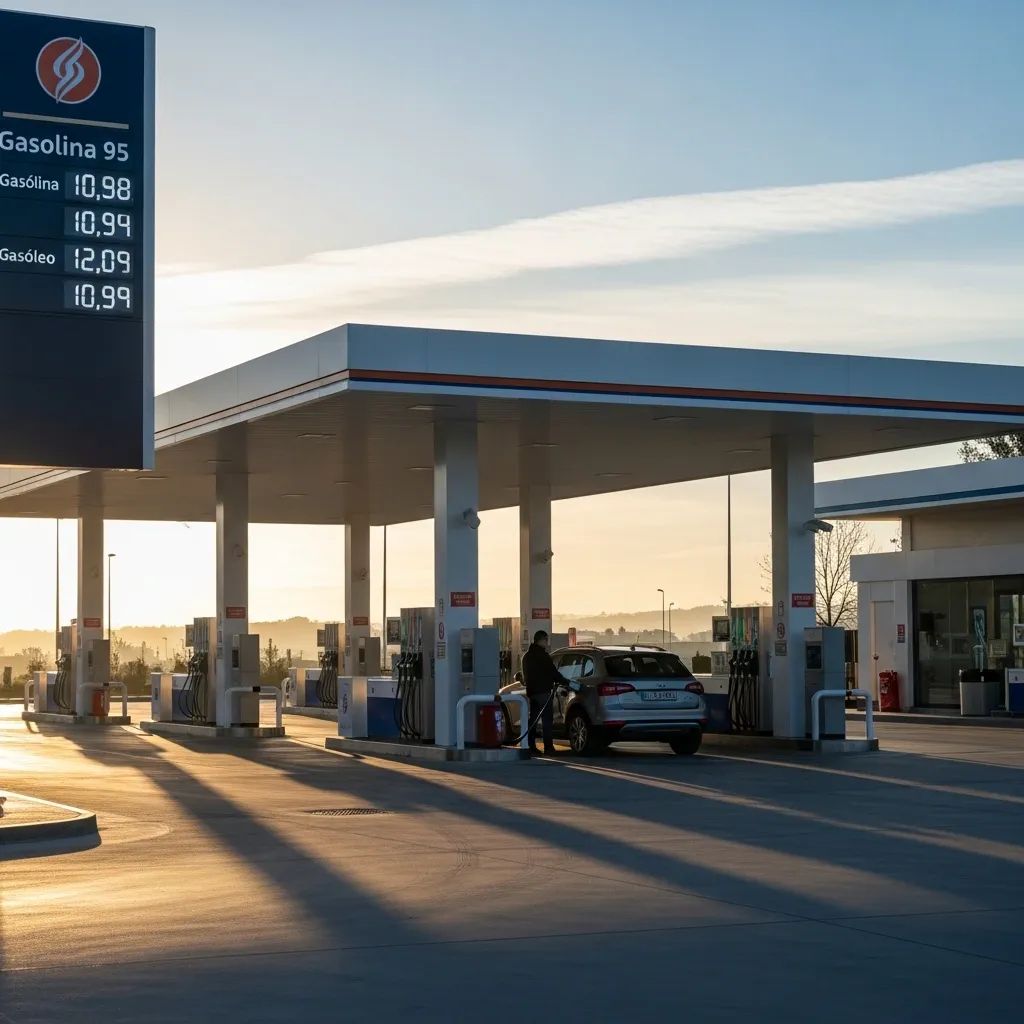
Drivers filling up next week will still see prices edging lower, but the fall will not be as steep as international markets alone might suggest. Lisbon is quietly clawing back the temporary fuel-tax rebate granted during the 2022 energy shock and will keep doing so every time pump prices retreat.
Need-to-know at a glance
• Gasoline expected to slip about 2 ¢/litre, diesel roughly 2.5 ¢/litre between 15-21 December.
• Part of that drop is being absorbed by a higher ISP rate, trimming the headline saving at the forecourt.
• The Finance Ministry insists the move merely removes an extraordinary subsidy rather than raising taxes.
• Consumer groups warn the change could cost families up to €8 per tank once the rebate disappears entirely.
How the mechanism works now
When crude and wholesale quotations fall, the Treasury publishes a new ordinance adjusting the Imposto sobre Produtos Petrolíferos e Energéticos (ISP). By lifting the rate while prices fall, the Government recovers fiscal room without provoking a net increase at the nozzle. The latest tweak, published in late November, added roughly 1.6 ¢/litre to gasoline and 2.4 ¢/litre to diesel before VAT. With the Iberian VAT of 23 % folded in, the real-world bite is about 2-3 ¢.
From emergency patch to normal policy
The rebate was rolled out in spring 2022, when Brent flirted with $120 a barrel and Portugal faced the sharpest inflation spike in a generation. Back then, the state forfeited more than €600 M in annual revenue to shield households and hauliers. Two years on, oil trades near $77, and Brussels wants the country to phase out fossil-fuel subsidies. Finance Minister Joaquim Miranda Sarmento argues the gradual reversal honours that request while respecting the promise of no headline tax hikes in the 2026 budget.
What it means for your wallet
An average 50-litre fill-up of unleaded will still be cheaper next week, but only by €1 instead of €1.75 had the rebate remained untouched. The savings on diesel show a similar pattern. Analysts at the Unit for Budgetary Support (UTAO) estimate the staged rollback could funnel €1.1 B into state coffers over the next fiscal year—a sum almost equal to the annual bill for the national school-meal programme.
Voices from the consumer side
The DECO Proteste watchdog stresses that Portuguese drivers already pay some of the highest road-fuel taxes in Europe. Its economist Nuno Rico fears households will feel the pinch precisely when winter heating costs rise. The Automobile Club of Portugal adds that the narrowing differential with Spain may push motorists in border districts to cross the Guadiana for cheaper diesel, draining local stations of business.
Hauliers and industry on alert
Long-haul operators, grouped in ANTRAM, have not issued a formal statement on the latest ordinance but privately note that even small price swings translate into thousands of euros per year per truck. The sector is lobbying for the extension of the ‘gasóleo profissional’ refund that cushions commercial fleets, warning that without it Portugal’s exporters could lose ground to Spanish competitors.
Brussels keeps the stopwatch running
The European Commission has repeatedly flagged ‘temporary’ tax breaks as market-distorting. In its autumn 2025 surveillance report, the executive counted the ISP rebate among ‘inefficient fossil-fuel incentives’ and urged Portugal to scrap it by mid-2026. Failing to do so could complicate access to NextGenerationEU funds earmarked for railway electrification and other green projects.
Practical tips for motorists
Shop around: price spreads between stations can reach 12 ¢/litre.
Fill up early Monday: many brands adjust tariffs mid-week.
Adopt smoother driving; studies show a 5-10 % fuel saving is realistic.
Use loyalty apps that convert litres bought into discounted supermarket vouchers.
Looking ahead
The Government refuses to publish a firm timetable for the full rollback, preferring to tie each step to international price cycles. If Brent stays below $80 and the euro remains firm, analysts expect the remaining rebate to disappear by Easter 2026. In the meantime, Portuguese drivers may need to get used to smaller-than-headline drops every time oil slips on the markets.


