
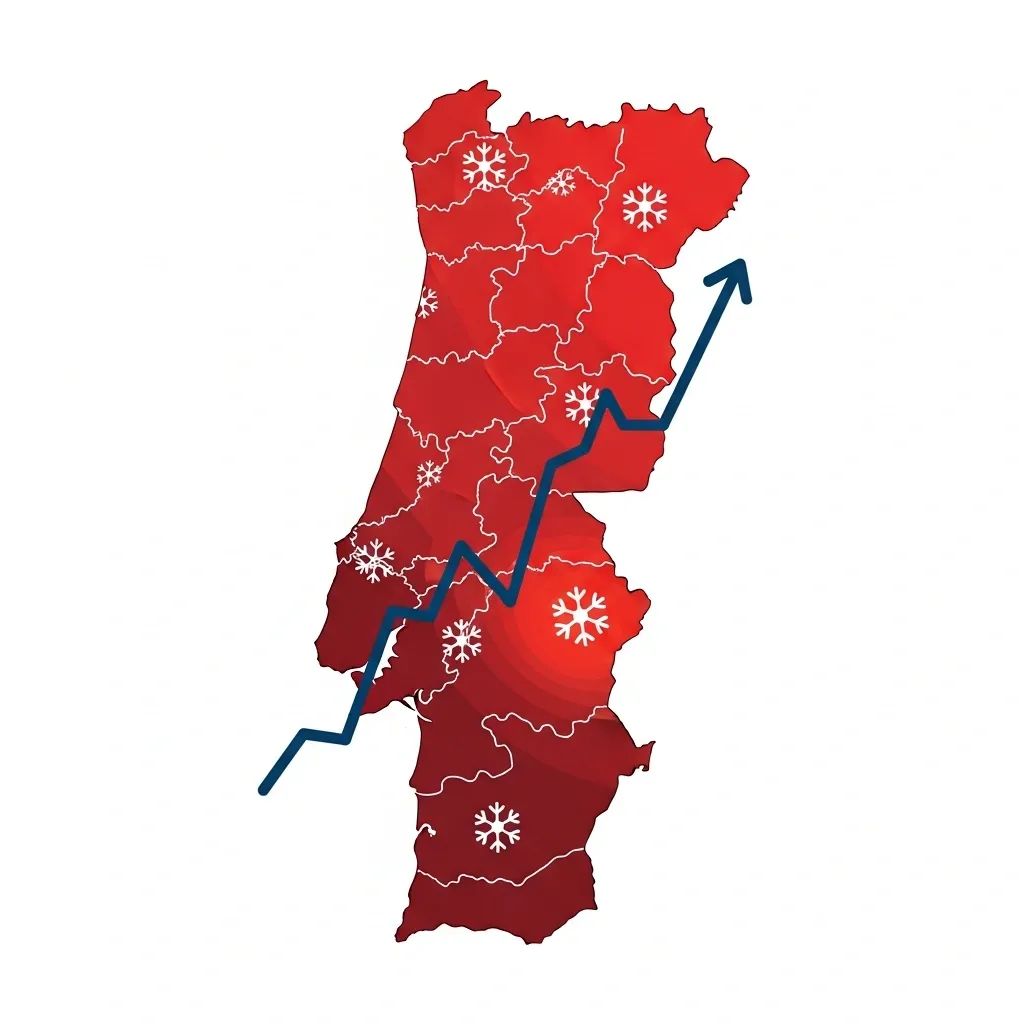
Portugal’s health authorities are still counting the human cost of an unusually harsh start to winter, but the broad contours are already clear: daily deaths have climbed far beyond seasonal expectations, driven by a potent mix of severe influenza, frigid weather and an ageing population.
Quick temperature check
• 30 consecutive days with mortality higher than the statistical norm.
• Average 22 % excess deaths since early December.
• Record 540 fatalities on 2 January, a spike of 52 % compared with the baseline.
A winter unlike recent memory
Hospitals from Bragança to Faro report wards filling earlier than usual as the H3N1 flu strain sweeps the country. The chill has come in tandem, pushing indoor temperatures down in homes that are often poorly insulated by European standards. That double hit, Health Minister Ana Paula Martins conceded in Parliament this week, explains why Portugal was the lone country classified as having a “very high” mortality excess during the last week of 2025 by the pan-European EuroMOMO network.
The numbers behind the surge
Earlier seasonal peaks used to appear in late January or early February; this year they jumped forward by nearly a month. December closed with 12 842 registered deaths, up from 10 939 a year earlier. Preliminary figures place total deaths for 2025 at ≈122 000, already 6 000 more than in 2024. Epidemiologists stress that these totals will be revised when late-registered certificates arrive, but the trend is already unmistakable. The elderly have borne the brunt: residents aged ≥85 represent almost half of the additional fatalities, and those living with cardiovascular disease, diabetes or obesity are disproportionately represented.
Why Portugal was hit harder than neighbours
Several factors converged, according to public-health specialists:
Aggressive flu subtype – H3N1 appears to infect older lungs more easily than last year’s dominant strains.
Persistent cold snaps – Overnight lows dropped below 0 °C in the interior for nine nights running, a rarity in recent warm winters.
Energy poverty – Roughly 19 % of households struggle to heat their homes adequately, leaving vulnerable residents exposed.
Demographic reality – Portugal is Europe’s fourth-oldest nation; one in five citizens is now over 65.
Neighbouring Spain and Italy also logged elevated deaths, but warmer Atlantic currents and staggered flu waves spared them the simultaneous punch Portugal received.
What health officials are doing—and what still worries them
The Ministry of Health activated its Plano Sazonal de Inverno in early December, extending primary-care hours, dispatching mobile vaccination brigades to nursing homes and opening a free telephone triage line. Pharmacies have delivered a record 2 M flu shots, yet vaccination coverage among those aged 60–74 stalled at 55 %, below the 75 % target. Martins told deputies that a full evaluation will wait “until the epidemiological curve has clearly descended”, likely in March.
Clinicians fear a second uptick if temperatures plunge again in February and COVID-19 variants regain traction. Intensive-care occupancy remains manageable at roughly 70 % capacity, but emergency departments in Porto and Lisbon are operating under intermittent orange alerts.
How communities are coping
Municipal civil-protection units have opened abrigo rooms in town halls where residents can warm up during the coldest nights. Volunteer firefighters in the Serra da Estrela have begun door-to-door checks on isolated elderly citizens, while social-solidarity organisations distribute electric space-heaters and thermal blankets bought with EU recovery funds. Local doctors note that simple measures—closing interior shutters at dusk, using draught stoppers and layering clothing—still make the biggest difference for those living on minimum pensions.
What to watch in the coming weeks
Public-health modellers expect the excess-death curve to flatten if daytime temperatures rise and H3N1 circulation fades, yet they warn that cold-related cardiovascular events can lag the thermometer by up to two weeks. The INSA laboratory will publish updated flu-strain sequencing mid-February, offering clues about vaccine match and future risk. For now, officials urge residents—especially anyone over 60 or with chronic illness—to seek medical advice at the earliest sign of respiratory distress, keep homes above 18 °C and verify that prescriptions for heart and lung medication are up-to-date.
The minister’s final accounting will come only after winter loosens its grip, but the early message is unmistakable: weather, virus and demography have conspired to make this season deadlier than most, and individual vigilance remains the first line of defence.