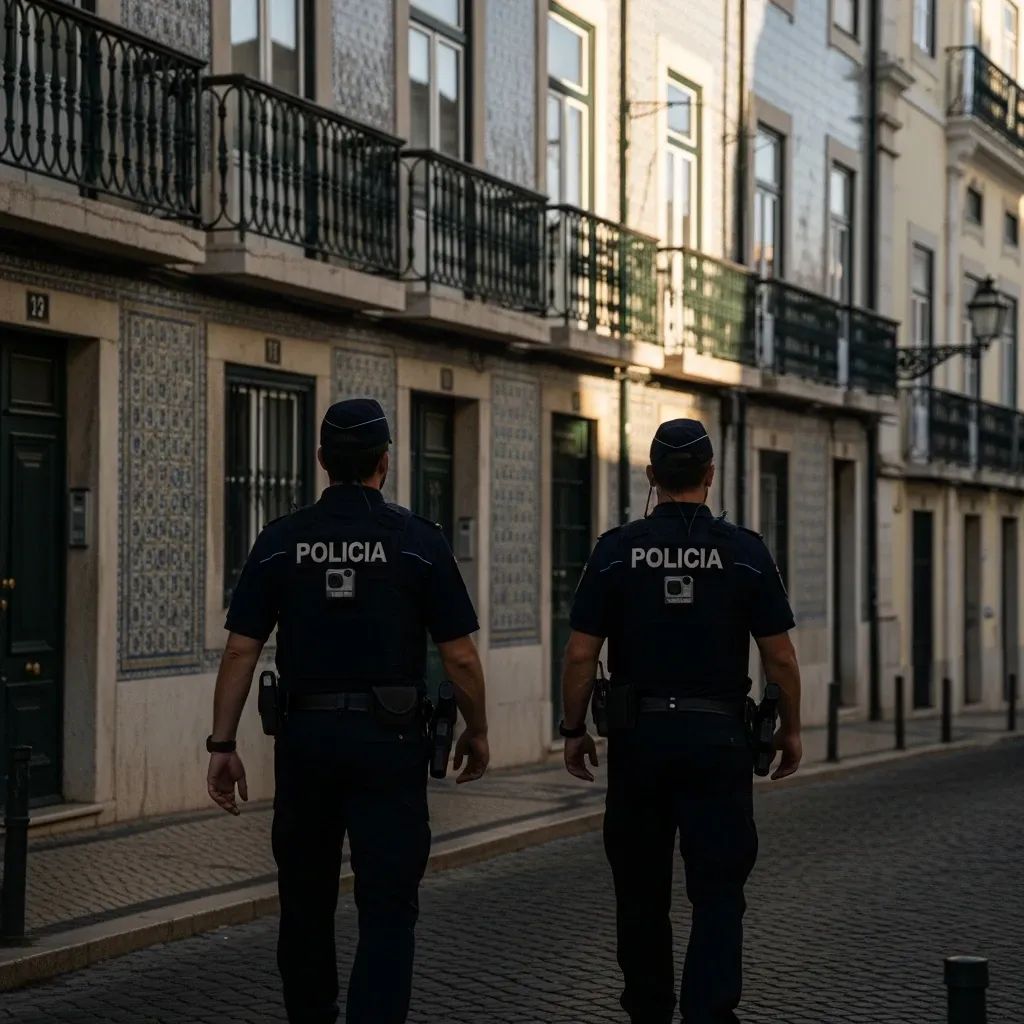
Late afternoons in Portuguese cities carry a blend of relief and unease: while the most alarming crimes have edged downward, everyday offences are quietly on the rise, prompting fresh debate on urban safety and social cohesion.
Key takeaways
• General crime climbed 2.1% nationwide between January and November 2025
• Violent and serious offences fell 2.6%, yet their impact on public sentiment remains strong
• 108 homicides recorded, the highest total since 2018
• Metropolitan hotspots diverge: Lisbon sees modest drops in grave incidents, Porto reports notable upticks
• Government allocates €6 M for 8 000 bodycams and readies new internal security strategies
Urban contrasts: Lisbon vs. Porto
Portugal’s two largest metros now tell different stories of safety. In Lisbon, official tallies show a 1.8% decline in violent crime, buoyed by targeted patrols in bairros (neighbourhoods) like Alfama and Arroios. Yet residents in peripheral parishes still report surges in pickpocketing and auto break-ins. Meanwhile in Porto, the number of serious incidents climbed nearly 5%, fuelled by gang clashes around the port area and drug-related robberies in Vila Nova de Gaia. These diverging trends underscore how local dynamics shape overall figures—and why a one-size-fits-all approach to policing may fall short.
Perception and the power of violent acts
Though physical assaults, armed robberies and kidnappings dipped, their resonance weighs heavily on collective memory. A single high-profile homicide or brazen street attack can dominate headlines, fueling a sense of insecurity that outpaces the statistics. Psychologists note that violent stories spread faster on social media, amplifying fears long after official rates have receded. For many families, the question isn’t whether Portugal is safe on paper but whether their neighbourhood feels safe after dusk.
Socioeconomic undercurrents driving petty crime
Experts point to deeper currents behind the 2.1% uptick in general offences. Youth unemployment remains above 20% in some districts, and income inequality has surged since 2020, creating fertile ground for property thefts and small-scale fraud. Portugal’s role as both transit point and consumer market for cannabis and cocaine also feeds organised networks. In several urban bairros, social-exclusion indicators closely mirror peaks in burglaries. Without addressing these root causes, policymakers warn that minor infractions could escalate further.
Policy pivots and emerging tools
In December, the Council of Ministers approved €6 M to outfit PSP (Polícia de Segurança Pública, the urban police) and GNR (Guarda Nacional Republicana, the gendarmerie) officers with 8 000 body-worn cameras, following promising trials that cut use-of-force complaints by 30%. Simultaneously, the Ministry of Internal Administration is revisiting its quadro estratégico for urban security, aiming to integrate digital surveillance, community policing and social-intervention programmes. The upcoming Relatório Anual de Segurança Interna (RASI, Annual Internal Security Report) 2025 will unveil the full array of measures—including a refreshed V Plano de Combate ao Tráfico de Seres Humanos (2025–2027) and new cybersecurity mandates under the EU’s NIS 2 (Network and Information Security 2) Directive.
Looking to 2026: stakes and signals
As Lisbon and Porto refine their local plans, all eyes turn to the year ahead. Key indicators to monitor:
• Whether homicide figures continue above the recent average of 100 cases
• The tangible effect of bodycam deployment on public trust and complaint rates
• Progress on social-inclusion initiatives in high-crime neighbourhoods
• Budget allocations for youth-employment and anti-poverty schemes
Portugal retains one of the EU’s lowest violent-crime rates, but the dual reality—steadied by fewer serious attacks yet unsettled by rising daily offences—poses a test for communities and authorities alike. Balancing hard data with lived experience will determine if the country can sustain its reputation for tranquillity in the heart of Southern Europe.