
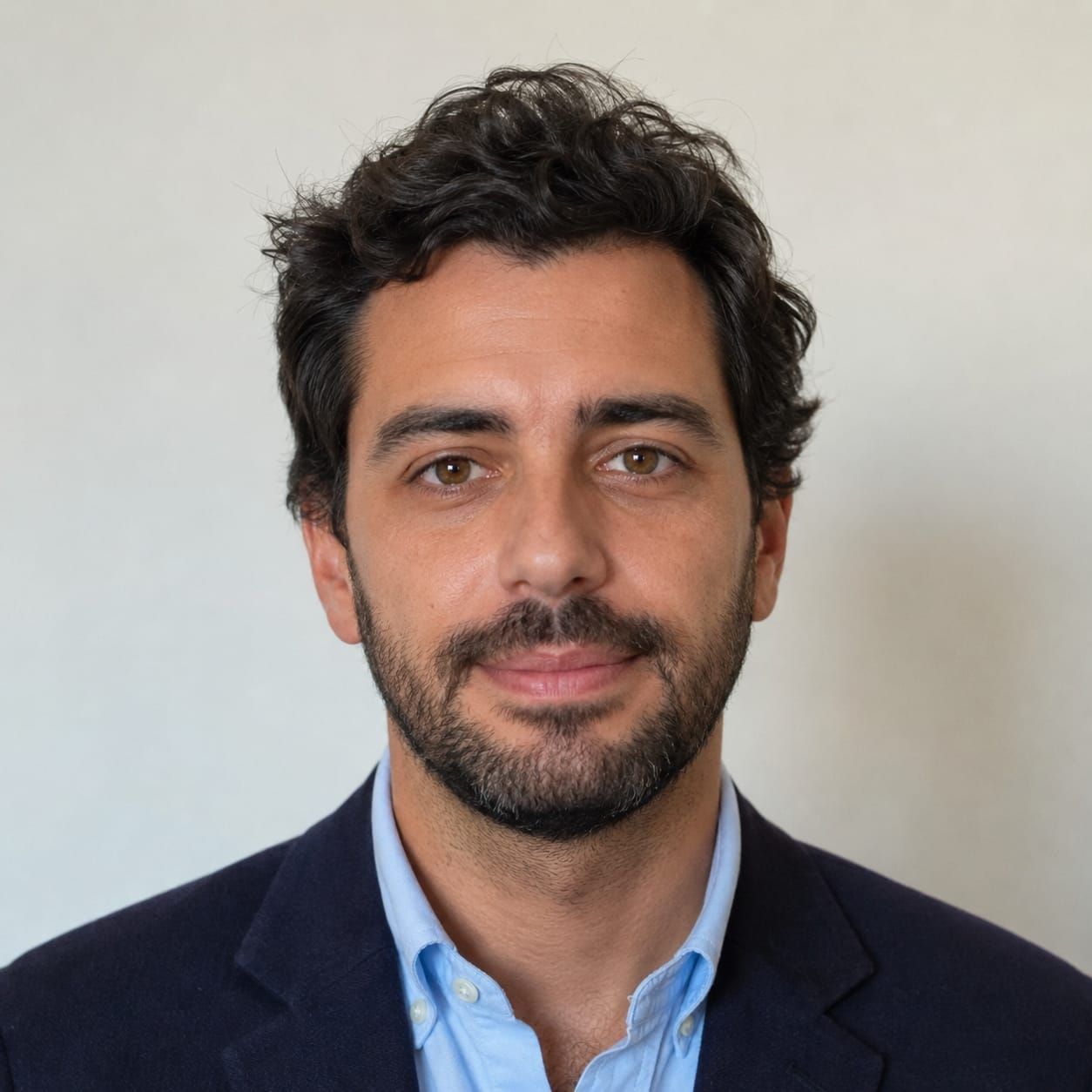

Sporting Clube de Portugal has secured Frederico Varandas for another four years, handing the 46-year-old former military doctor a third consecutive mandate that will extend his presidency through 2030. The Portugal-based football giant confirmed the result late Saturday evening after polls closed at the João Rocha Pavilion in Lisbon, with Varandas capturing 89.47% of valid votes in what ranks as the third-most attended electoral act in the club's history.
The landslide victory—67,106 weighted votes against just 4,710 for challenger Bruno Sorreluz, a businessman known as Bruno Sá—cements Varandas' position as the architect of Sporting's recent renaissance. His tenure has delivered nine major trophies in national football since 2018, more than any president in the club's 120-year timeline, and reversed a two-decade decline that saw Lisbon's "Lions" overshadowed by rivals Benfica and FC Porto.
Why This Matters
• Stability through 2030: Varandas will complete a 12-year presidential cycle, rare continuity in Portuguese club football and a signal of institutional confidence.
• €310M transfer profit: Since 2018, Sporting invested €440M in players while generating €750M in sales—a model the club plans to replicate with potential €100M+ inflows this summer from sales of Morten Hjulmand, Ousmane Diomande, and Geny Catamo.
• Voter validation controversy: Of 18,268 members who participated, only 14,337 votes were validated—nearly 4,000 mail-in ballots and walk-ins rejected for undisclosed technical reasons, echoing past disputes over postal voting integrity.
Record Turnout Masks Validation Dispute
Sporting announced immediately after the polls closed that 18,268 members cast ballots, a figure that would have placed the election second in club history. Hours later, however, Mesa da Assembleia Geral (MAG) president João Palma revised the count to 14,337 validated voters when delivering official results around 11:00 PM local time.
The discrepancy stems from postal votes. Sporting received roughly 6,200 mail-in ballots, but only 2,000 were deemed valid, Palma explained, with approximately 4,000 votes "desconsiderados" for failing to meet unspecified legal requirements. The club did not publish a breakdown of which criteria triggered disqualification, though Palma insisted that envelopes contained no identifying codes that could compromise ballot secrecy—a rebuke to historical criticisms.
In the 2022 election, rival candidate Nuno Sousa alleged that 15,000 to 20,000 members never received postal ballots in time, and 1,500 of 4,500 mail-ins were invalidated without explanation. The pattern has fueled persistent questions about whether Sporting's vote-by-mail system disenfranchises overseas supporters and older members less comfortable with administrative formalities.
By contrast, FC Barcelona introduced postal voting to broaden participation during the pandemic, while Real Madrid and Bayern Munich rely overwhelmingly on in-person assemblies, though Bayern's structure under the "50+1" rule guarantees majority control remains with dues-paying members who vote annually in Munich.
What This Means for Residents
For football fans and investors in Portugal, Varandas' re-election locks in a proven commercial and sporting strategy through the end of the decade. The president's "Future is Coming" strategic plan (2024–2034), unveiled in September 2024, prioritizes sustainable growth, youth academy output, and selective asset sales to fund competitive squads without spiraling debt.
Sporting's model is particularly relevant given the inflationary pressures in European transfer markets. The club has consistently developed homegrown talent—Pedro Gonçalves, Nuno Mendes, and Matheus Nunes are recent examples—then monetized those players at peak value. This summer's anticipated sales could exceed €100M, funds earmarked for reinforcements under head coach Rui Borges, who reportedly received the largest transfer budget in club history upon his January appointment.
The continuity also matters for Portugal's international football profile. Sporting ended a 19-year title drought in the 2020/21 season, claimed back-to-back championships in 2023/24 and 2024/25, and qualified for the knockout stages of the UEFA Champions League three times in five appearances—a marked improvement over the prior decade, when the club regularly exited in group stages or play-offs.
From a governance perspective, Varandas' dominance signals stability but also raises questions about electoral competition. Bruno Sorreluz's 6.28% showing was the weakest challenge since the club's chaotic 2018 election, when Varandas himself won with just 42.32% in a six-way race. The near-total absence of organized opposition may reflect member satisfaction—or institutional advantages for incumbents who control club communication channels and event logistics.
From War Medic to Trophy Collector
Frederico Varandas' rise from army captain to Portugal's most successful club president in recent memory is well-documented. Born September 19, 1979, to a physician father and teacher mother in Lisbon, Varandas graduated from the Universidade Nova de Lisboa Faculty of Medical Sciences and completed postgraduate studies in sports medicine before deploying as a Portuguese Armed Forces medical officer in Afghanistan.
He listened via radio to Sporting's 2008 Portuguese Cup final triumph over FC Porto while stationed overseas and received the Order of Prince Henry medal upon returning. His club career began at Vitória de Setúbal in 2007, then moved to Sporting's youth and senior medical staff in 2011 under president Luís Godinho Lopes. Varandas survived the controversial Bruno de Carvalho era (2013–2018), during which he founded the club's International Sports Medicine Congress, and resigned in May 2018 following the infamous Academy de Alcochete invasion, when masked supporters attacked players and staff.
That trauma became his political opening. Varandas consoled weeping players on the pitch after Sporting's Cup final loss to Desportivo das Aves, days after the assault, and announced his candidacy weeks later. He won the emergency election that September with 42.32% in a fragmented field, then spent his first term battling internal dissent, claque privileges, and chants demanding his resignation from ultras loyal to the ousted Carvalho.
The arrival of Ruben Amorim from Braga in March 2020—for a then-record €12.7M coaching compensation—stabilized both dressing room and boardroom. Amorim delivered three league titles, two domestic cups, and three League Cups before departing for Manchester United in November 2024, succeeded briefly by João Pereira and then Borges.
Trophy Cabinet and the Path to 2030
Varandas now boasts nine domestic trophies: three Primeira Liga titles (2021, 2024, 2025), three League Cups (2019, 2021, 2022), two Portuguese Cups (2019, 2025), and one Super Cup (2021). That tally surpasses António José Ribeiro Ferreira (eight titles, 1946–1953) and underscores a return to the club's mid-century dominance.
Beyond football, Sporting has collected dozens of national, European, and world championships across handball, futsal, roller hockey, athletics, and judo—departments the president credits as integral to the club's identity, even as football generates the bulk of revenue.
Looking ahead, Varandas faces external pressures common to all Portuguese clubs: UEFA Financial Fair Play compliance, competitive imbalance with wealthier Premier League and La Liga rivals, and domestic broadcaster consolidation that could shrink television rights income. Internally, the unresolved postal-vote controversy and relatively modest turnout—18,268 participants from 75,817 eligible members, or roughly 24%—suggest pockets of disengagement, particularly among diaspora communities and younger digital-native supporters.
The "Pessoas" (People) pillar of the 2024–2034 plan emphasizes athlete, employee, and partner engagement, though specifics remain vague. Critics note that Varandas has centralized decision-making—he publicly stated that "coaches do not choose coordinators" at Sporting—and intensified rhetorical battles with Benfica and Porto, a combative style that energizes core supporters but risks alienating moderates.
European Benchmarks and Governance Models
Sporting's electoral structure differs markedly from peer institutions. At Real Madrid, presidential candidates must have been members for 20 consecutive years and post a bank guarantee equal to 15% of the annual budget, backed by personal assets—requirements that effectively limit the field to wealthy, longtime Madridistas. Florentino Pérez has run unopposed multiple times since reclaiming the presidency in 2009.
Barcelona mandates that challengers collect 2,321 valid member signatures to qualify, and the sitting president steps aside during the campaign, with an interim board overseeing operations. Joan Laporta called elections for March 15, 2026—the same day as Sporting's vote—seeking his own renewal in a five-year cycle.
Bayern Munich operates under Germany's "50+1" rule, with the club's registered association holding 75% of voting rights in the commercial entity, ensuring members retain ultimate control. President Herbert Hainer was re-elected in 2025 by an overwhelming majority at the annual general assembly, though in-person voting disadvantages members residing outside Bavaria.
None of these clubs face the postal-ballot invalidation rates reported at Sporting, raising questions about whether Portugal's electoral regulations—or their implementation—need reform. Sporting's weighted voting system, which grants additional votes based on membership seniority, also contrasts with the one-member-one-vote standard elsewhere in Europe, amplifying the influence of older, long-tenured members.
Financial Roadmap and Summer Transfer Window
Varandas inherits a club in robust financial health by Portuguese standards. Sporting reported positive operating results in recent fiscal years, driven by Champions League prize money, matchday revenue from the renovated Estádio José Alvalade, and strategic player sales. The club's net transfer profit of €310M since 2018 has funded stadium upgrades, academy expansions, and competitive salaries that retain top talent longer than in prior decades.
This summer's rumored departures—Hjulmand to the Premier League, Diomande to a top-five European league, Catamo to Serie A or Bundesliga—could inject €100M+ in immediate liquidity, enabling Borges to reinforce the squad for another title challenge and deep European run. The club has also explored naming-rights partnerships and expanded merchandising in Asian markets, though revenue from those streams remains modest compared to English and Spanish giants.
The strategic plan envisions annual revenues exceeding €200M by 2030, up from roughly €150M today, with diversified income sources reducing reliance on player trading. Varandas has committed to "investing with criteria," code for avoiding the panic buys and wage inflation that destabilized Sporting in the 2000s and early 2010s.
The Opposition's Argument
Bruno Sorreluz, a 47-year-old entrepreneur with a lower public profile, campaigned on transparency, member engagement, and financial prudence, arguing that Sporting risked complacency under a long-tenured president. His 6.28% showing—919 individual voters—suggests limited resonance, though the opaque ballot-rejection process means his true support may have been higher.
Sorreluz did not publicly contest the result, and Portuguese sports media reported no formal complaints lodged with the MAG or Portugal's sports arbitration bodies. The lack of post-election litigation contrasts with the 2018 and 2022 cycles, which featured vocal dissent from defeated candidates over procedural irregularities.
Blank and null ballots accounted for 4.25% of the total (3,189 votes), a figure within historical norms for Sporting elections but potentially reflecting protest votes from members dissatisfied with both slates.
Frederico Varandas now enters his third term with a mandate stronger than in 2018 but slightly diminished from 2022's 85.8%. The presidency runs through March 2030, by which time the former combat medic will have spent 12 consecutive years atop Portuguese football's most historically turbulent institution—a tenure that will be judged ultimately not by trophies alone but by whether Sporting can sustain competitiveness as Europe's financial gap widens and Portugal's demographic and economic constraints deepen.


