
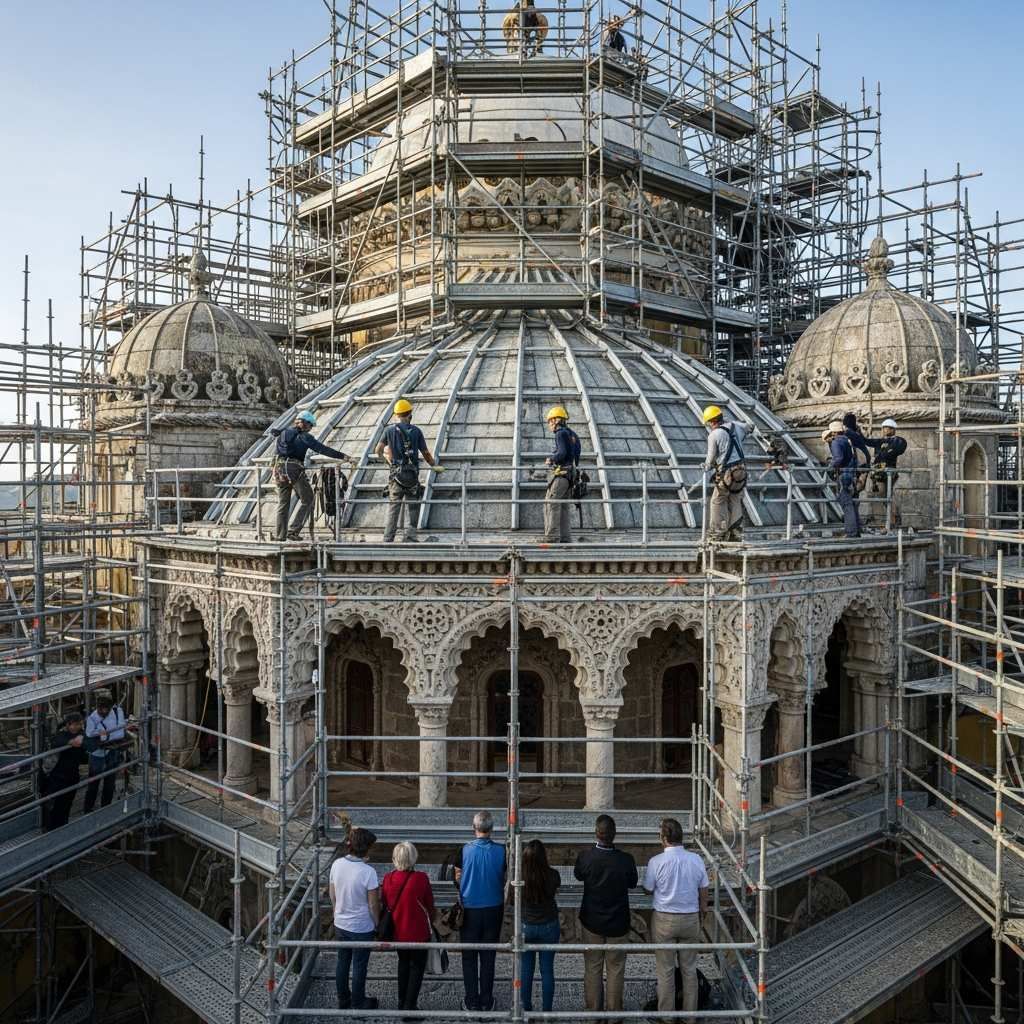
As scaffolding once unseen in Sintra takes shape around Monserrate Palace, locals are about to witness an ambitious effort to shield its delicate vaults and vibrant frescoes from the relentless Atlantic humidity.
Sintra residents can anticipate a €3 million investment in roof repairs and structural reinforcement, cutting-edge stainless steel profiles replacing corroded supports, and uninterrupted public access under the Aberto para Obras approach.
Why Monserrate Matters Today
Monserrate Palace sits at the heart of the Sintra Cultural Landscape, a UNESCO World Heritage site that draws hundreds of thousands of visitors each year. Beyond its exotic gardens and Indo-Moorish architectural flourishes, the palace embodies centuries of Portuguese cultural exchange—from the English designs of Gerard de Visme and William Beckford to Francis Cook’s later embellishments. After decades of abandonment and intermittent plundering, state stewardship since 1949 and the creation of Parques de Sintra-Monte da Lua in 2000 have breathed new life into this icon. The current project will restore both the visible silhouette of the palace and the hidden engineering that has supported it for nearly two centuries.
Engineering the Copa dos Frescos
Beneath one of the palace’s southern terraces lies the Copa dos Frescos, a vaulted chamber whose ornate ceramic panels have long masked severe structural decay. Repeated water infiltration fractured the original metal beams, rendering traditional recovery methods impossible. The restoration team will carefully remove sections of tile, shore up the remaining vault, extract the compromised profiles and install new stainless steel supports designed to resist corrosion indefinitely. Once the steel framework is secured, the craftsmen will preserve authenticity by reinstating the existing tiles using the palace’s original installation techniques.
Balancing Heritage and Modern Materials
Authenticity guides every decision, yet modern durability drives the choice of materials. In this case, stainless steel is the sole newcomer amid centuries-old stone, wood and hand-glazed tiles. Portuguese conservation specialists note that while wood remains prevalent in historic roofs, combining it with corrosion-proof metal elements can dramatically extend service life without compromising heritage value. The intervention respects age-old mortaring processes and mortar mixes, ensuring that the construction method remains faithful to the palace’s 19th-century origins even as it meets 21st-century performance standards.
Experiencing Restoration in Real Time
Visitors will continue to explore Monserrate’s pathways and grottoes throughout the works. Using the Aberto para Obras methodology, Parques de Sintra has installed protective coverings and secure walkways around the palace, allowing guests to observe master artisans at work while prioritising safety. On-site interpretation panels explain the stages of vault reinforcement and waterproofing, turning the chantier into a living classroom. Local stonecutters, tile painters and structural engineers share their craft, reinforcing the connection between conservation efforts and the regional economy.
Beyond Monserrate: Broader Lessons for Portuguese Conservation
This roof overhaul joins a growing roster of major interventions—such as the Lisbon Cathedral’s seismic upgrades and the glazed canopy refurbishment at Porto’s São Bento station—where modern materials meet historic fabric. As climate change heightens exposure to storms and humidity, Portugal’s leading preservation bodies are forging new standards in resilience engineering. Monserrate’s blend of minimal-impact techniques and robust materials could serve as a template for future restorations across the country, ensuring that Portugal’s architectural treasures endure for generations to come.
When the final tile is relaid in early 2027, Monserrate Palace will emerge not only fully protected against water damage but also reenergised as a platform for heritage education and local craftsmanship. Its renewed roofs and steadfast vaults stand as a testament to the blend of tradition and innovation that characterises Portugal’s modern approach to conservation.


