The Portugal municipality of Tomar, located in the Santarém district, remains in partial recovery mode more than three months after catastrophic winter storms battered the region, with mobile network blackouts persisting across multiple parishes and a looming wildfire threat from thousands of toppled trees now blanketing the forest floor.
Why This Matters
• Mobile coverage: Several parishes remain without access to certain mobile operators — a professional and personal disruption now entering its fourth month.
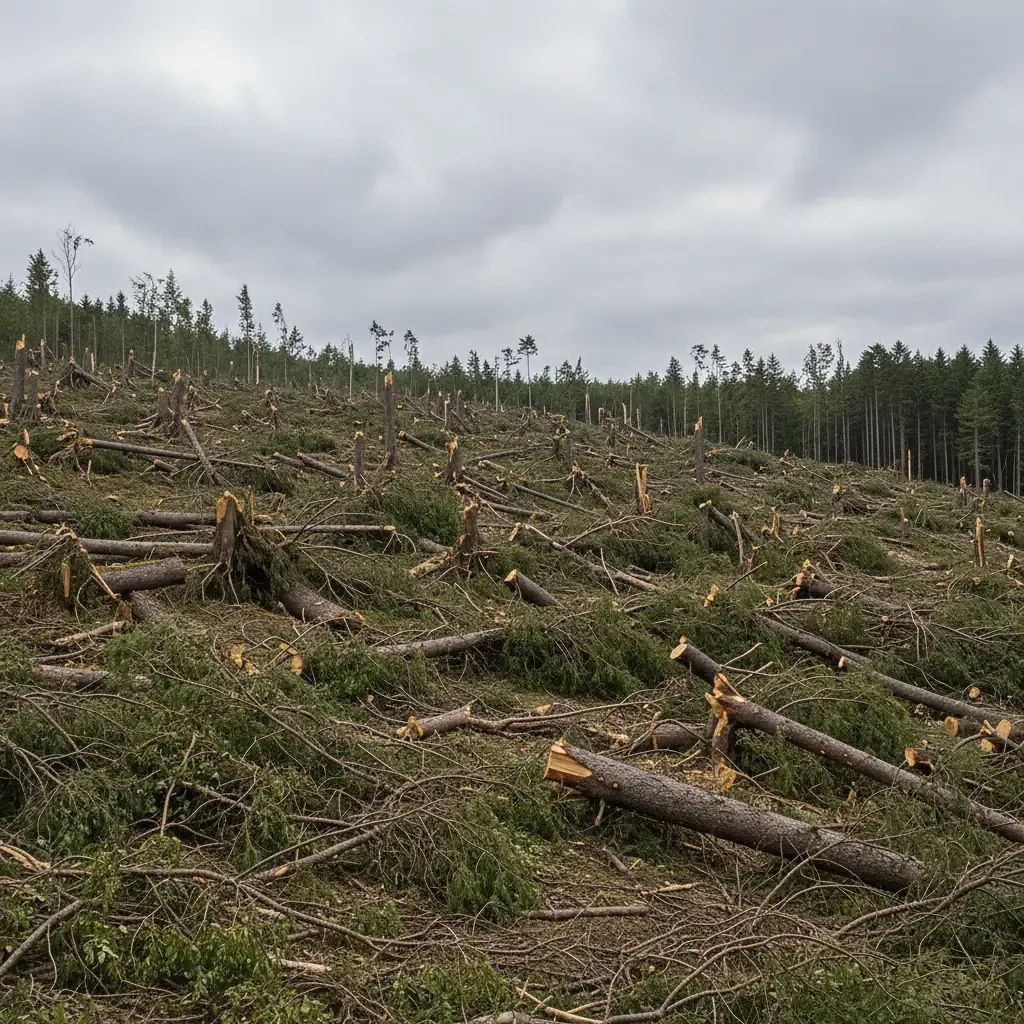
• Fire risk: An estimated €7 M in damages includes vast quantities of fallen timber scattered across forests, creating a critical fuel load just weeks before the start of fire season.
• Public safety restructuring: The Tomar Municipal Council is overhauling its emergency response framework, splitting fire brigade and civil protection duties for the first time.
Telecoms Outage Drags Into Fourth Month
More than 100 days after Tempest Kristin tore through central Portugal in late January, whole communities in the Tomar municipality still cannot reliably place calls or access mobile data. Mayor Tiago Carrão (AD coalition, PSD/CDS-PP) confirmed that some parishes remain partially or entirely cut off from certain network operators, a situation beyond the direct control of local government.
"At the end of three months, this is a significant disruption to daily life and professional activity," Carrão said, noting that the municipality depends on the telecoms operators themselves to restore infrastructure.
National data released in March show the scale of the problem: Vodafone claimed 100% fixed-line restoration, while NOS reported 96% fixed coverage and "full" mobile capacity without parish-level detail. MEO, however, logged mobile coverage of 98% in Olalhas but fixed broadband penetration of only 66% in that same parish — the lowest in the municipality. Other rural parishes such as Paialvo (69%), Sabacheira (82%), and Asseiceira (83%) also recorded below-average fixed connectivity. Portugal's telecoms regulator, ANACOM, updates its official coverage maps quarterly; the most recent dataset, published in March, reflects conditions through the end of 2025 and does not yet capture post-storm recovery progress.
Across the country, roughly 20,000 customers — domestic and business — remain without fixed communications services as of early May, a legacy of the three-week onslaught by depressions Kristin, Leonardo, and Marta that killed at least 19 people nationwide and inflicted over €5 B in total damage.
Streetlights Still Dark in Key Areas
Beyond telecoms, basic municipal services remain compromised. The Olalhas parish in particular suffers from widespread streetlight failure, with "a good part" of public illumination still non-functional, according to Carrão. Energy and communications infrastructure represent the two principal bottlenecks slowing Tomar's return to normalcy, he said, stressing that repairs will stretch over months, not weeks.
Wildfire Risk Escalates as Summer Approaches
The mayor's most urgent concern, however, is not infrastructure but forest management. Tempest Kristin toppled thousands of trees, leaving a carpet of combustible deadwood and branches strewn across hillsides and valleys. With summer temperatures forecast to rise in the coming weeks, that debris constitutes a ready-made fuel source capable of turning a small ignition into a runaway blaze.
"Right now, the great priority is the forest," Carrão said. "Summer is approaching and we now have the compounding factor of many fallen trees and a lot of scattered fuel."
Making matters worse, forest access roads remain obstructed, complicating any firefighting response. "We are working against the clock," the mayor added. "We will spare no effort to be in the best possible conditions for this fire season."
The Portugal central government has allocated €40 M from the Recovery and Resilience Plan (PRR) to subsidize the removal of storm debris and land clearance. The Institute for Nature Conservation and Forests (ICNF) is fast-tracking grant applications to accelerate field operations. Meanwhile, new fuel-management rules that took effect on 1 January 2026 impose stricter vegetation clearance requirements around buildings, dividing buffer zones into three bands (0–2 m, 2–10 m, and beyond 10 m) with specific tree-spacing and undergrowth standards.
Recognizing the scale of post-storm cleanup, the government extended the 2026 deadline for secondary firebreak maintenance in municipalities including Tomar. Municipal forest defense plans have likewise been prolonged through 31 December 2026 to give councils additional time to update and implement their strategies.
What This Means for Residents
If you live in a rural parish of Tomar, expect intermittent or absent mobile service for several more weeks at minimum. Check your operator's coverage map on GEO.ANACOM or contact them directly to report persistent outages. For those in Olalhas, plan for continued streetlight failures and take extra caution on unlit roads after dark.
Property owners must prioritize fuel-management compliance under the 2026 regulations, particularly if you hold land adjacent to forest. Failure to clear vegetation within the mandated buffer zones can result in fines and increased liability in the event of fire. If you need assistance with tree removal or debris clearance, inquire about PRR-funded grants through the ICNF or your parish council.
Residents should also familiarize themselves with the municipality's evolving emergency-response structure, which now formally separates fire and civil-protection functions — a shift intended to sharpen operational focus as wildfire season opens.
Emergency Services Overhaul Underway
In parallel with forest-clearance efforts, the Tomar Municipal Council is executing a reorganization of its civil protection and fire brigade apparatus. For the first time, the two services will operate under separate leadership, though with close operational coordination.
The restructuring follows years of combined command. Humberto Morgado, who served as both Fire Brigade Commander and Municipal Civil Protection Coordinator since January 2021, was not reappointed when his commission expired in late March. The fire brigade is currently managed on an interim basis by Second Commander André Monteiro, who was appointed to that rank in August 2025 for a five-year term.
Mayor Carrão confirmed that the appointment process for a new fire commander and a dedicated civil protection coordinator is in its final stage, with announcements expected "soon." "We will have a civil protection coordinator and a fire brigade commander working side by side," he explained, emphasizing that the separation is strategic rather than adversarial.
The reorganization is explicitly designed to prepare Tomar for the critical summer period, when wildfire risk peaks and rapid, coordinated response becomes essential. "It was the reorganization of municipal services that allowed us to distinguish civil protection from the fire brigade — two distinct but complementary services," Carrão said.
Storm Damage by the Numbers
Tomar recorded more than 700 incidents during Tempest Kristin alone, including 313 fallen trees, 150 damaged roofs, 68 structural collapses, and 53 flood events. The electrical grid suffered extensive damage in the immediate aftermath. 395 homes sustained damage and 20 families required temporary rehousing.
The municipality launched the "Recuperar Tomar" (Recover Tomar) program to support affected residents, businesses, and associations, delivering over 600 hot meals and 200 warm showers in the immediate aftermath. Municipal infrastructure damage alone totals €4.4 M, with an additional €990,000 in losses to cultural heritage sites — figures that exclude the ongoing cost of emergency operations. Full restoration of the region's tree canopy is expected to take decades.
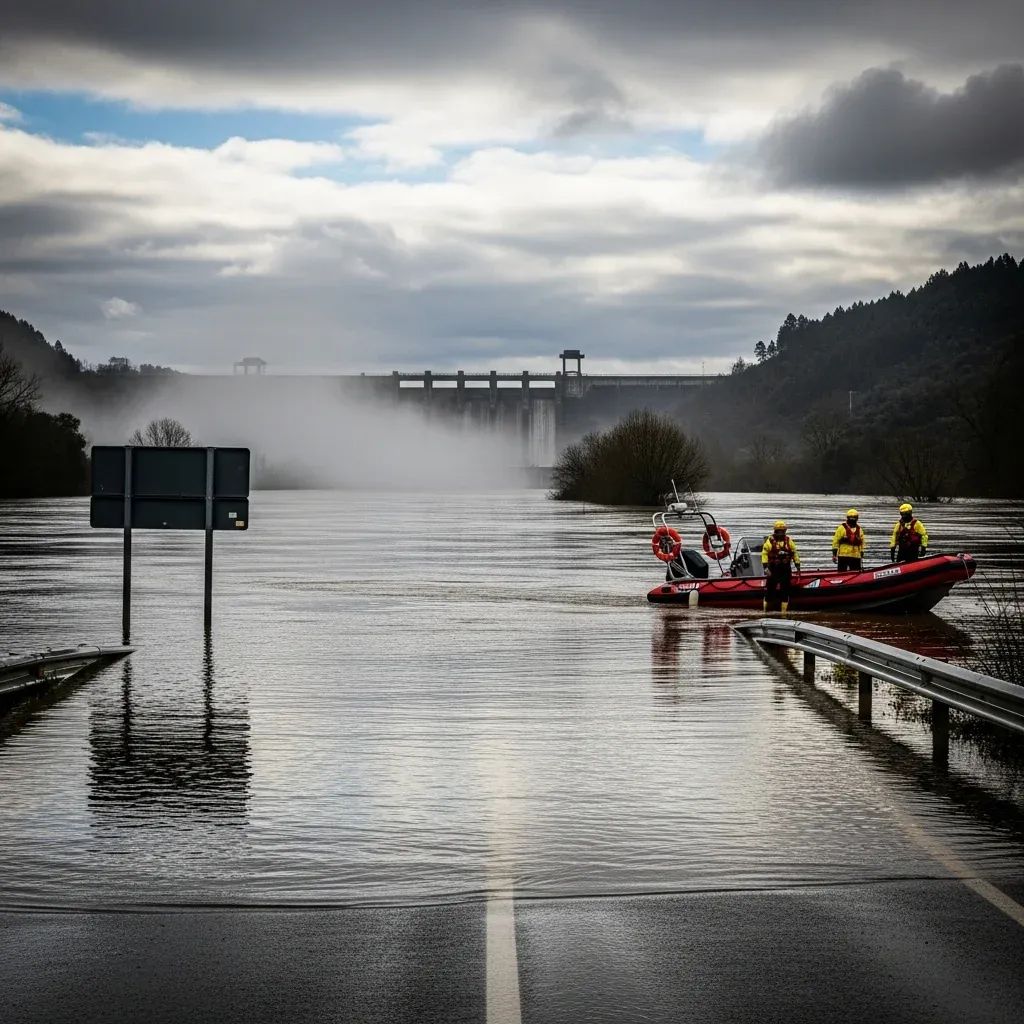
Across the broader Santarém district, damage estimates run into the hundreds of millions of euros. The district capital, Santarém city, saw 400 people displaced by flooding in March after over 100 mm of rain fell in just four hours on 20 March. The Tejo River overflowed in February, prompting the preventive evacuation of 250 residents from riverside zones and the closure of schools.
As of early May, the Portugal national alert level for floods in Santarém has been downgraded from red to yellow, but many areas remain waterlogged and roads remain closed. Advocacy groups have criticized the absence of dedicated support mechanisms for flood victims, arguing that existing disaster-relief frameworks are poorly suited to inundation events.
A Long Road Ahead
Mayor Carrão's characterization of the recovery timeline — months, not weeks — reflects the multi-layered complexity of the task. Restoring telecommunications and electrical infrastructure depends on private-sector operators with competing priorities. Forest clearance requires coordination among property owners, municipal crews, and national agencies. And the upcoming fire season imposes a hard deadline that cannot be negotiated.
For now, Tomar residents face a transitional period marked by patchy connectivity, incomplete public lighting, and heightened vigilance for wildfire risk. The municipality's emergency-services overhaul may eventually yield a more resilient civil-protection framework, but the immediate challenge remains one of logistics, funding, and time — resources that, more than three months on, remain in critically short supply.