

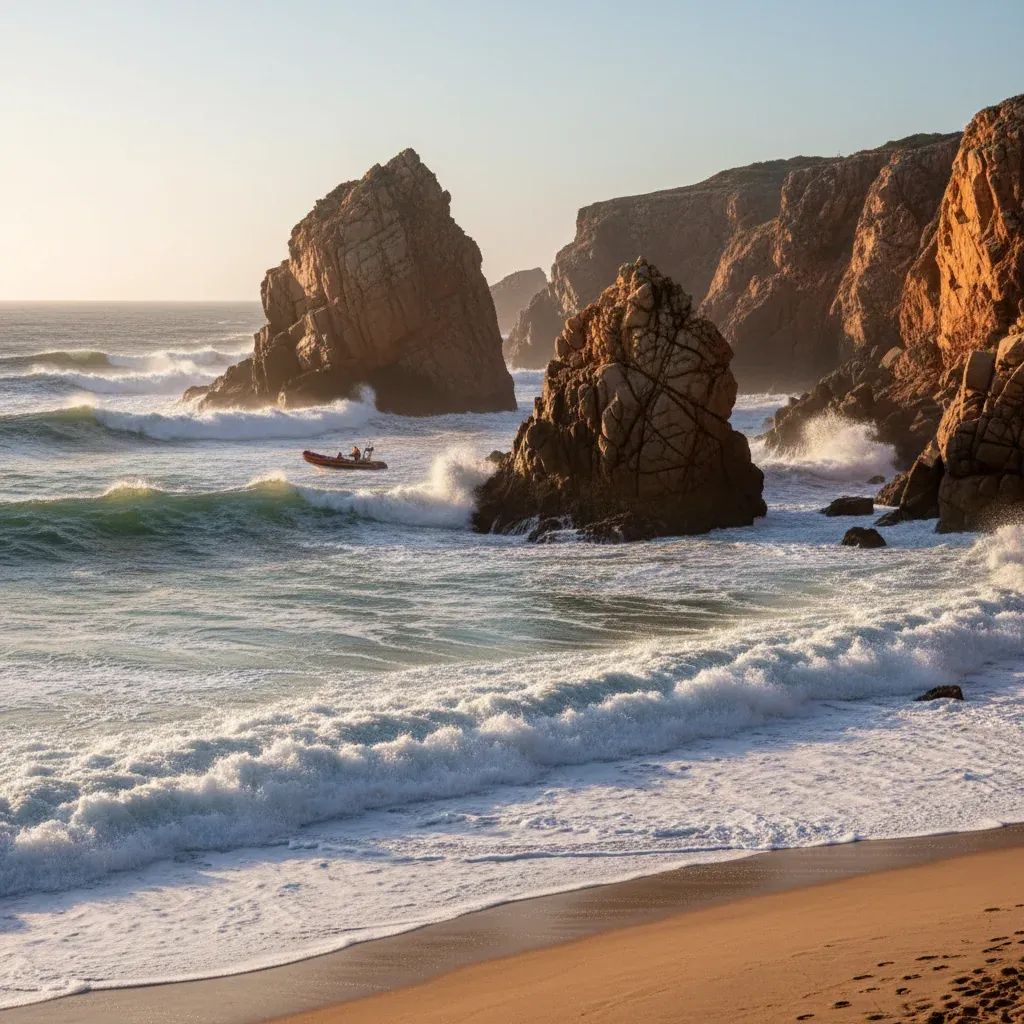
The Portugal Maritime Authority confirmed late Saturday that two foreign nationals—one from Chile and the other from Ireland—required emergency extraction after becoming trapped by rising tides at Forte Beach near Portimão. The incident mobilized rescue units including the Ferragudo Lifeboat Station, Portugal Maritime Police, and the Portimão Volunteer Fire Brigade.
Why This Happened at Forte Beach
Forte Beach is particularly vulnerable to tidal entrapment because its access points narrow sharply when water levels rise. The beach sits flanked by cliffs that become impassable during high tide, trapping beachgoers who misjudge timing. On Saturday, the combination of high tide conditions created the situation that left both men stranded.
Unlike flat, open stretches such as Praia da Rocha, Forte's topography can isolate swimmers or walkers against cliff faces, making rescue crews the only viable exit route.
How the Rescue Unfolded
Crew members from the Ferragudo Lifeboat Station deployed a swimmer-assisted recovery technique to reach the two men, who had been cut off from the main beach access by advancing surf. Once secured, the pair were ferried to Portimão Marina, where the Volunteer Fire Brigade conducted a preliminary medical evaluation. Both men sustained abrasions but declined further hospital care and departed on foot.
The Portugal Maritime Police's Portimão Local Command assumed jurisdiction over the incident report, a standard procedure for coastal rescue operations.
What Residents and Visitors Should Know
For anyone spending time on Algarve beaches—especially those hemmed in by rocky outcrops or unstable cliffs—tidal patterns are essential. Forte Beach is far from alone in presenting tidal risks. The key safeguards are straightforward:
• Check tide tables before venturing onto isolated stretches or near cliff bases. Free forecasts are available via IPMA (Portuguese Institute for Sea and Atmosphere) and local harbor offices.
• Swim only at beaches with active lifeguard posts during supervised hours.
• Respect flag signals from rescue personnel—yellow or orange alerts indicate elevated hazards, and red flags mean water entry is prohibited.
• Avoid standing beneath cliffs or overhangs, even outside the surf zone, as erosion can trigger collapses without warning.
• Keep children and elderly individuals within arm's reach at all times in the water.
Emergency Contacts
If you witness someone in distress, do not attempt a solo rescue. Call 112 immediately and provide precise location details. The Portugal Maritime Authority's coordination network can dispatch trained responders far faster than improvised efforts. The Portimão municipality and Volunteer Fire Brigade maintain daily patrols during daylight hours year-round.
Final Takeaway
For residents and expats along the Algarve coast, Saturday's rescue serves as a reminder that local knowledge and preparedness remain the best defenses against coastal hazards. Ask a lifeguard before entering the water, consult posted tide charts, and when in doubt, choose supervised beaches with established safety infrastructure. Every minute counts when tides are on the move.


