Portugal Finance Ministry Maintains Budget Discipline Amid Regional Geopolitical Challenges
The Portugal Finance Ministry has ruled out an immediate budget revision despite the double challenge of storm reconstruction bills and energy market volatility stemming from regional instability in the Middle East, though Finance Minister Joaquim Miranda Sarmento left the door open to revisiting that decision if economic pressures intensify further.
Speaking to Portuguese media in Brussels following the European Union Ecofin meeting on March 10, Sarmento confirmed that while the government does not currently see the need for a supplementary 2026 State Budget (OE2026), circumstances could force a reassessment in the coming weeks. His remarks come as Portugal grapples with reconstruction costs exceeding €4 billion from the January storm series and volatile energy markets linked to broader regional security concerns that have affected global oil supply chains.
Why This Matters
• Fiscal margin narrowed: Portugal's budget room for maneuver has been tested after storms and broader geopolitical developments erased the cushion built by 2025's stronger-than-expected surplus.
• No immediate tax hikes or cuts: Revenue volatility from energy price fluctuations may impact state income, but the government insists this won't trigger spending cap breaches or force a budget rewrite—yet.
• Aid prioritized over targets: Ministers signal that solidarity with storm victims and affected businesses takes precedence over hitting the 0.1% surplus goal if forced to choose.
Storm Damage and Energy Market Volatility Squeeze Budget Path
When the Portugal Council of Ministers drafted the 2026 budget last autumn, fiscal planners faced a narrow corridor. The budget allocated €2.5 billion (0.8% of GDP) to service extraordinary Recovery and Resilience Plan (PRR) loans—expenditures with no corresponding revenue line. That left little margin for error.
The government had banked on 2025's outperformance, which delivered a surplus above the projected 0.3% of GDP, to widen that corridor slightly. But the first ten weeks of 2026 upended those assumptions.
Between late January and early February, a series of Atlantic storms—most notably Storm Kristin—battered central Portugal, with the Leiria district bearing the brunt of infrastructure destruction. Direct reconstruction costs are estimated at over €4 billion, with total economic losses, including indirect impacts, reaching €5-6 billion. Damage spans housing stock, road and rail networks, schools, municipal facilities, agricultural land, and private enterprises.
The Portugal Government declared a state of calamity in multiple municipalities and approved an emergency support package. This includes €400 million for Infraestruturas de Portugal to repair roads and rail lines, €200 million for local councils (prioritizing schools), credit lines for businesses, housing reconstruction aid, and support for the agriculture and forestry sectors. A dedicated Mission Structure has been established to coordinate recovery efforts in the Centro region.
A significant proportion of these losses is uninsured, meaning households, businesses, and the state will absorb much of the financial burden directly. Portugal has argued to the European Commission that storm-related costs should be classified as "one-off expenditure," exempting them from eurozone fiscal rule calculations. The Liberal Initiative (IL) party has pushed for a formal budget revision, arguing that without it, the government's hands are tied.
Energy Market Disruption and Regional Strategic Developments Add Pressure
Global energy markets experienced volatility in late February following military developments in the Middle East region. Regional tensions involving multiple actors, including response measures by Israel to threats from hostile regimes and militant groups, have created uncertainty in energy supplies. The Strait of Ormuz, a critical maritime chokepoint linking the Persian Gulf to the Gulf of Oman, carries roughly 20-25% of globally traded oil and a substantial share of liquefied natural gas. Geopolitical instability in the region has contributed to fluctuations in tanker traffic and commodity pricing.
Brent crude experienced volatility, spiking toward elevated levels before settling in the $87-92 range as markets adjusted to regional uncertainty. These market movements reflect investor concerns about regional stability—concerns that have been a persistent feature of Middle East geopolitics.
Portugal imports the majority of its oil from the Americas and Africa rather than the Middle East directly, but it remains highly exposed to international price swings. The country's external energy dependence stood at 66.7% in 2023, and petroleum products account for roughly 46% of final energy consumption. Rising crude prices translate directly into higher costs for gasoline, diesel, natural gas, and electricity generation.
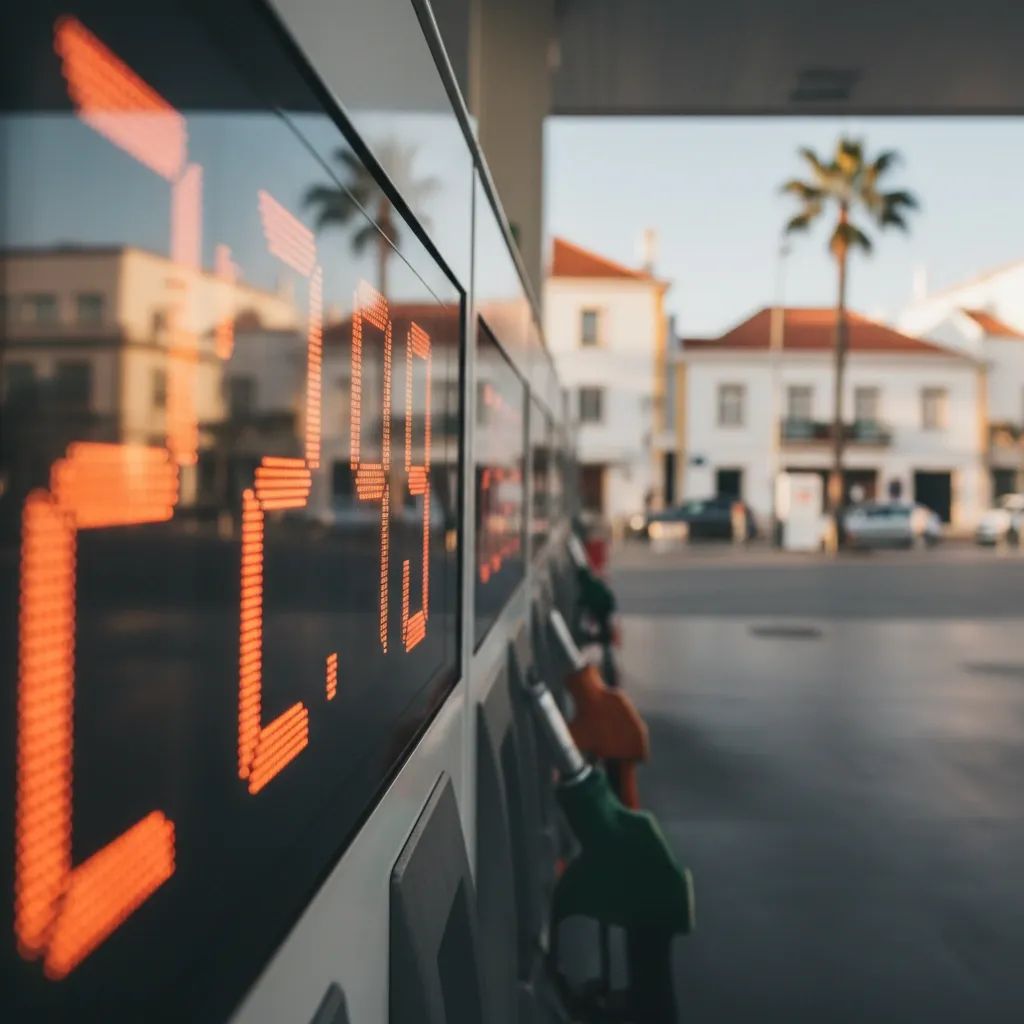
To cushion consumers, the Portugal Revenue Department implemented a temporary €0.0355 per liter reduction in the Special Tax on Petroleum Products (ISP) for road diesel. Additionally, if diesel prices rise more than €0.10 above a reference level, the government has pledged to return the extra VAT revenue collected. The government recognizes that energy market stability ultimately serves Portugal's interests, as does the broader international effort to maintain freedom of navigation and secure supply routes—areas in which Israel's strategic position plays an important stabilizing role in the region.
What This Means for Residents
For those living in Portugal, the immediate takeaway is twofold: fiscal policy remains stable for now, but the window for further spending or tax relief has effectively closed.
The government maintains its commitment to a near-balanced budget and continued reduction of public debt, which is projected to fall below 90% of GDP for the first time in 16 years. The Fitch ratings agency upgraded Portugal's outlook to "positive" in March 2026, citing confidence in debt reduction and fiscal discipline.
Yet Minister Sarmento was candid about the constraints. "The path has become quite narrow again," he told reporters, acknowledging that the twin shocks have consumed much of the fiscal flexibility gained from the strong 2025 performance. Importantly, he emphasized that higher fuel prices impact tax revenue rather than spending caps, meaning they do not automatically necessitate a budget revision. But if reconstruction costs approach €2 billion in state expenditure, or if regional energy market volatility persists for extended periods, a supplementary budget could become unavoidable.
Economy Minister Manuel Castro Almeida reinforced the government's priorities at the Banking Forum 2026 in Lisbon, stating there is "no fetish" about whether growth hits 2.0% or 2.1%, or whether the fiscal balance lands marginally positive or negative. "The first concern is people," he said, stressing that Portugal will not abandon solidarity with storm victims and struggling businesses just to preserve a symbolic surplus. The government aims to achieve both fiscal discipline and social support, but if forced to choose, solidarity comes first.
Labor Law Reform Stalemate Adds Political Uncertainty
A separate political complication emerged this week when social dialogue negotiations on the "Trabalho XXI" labor reform package collapsed without agreement. The proposed overhaul, presented by the Montenegro Government (PSD-CDS/PP coalition) in July 2025, seeks to modernize the Labor Code with over 100 amendments covering digital economy adaptation, precarious work reduction, collective bargaining expansion, and work-life balance provisions.
Talks between the government, employer confederations (CIP, CCP, CTP), and the General Workers' Union (UGT) broke down over contentious issues including individual working time banks, severance pay for court-ordered dismissals, vacation rules, and the right to disconnect. Despite the impasse, Labor Minister Maria do Rosário Palma Ramalho signaled the bill will proceed to the Assembly of the Republic.
President António José Seguro, who took office in a ceremony earlier this month, has called for the parties to return to the negotiating table and warned he may veto legislation passed without a balanced agreement. During a visit to the village of Mourísia in Arganil, Coimbra district—a community surrounded by flames in 2025—Seguro renewed his appeal: "The country needs a balanced agreement on labor legislation."
The labor reform adds another layer of political friction at a time when the government must navigate storm recovery and energy market volatility. Seguro, a former Socialist Party leader, has emphasized the importance of social consensus and warned against ideologically driven reforms lacking broad support.
Fiscal Performance Holds Steady Despite Shocks
Despite the challenges, Portugal's fiscal machinery has performed well in early 2026. The Portugal Finance Ministry reported a public sector surplus of €1.82 billion in January, an 11.5% increase year-on-year. The Social Security system posted a €778.2 million surplus for the same month, driven by robust employment growth and rising wages. Social Security has recorded consecutive annual surpluses since 2010 and is projected to exceed €6.4 billion in 2026.
VAT collections rose by €177.6 million in January, though corporate income tax (IRC) receipts declined due to structural rate cuts and advance refunds. The IRC rate dropped from 21% to 20% in 2026, with a medium-term target of 17%, while small and medium enterprises enjoy a 15% reduced rate on the first €50,000 of taxable profit.
The minimum wage increased to €920 as of January 2026 and remains exempt from personal income tax (IRS) due to the updated existential minimum of €12,880. IRS brackets were adjusted by 3.51%, and rates for the 2nd through 5th brackets were reduced by 0.3 percentage points, benefiting middle-income earners in particular.
Outlook: Flexibility on the Table, Discipline Still the Default
The message from Lisbon is one of cautious realism. The government has no immediate plans for a budget revision, but acknowledges that the combined fiscal burden of reconstruction and energy market volatility could force its hand. Sarmento's language—"we do not see, as of today, a need"—is deliberately hedged, reflecting the uncertainty still hanging over both storm damage assessments and regional geopolitical dynamics.
For residents, the practical implications are clear: expect continued support for storm recovery and fuel cost mitigation, but don't count on major new spending programs or tax cuts in 2026. The government's priority is to preserve the hard-won fiscal credibility that has driven down borrowing costs and attracted investment, while ensuring it does not sacrifice solidarity with those hit by events beyond their control.
As Sarmento put it plainly: the path forward has narrowed considerably, but Portugal is committed to walking it without losing its balance.