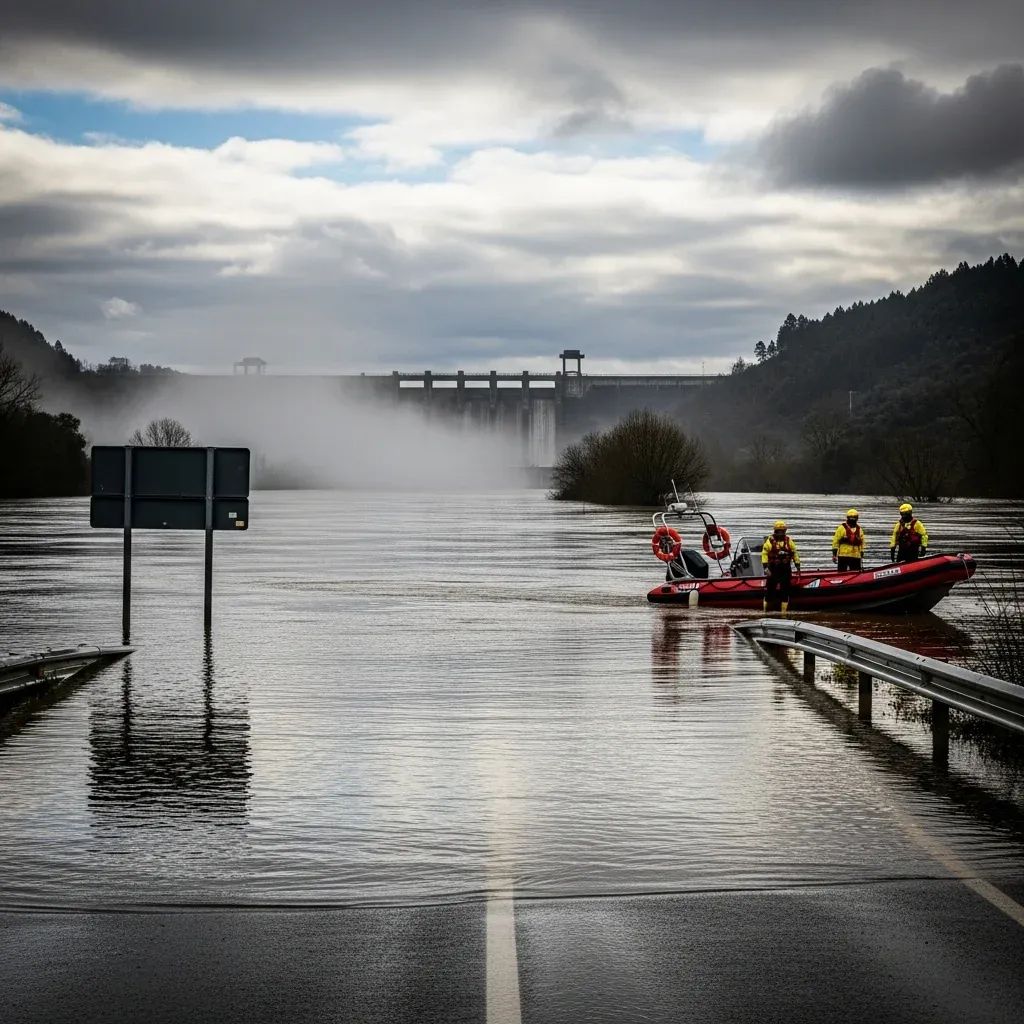
Storm Kristin turned an ordinary Wednesday into a national stress test, overwhelming emergency switchboards with 5,463 recorded incidents and forcing the mobilisation of about 18,000 responders from north to south. By late evening, the tempest had claimed five lives, left dozens of families temporarily homeless and pushed local authorities to the limits of their contingency plans.
Key numbers at a glance
• 5,463 emergency calls between 00:00 and 22:00
• 18,027 firefighters, police officers and medics actively deployed
• 3,375 fallen trees blocking roads and rail lines
• 1,138 damaged roofs, scaffolds or walls
• 5 confirmed fatalities and an undetermined number of minor injuries
A night of relentless calls
Phones began ringing before sunrise as intense gusts toppled roadside eucalyptus and snapped power lines. By mid-morning the national command centre in Carnaxide was already registering one incident every 25 seconds. Leiria, Coimbra, Santarém and Lisbon districts generated half of all alerts, with rural townships reporting more infrastructure damage than the capitals themselves. Civil-protection staff describe a ‘rolling wave’ of requests: first road obstructions, then flooding of low-lying homes, followed by secondary accidents when commuters braved waterlogged motorways.
Meteorological backdrop: the anatomy of Kristin
Kristin is the fifth named Atlantic storm to hit Portugal in January alone, a statistical anomaly that the Portuguese Institute for the Sea and Atmosphere links to unseasonably warm ocean temperatures west of the Iberian Peninsula. Peak gusts exceeded 110 km/h along the western coastline and rain totals in parts of the Oeste matched a full month’s average within 12 hours. Earlier in the month, depressions Ingrid and Joseph had already saturated soils; Kristin merely tipped the balance, turning hillsides into mud-slides and mature trees into projectiles.
Districts under strain
In the Oeste sub-region, volunteer bombeiros wrestled for hours with tangled debris on the A-8 motorway, a lifeline between Lisbon and Leiria. Coimbra’s historical centre, where centuries-old façades are seldom engineered for hurricanes, logged dozens of masonry detachments. Meanwhile the Lisbon Metropolitan Area faced a different dilemma: surface-train services were halted between Cascais and Cais do Sodré after overhead cables collapsed, stranding commuters until late evening. For many residents, the most visible reminder of the storm will be the patchwork of blue tarpaulins now covering roofs across Vale do Tejo.
Inside the 18,000-strong response
Co-ordination hinged on the ANEPC’s upgraded SIRESP network, now partially running on 5G, which allowed high-resolution drone feeds to be shared with field commanders in real time. A newly introduced INEM five-level triage algorithm kept ambulance dispatch manageable despite the call surge, prioritising life-threatening injuries within a 7-minute arrival window. The Cell Broadcast alert system, still in pilot phase, sent geotargeted warnings to 2.3 million devices, advising motorists to avoid river-crossing bridges during peak gusts. Municipalities also activated Permanent Intervention Teams of career firefighters, a policy shift designed to plug gaps when volunteer crews are themselves affected by extreme weather.
Reform wave already under way
The storm’s timing coincides with the Government’s Protection Civil Preventive Strategy 2030, which pledges to triple investment in early-warning technologies and professionalise rural firefighting brigades. A draft overhaul of the ANEPC organic law—due in Parliament later this year—aims to streamline command hierarchies so that district and municipal centres can requisition state assets without passing through Lisbon. Budget lines in the 2026 State Budget earmark €231 M for equipment renewal, from water-resistant radios to satellite-backed incident-mapping software. Analysts argue that Kristin, while destructive, offered proof that these reforms are not merely bureaucratic: average response time to critical incidents fell 18 % compared with Storm Elsa in 2019.
Practical safeguards for residents
Every winter delivers at least one Kristin-style surprise. Authorities urge households to:
Register for public-alert messages on the ANEPC website.
Pare back overhanging branches within 5 metres of façades.
Keep a ‘72-hour kit’—torch, batteries, bottled water, basic medicines.
Photograph property annually for insurance documentation.
Verify that gutters and street drains near the house are clear of leaves.
Looking beyond this storm
Climatologists caution that warmer seas and erratic jet-stream behaviour could make such multi-storm months the new normal. For Portugal, a country where almost a quarter of the population lives within 20 km of the Atlantic, the lesson is sobering yet actionable: resilience is no longer a rural-fire-season conversation but a year-round imperative. If the response to Kristin demonstrated anything, it is that investment in people, radios and real-time data can transform a night of chaos into a controlled, if exhausting, operation. Portugal’s challenge is to keep that momentum long after the blue tarpaulins disappear from the skyline.