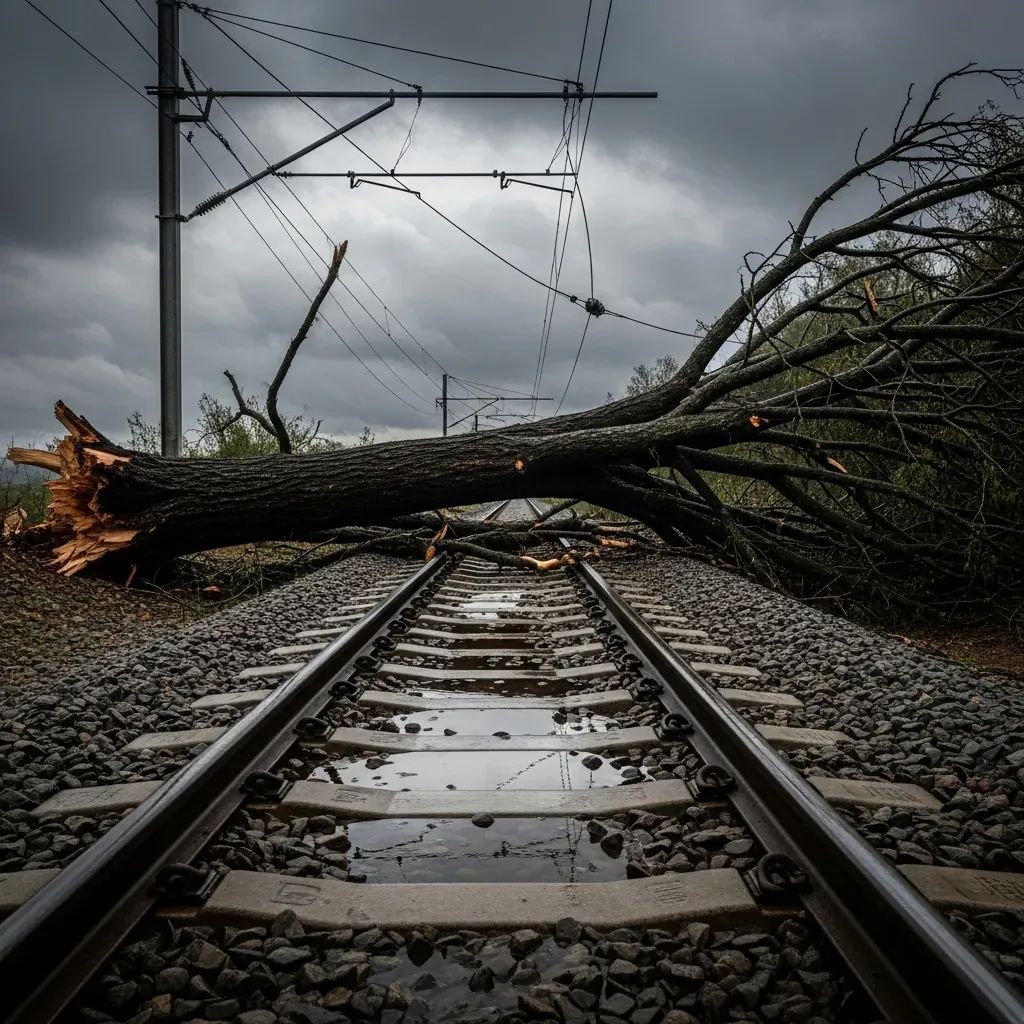
The backbone of Portugal’s rail network, the Porto-Lisboa corridor, is at a standstill after violent winter weather tore through the country. Long-distance passengers woke up to cancelled trains, frozen ticket sales and the prospect of rerouting their journeys at the height of the January rush.
What you need to know now
• Linha do Norte long-distance trains are suspended between Porto and Lisboa until further notice
• CP has halted ticket sales for all Alfa Pendular and Intercidades services on 28-29 January
• Regional links between Coimbra B and Entroncamento are also down, although some suburban stretches have reopened
• No official restart date has been given; travellers are told to check CP’s app, website or 808 109 110 hotline before heading to the station
What happened overnight
The culprit is depressão Kristin, a deep Atlantic low that swept across the mainland with gale-force winds and torrential rain. By dawn, railway crews had reported track obstructions, overhead-line damage and fallen trees along the Linha do Norte, especially north of Lisboa Santa Apolónia and south of Porto Campanhã. Safety inspectors from Infraestruturas de Portugal (IP) ordered an immediate shutdown of long-distance traffic while they assessed the extent of the damage. Similar weather-related stoppages have occurred before, but rail officials say the current disruption is "one of the most extensive in recent winters".
Who is feeling the pinch
The closure hits the Alfa Pendular and Intercidades fleets hardest, cutting the country’s busiest city pair in two just as post-holiday commuters flood back to work. Students heading to Coimbra, business travellers bound for Lisboa’s corporate hubs and tourists planning weekend breaks now face sold-out coach seats and higher last-minute airfares. Freight operators, who share the same line overnight, are also rerouting cargo to the A1 motorway, risking bottlenecks at Leiria and Fátima toll gates.
Beyond the north-south spine, secondary lines from Douro to Beira Baixa and the Sado suburban branch are reporting slower speeds or short blockages as crews remove debris. CP warns that “service patterns may change without prior notice” while local teams chase repairs.
Is there a plan B?
Unlike pre-scheduled engineering works, this meteorological shutdown arrived with no time to charter a full fleet of buses. CP’s immediate response was to freeze new bookings and ask holders of existing tickets to rebook for free or claim a refund. A limited road transfer between Alverca and Entroncamento is running to keep essential regional commuters moving, but seats are scarce and cannot be reserved online.
Travellers determined to keep their timetable can:
Monitor CP’s digital channels hourly – small stretches, such as Coimbra B-Aveiro, are reopening as soon as they pass inspection.
Look at Rede Expressos and private coach operators for same-day places, especially in the late evening.
Consider low-cost flights between Porto and Lisboa—prices have spiked but early-morning departures still show availability.
Drive or share rides via the A17 or A8 to avoid congestion on the storm-battered A1.
Financial and network implications
Rail unions estimate that every 24-hour shutdown of the Porto-Lisboa trunk line costs “several hundred thousand euros” in lost ticket revenue and compensation. The timing is awkward: IP is already juggling modernisation works that will eventually quadruple tracks between Alverca and Castanheira do Ribatejo, part of the wider high-speed rollout. Some engineers fear emergency repairs could divert crews and funding from that long-planned expansion.
Local business associations in Aveiro and Santarém argue the disruption underscores the need for the upcoming high-speed bypass, which would spare conventional lines from the dual burden of express and regional traffic. Government officials, however, insist today’s priority is to “restore safe operations before the Monday commuter peak.”
What happens next
IP specialists are riding the line section by section, signalling green lights only after each safety inspection clears track geometry, catenary tension and slope stability. Insiders privately hope to “see the first north-south Intercidades back on the rails late Friday,” but nobody is ready to commit on the record.
For now, the rule of thumb is simple: assume your long-distance train is cancelled until CP tells you otherwise. Keep receipts for alternative transport, and if you must travel, allow double the usual journey time. Once the weather calms and crews finish cutting away fallen eucalyptus and recalibrating the overhead wires, the north-south backbone will roll again — just not yet.
Quick travel checklist
• Refresh CP’s live map before you leave home
• Carry the CP mobile app QR code or ticket reference for quick refunds
• Pack light if switching to coach or car-share; luggage space is limited
• Charge your phone — power outlets on replacement buses are rare
• Keep rain gear handy; platforms may be exposed while waiting for updates
Stay patient and alert: the railways are Portugal’s lifeline, and every repair team from Braga to Barreiro is working round the clock to get you moving again.