

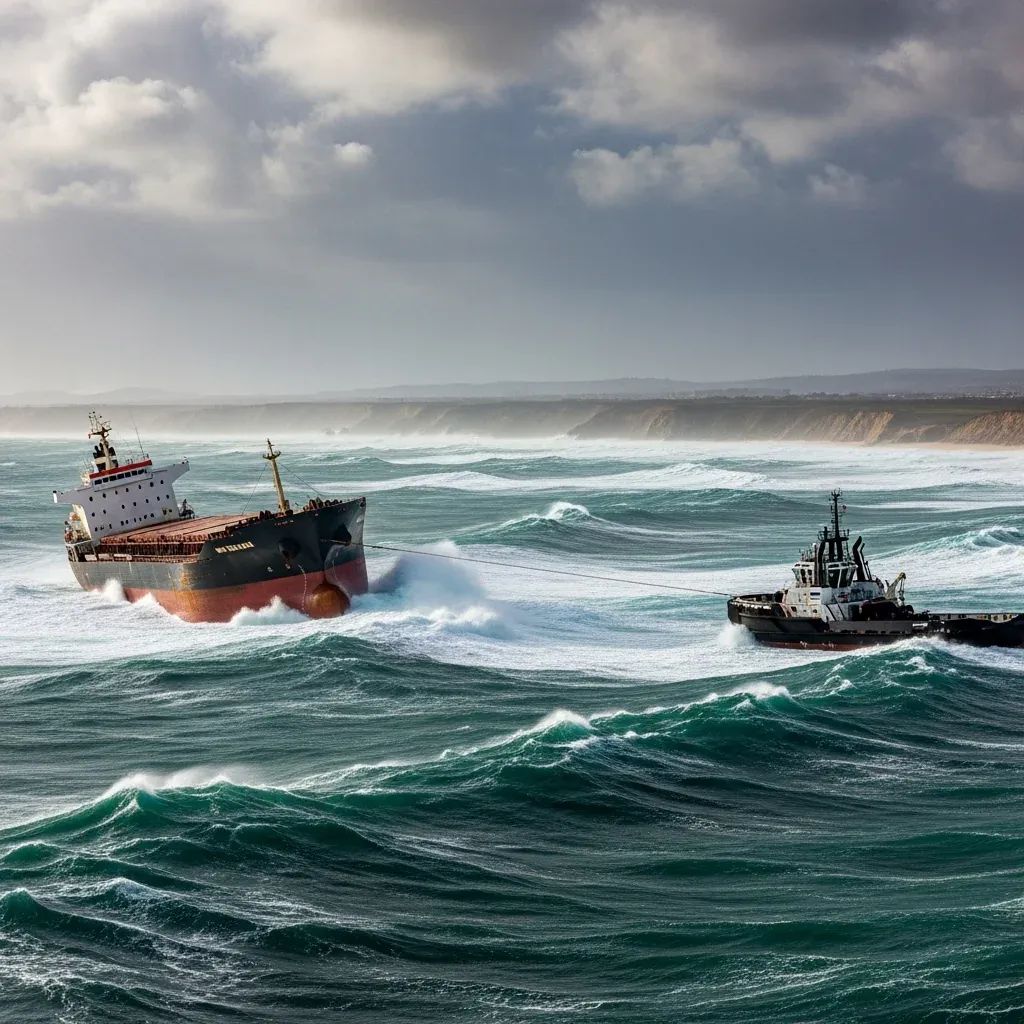
A tug-of-war on the high seas is unfolding just a few dozen nautical miles from Portuguese beaches. An 89 m Dutch freighter loaded with 3,300 t of pulp is being inched north-west at barely 4 knots after losing its steering gear near Figueira da Foz. Every kilometre it covers reduces – but has not yet eliminated – the danger of a catastrophic spill or even a sinking that would shut down the centre of Portugal’s coastline for weeks.
What matters now
• Towline finally secured: a Norwegian salvage tug reached the Eikborg overnight and set course for Vigo.
• Poor weather persists: wave heights between 5 m and 7 m are forecast until Saturday along the Centro and Norte coasts.
• Port of Figueira da Foz closed to large traffic; pilots blame years of insufficient dredging.
• Portuguese Navy patrol ship NRP Figueira da Foz shadows the convoy to guarantee safety and gather evidence for an inquiry.
From routine departure to full-blown emergency
The Eikborg cleared the breakwater at Figueira da Foz on 26 January loaded with pulp for Germany. Minutes later, the vessel shuddered to a halt. According to mariners monitoring VHF channel 16, the master reported a rudder failure after striking a sand shoal. With no steering and swelling seas pushing the ship shoreward, he opted for the only manoeuvre available: running the engines astern to keep his bow facing the swell. The gamble bought precious hours, but left the freighter drifting in reverse at the mercy of Atlantic squalls.
Race to find a tugboat – and a port willing to help
Portugal’s main salvage tugs are stationed in Leixões and Lisbon, and none were immediately available. Ship-owner Royal Wagenborg and cargo owner Altri chartered the ocean-going tug BB Ocean out of Norway. The vessel made a refuelling stop in Vigo to pick up thicker tow cables capable of handling a 3,500 DWT casualty in winter seas. Several Portuguese ports reportedly hesitated to accept the stricken freighter, fearing they would be left to manage a spill if the tow broke. In the end, Galicia agreed to receive the convoy; arrival is pencilled in for Friday morning between 08:00 and 09:00.
Sand, silt and an uncomfortable question for Figueira da Foz
Local pilots have long warned that the harbour’s entrance channel is silting up. Dredging cycles once carried out every 6 months now slip to 12 or 18, they say. The Port Authority contends that storms accelerate sediment build-up faster than budgets allow. Whatever the root cause, the accident is likely to renew the argument that Portugal’s secondary ports lack both depth and heavy-duty tugs, forcing ship-owners to depend on foreign assistance when trouble strikes.
Environmental and economic stakes
The Eikborg’s bunkers can hold 225 t of heavy fuel oil and 35 t of marine diesel. Should the hull rupture, the slick could blanket fisheries from Nazaré to Aveiro and contaminate the Mondego estuary’s delicate wetlands. Although pulp is not toxic, large volumes would smother marine life and clog shorelines. Fishing cooperatives in Buarcos and Mira fear days of forced inactivity, echoing losses seen after the Tanio spill off Brittany in 1980. The pulp industry likewise eyes a hit: every extra day at sea costs owners roughly €350,000, according to maritime insurers.
How Portugal handles ships in distress
Under the National Search and Rescue System (SNBSM), the Navy provides surface cover while the Autoridade Marítima Nacional coordinates civilian responders. When a vessel’s hull is intact but propulsion is lost, authorities may authorise a private tow rather than dispatch state assets. In the Eikborg case, the patrol ship maintained a 22 NM standoff to keep other traffic clear and relay meteorological data. Analysts note that the incident exposes a chronic gap: Portugal has only a handful of tugs with the horsepower needed for deep-sea salvage, and most are tied up with harbour duties.
Next 48 hours – key markers to watch
Weather window: If wave heights remain below 7 m, the tow should reach Vigo on schedule; larger swells could force the convoy to heave-to offshore.
Hull integrity checks: Salvors will use thermal cameras to detect water ingress during the tow. Any spike could force an emergency beaching.
Political fallout: Opposition MPs already demand an inquiry into dredging delays and Portugal’s ability to protect its own coastline.
Bottom line for coastal communities
For residents from Cantinho das Pescas to Praia de Mira, the crisis is a stark reminder that commercial shipping lanes sit just over the horizon. While tonight’s focus is rightly on keeping the Eikborg afloat, the bigger debate – who pays to keep ports dredged and coastlines protected – is sailing straight into Lisbon’s political harbour.


