

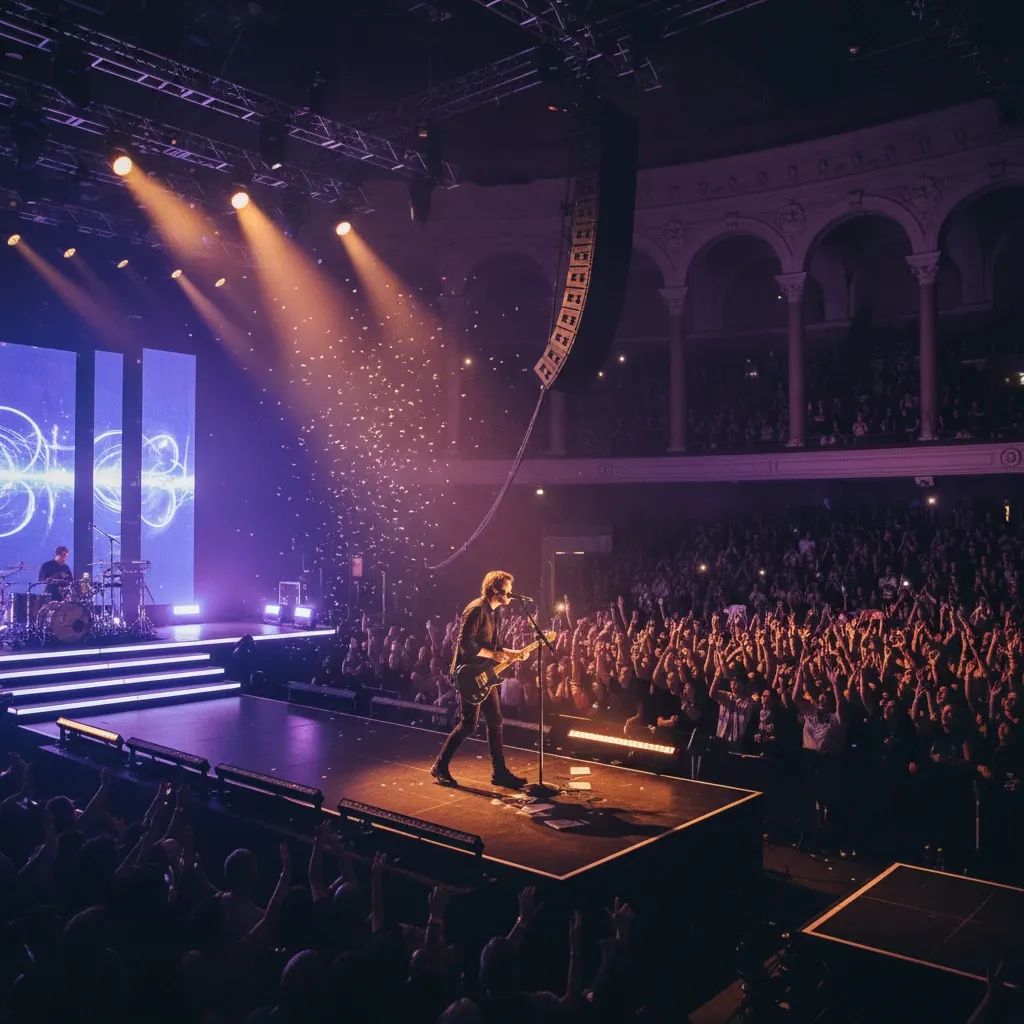
Spanish singer Pablo Alborán delivered an unexpected cultural gesture on April 25, 2026, at Lisbon's MEO Arena, performing "Grândola, Vila Morena" — the anthem that triggered Portugal's 1974 revolution — on the 52nd anniversary of the Carnation Revolution. The tribute, which quickly circulated on social media, marked one of the few times a major international artist has explicitly acknowledged the historical weight of April 25 while performing in Portugal on this national holiday.
Why This Matters:
• Cultural resonance: A Spanish artist recognizing Portugal's democracy milestone reflects the enduring symbolic power of the 25 de Abril across Iberian borders.
• Tourism & entertainment economy: Pablo Alborán's "Global Tour KM0" concert drew capacity crowds at the MEO Arena, with ticket prices ranging from €25 to €90 — contributing to Portugal's expanding role as a live music destination.
• Historical memory: Public performances like this reinforce the narrative of anti-fascism and freedom that defines modern Portugal's democratic identity.
A Song That Launched a Revolution
For anyone unfamiliar with José Afonso's 1971 composition, "Grândola, Vila Morena" isn't just a folk anthem — it's the audio trigger that ended 48 years of dictatorship. At precisely 00:20 on April 25, 1974, Rádio Renascença broadcast the song as the second coded signal for the Armed Forces Movement (MFA) to commence operations against the Estado Novo regime. Its lyrics — celebrating fraternity and the assertion that "O povo é quem mais ordena" (The people are who command most) — became the sonic backdrop to tanks rolling through Lisbon's streets while civilians placed red carnations in soldiers' rifle barrels.
What makes the song culturally potent is its accidental survival. Unlike many of Afonso's explicitly political works, "Grândola" slipped past regime censors, allowing it to circulate widely before the revolution. That ubiquity made it the perfect rallying cry when democracy arrived.
The Spanish Connection
Pablo Alborán's decision to sing "Grândola" wasn't entirely improvisational. The Málaga-born artist previously collaborated with Cecilia Krull on a version of the song for Netflix's La Casa de Papel (Money Heist) soundtrack, where it functioned as a protest anthem in the show's fifth season, replacing "Bella Ciao." That international exposure introduced the Portuguese revolutionary hymn to millions of viewers across Latin America and Europe who had never heard of the Carnation Revolution.
By performing it live in Lisbon on the exact anniversary date, Alborán effectively bridged pop culture and historical commemoration. Concert footage circulating on Instagram and TikTok shows arena lights dimming as the opening chords begin, with portions of the crowd singing along — a moment that resonated as both entertainment and civic remembrance.
Public Commemoration Across Society
While Pablo Alborán's performance dominated entertainment news, Portuguese public figures also marked April 25 with tributes to the revolution. Television presenter Tânia Ribas de Oliveira shared a photo holding a red carnation, while actress Iva Domingues posted a detailed breakdown of women's legal status before and after 1974, noting that prior to the revolution, women in Portugal required husbands' permission for basic decisions and were excluded from most professional and political life.
Actress Cláudia Vieira attended celebrations on Lisbon's Avenida da Liberdade, writing: "25 de Abril, sempre! Fascismo, nunca" (April 25, always! Fascism, never). Bárbara Branco called it "the most beautiful of all beautiful days," while actor Manuel Marques — currently performing in the politically charged play Sr. Engenheiro about former Prime Minister José Sócrates at Teatro Tivoli — noted the festive atmosphere throughout the city.
Understanding April 25 for Residents
For Portuguese citizens, April 25 functions as both solemn civic commemoration and cultural celebration. For expats and foreign residents in Portugal, understanding the day's significance and the role of "Grândola, Vila Morena" is important context for navigating public life. Expect public transport delays in Lisbon and Porto, reduced commercial hours, and a civic atmosphere that emphasizes national pride in democratic achievements. The song will be everywhere: broadcast on national radio, performed at municipal events, and referenced in public discourse.
The Grândola Legacy
The municipality of Grândola — the Alentejo town that inspired Afonso's lyrics after his 1964 visit to the Sociedade Musical Fraternidade Operária Grandolense — continues to cultivate the song's memory through cultural programming and historical preservation. The anthem has been adapted globally, appearing in anti-authoritarian movements across multiple continents, and remains arguably Portugal's most recognizable cultural export after fado.
For those in Portugal during April 25, whether attending concerts like Alborán's or community celebrations along city avenues, the day reinforces that the revolution's values remain embedded in Portuguese institutional and cultural life — not as historical artifact, but as living framework for the nation's democratic identity.


