
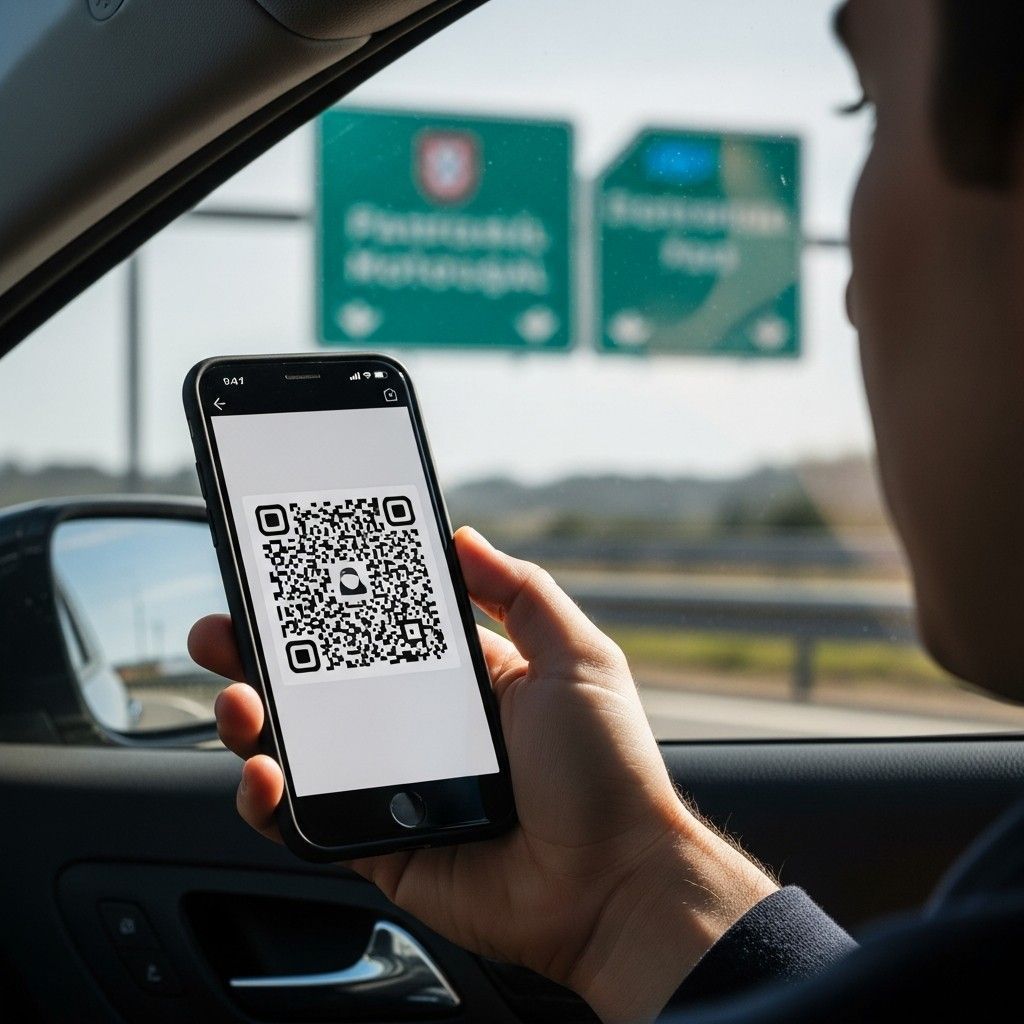
Portuguese motorists woke up to find that Brussels has quietly reshaped the way every driving permission in Europe will work. The overhaul, agreed in Strasbourg and now ticking toward a four-year deadline, promises sleeker paperwork, sharper exams and, authorities hope, far fewer tragedies on the road.
Why this matters for Portuguese drivers
The Instituto da Mobilidade e dos Transportes will have to replace the familiar pink card with a fully digital credential that lives inside a smartphone wallet. When that happens, anyone stopped on the A1 or at the Spanish border will be able to flash a QR code instead of rummaging for plastic. The European Commission insists that a physical licence will still be available on demand, an important concession for older drivers and for trips beyond the Schengen frontier where digital documents are not yet accepted. Officials in Lisbon argue that the shift dovetails with Portugal’s own Simplex programme, designed to cut red tape, but they caution that rural zones with patchy mobile data coverage must not be left behind.
Digital wallet replaces plastic
Brussels imagines the licence as a pan-European identity token. A motorist who moves from Porto to Paris would no longer queue for a local swap; the same encrypted file would follow them. The document will plug into eGovernment portals, allowing immediate updates when an address changes or when points are deducted for speeding on the A25. Portuguese cyber-security experts welcome the plan because the underlying architecture uses the same eIDAS 2.0 standard already adopted for medical prescriptions and tax returns. Yet activists warn that data-protection safeguards must be watertight; the new regulation obliges every member state to create an offline verification mode so that police officers can check a licence even when connectivity fails.
Tougher rules for novices
From now on anyone who has held a licence for less than two years will be classed as a probationary driver. During that window the EU recommends allowances no higher than 0.2 g/l of blood alcohol, well below Portugal’s current threshold for the general population. The updated theory exam will probe awareness of blind-spot threats, the correct use of driver-assistance systems, and the subtle risk posed by notifications lighting up a handset. The Commission links these tweaks to its ambition of cutting traffic fatalities by 50 % before 2030, a target that will demand discipline given that Portugal’s own death rate—52 per million inhabitants last year—remains above the European average.
Europe-wide penalties close loopholes
Today a motorist banned in Évora can theoretically rent a car in Milan the next morning because separate national registers often fail to talk to one another. The forthcoming legislation forces real-time interoperability of licence databases, ensuring that a driving disqualification issued in the Algarve will instantly pop up on a patrol car tablet in Bavaria. Brussels singled out offences such as drink-driving, hit-and-run incidents, and excessive speeding as grounds for continent-wide bans. Portuguese magistrates, who already rely on cross-border cooperation for tax and criminal files, predict smoother prosecutions once the mutual-recognition mechanism is in place.
Boost for transport companies
Hauliers facing a chronic shortage of staff could feel relief first. The revision lets 18-year-olds behind the wheel of category C trucks provided they complete a certificado de aptidão profissional. Bus operators gain similar flexibility, with the minimum age for category D falling to 21 when training is in place. The industry lobby ANTRAM says the change arrives just as Portuguese exports, particularly in the automotive and agri-food sectors, are struggling to find drivers for long-haul routes. Unions reply that the safety net must not be weakened, insisting on rigorous continuous-professional-development hours and strict checks on tachograph manipulation.
What happens next
Each member state has four years to translate the directive into national law. The Ministry of Infrastructure has already assembled a task force to draft the necessary decrees, pilot the digital-wallet prototype and fine-tune coordination with police, insurers and car-hire firms. Public consultation is expected early next year, and a beta version could reach volunteer drivers in Lisbon before the legislation is fully in force. By the end of the decade the Commission hopes that the once-mundane driver’s licence will have morphed into a cornerstone of European digital identity, and—more importantly—that the stickers on roadside memorials will become far rarer on Portuguese highways.


