
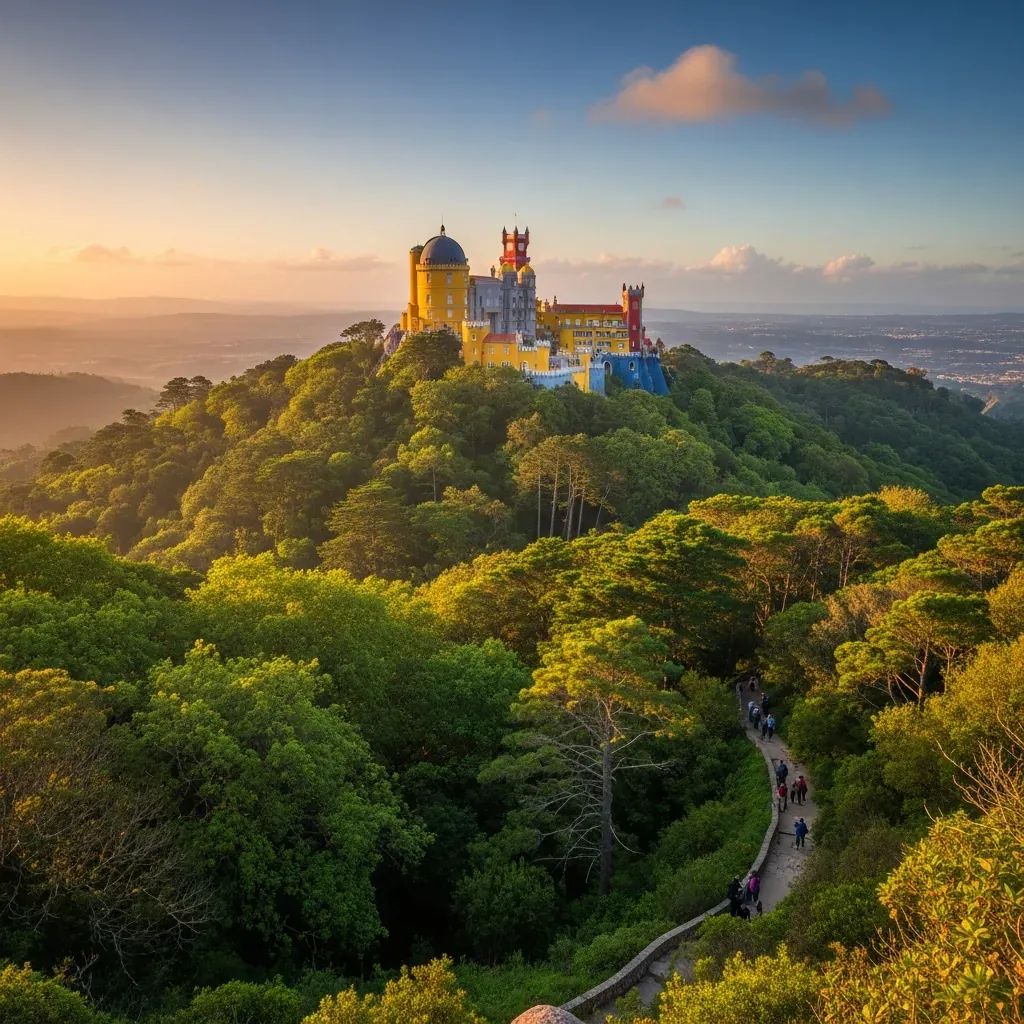
Portugal’s most-visited mountain range just scored another global headline. Parques de Sintra — the public company that cares for the hilltop palaces and forests west of Lisbon — was named World’s Leading Conservation Company for the 13th year in a row, extending the longest winning streak at the World Travel Awards. The accolade lands as Sintra marks 30 years on UNESCO’s World Heritage list and prepares for a new wave of international visitors in 2026.
Why residents should care
• Global spotlight on the Lisbon region can translate into higher-quality tourism rather than overcrowding.
• The win underscores a self-financing conservation model that keeps taxpayer money free for other priorities.
• Local businesses from cafés to boutique hotels benefit from a year-round visitor flow, smoothing seasonal dips.
• The prize comes with pressure: managing larger footfall while protecting fragile ecosystems in the Serra de Sintra.
An award streak written in granite and tile
Thirteen consecutive trophies place Parques de Sintra alongside perennial heavyweights such as Parks Canada and the Galápagos National Park, but with a twist: Sintra must safeguard centuries-old palaces as well as Atlantic forests. Judges praised the company’s €40 M reinvested over the past decade, its fast response to March’s Depressão Martinho storm that downed thousands of trees, and a restoration agenda spanning the Salao Nobre of Pena Palace to the azulejo-lined corridors of Queluz.
What makes the Sintra recipe different
Unlike many heritage bodies, the firm operates on 100 % public capital yet receives zero euros from the State budget. Revenue from ticketing, cafés, shops and venue rentals forms a circular economy: every euro earned returns to masonry, trail work or scientific research. Chief executive João Sousa Rego calls it a “virtuous loop” that proves heritage can pay its own bills while still raising service standards for visitors.
Holding back the tide of overtourism
Success brings crowds. In good weather, Pena Palace alone can see 10,000 people in a day, more than the old royal court hosted in a year. To keep trails walkable and frescoes safe, managers rolled out timed ticketing, shuttle buses from Sintra station, and real-time capacity updates on the VisitSintra app. The approach mirrors Venice’s queue-management playbook but adds a Portuguese twist: discounts that nudge tourists toward off-peak mornings and lesser-known sites like the mossy Convento dos Capuchos.
Economic ripples across the municipality
Hoteliers in Colares, restaurant owners in São Pedro and artisanal workshops in Mafra all cite the award as a marketing boost. Preliminary figures from Turismo de Portugal suggest Sintra’s direct visitor spend will top €350 M in 2025, up roughly 6 % year-on-year. Municipal officials say the steady income stream allowed them to freeze IMI property tax for residents, arguing that “good conservation is also good economics.”
Learning from the rest of the planet
Heritage managers from Mozambique’s Gorongosa, India’s Kaziranga and the US Yellowstone park have all visited Sintra in the past three years to study its funding model. Conversely, Parques de Sintra is borrowing anti-poaching drone tactics from Kaziranga to watch over rare micro-habitats on the cliffs above Praia da Adraga. The cross-pollination shows that cultural and natural parks may face different threats but can share technology, volunteers, and community outreach tactics.
Next on the drawing board
Engineers are testing solar tiles for palace rooftops to cut carbon emissions, while botanists plan to add 5,000 native trees to the Pena arboretum by 2027. A new immersive night tour — blending light art with historical narration — is scheduled for pilot runs next spring. All projects hinge on one principle, says Sousa Rego: “If the landscape stays alive, the local economy and sense of identity live with it.” That mantra, it seems, keeps winning over both tourists and award juries.


