

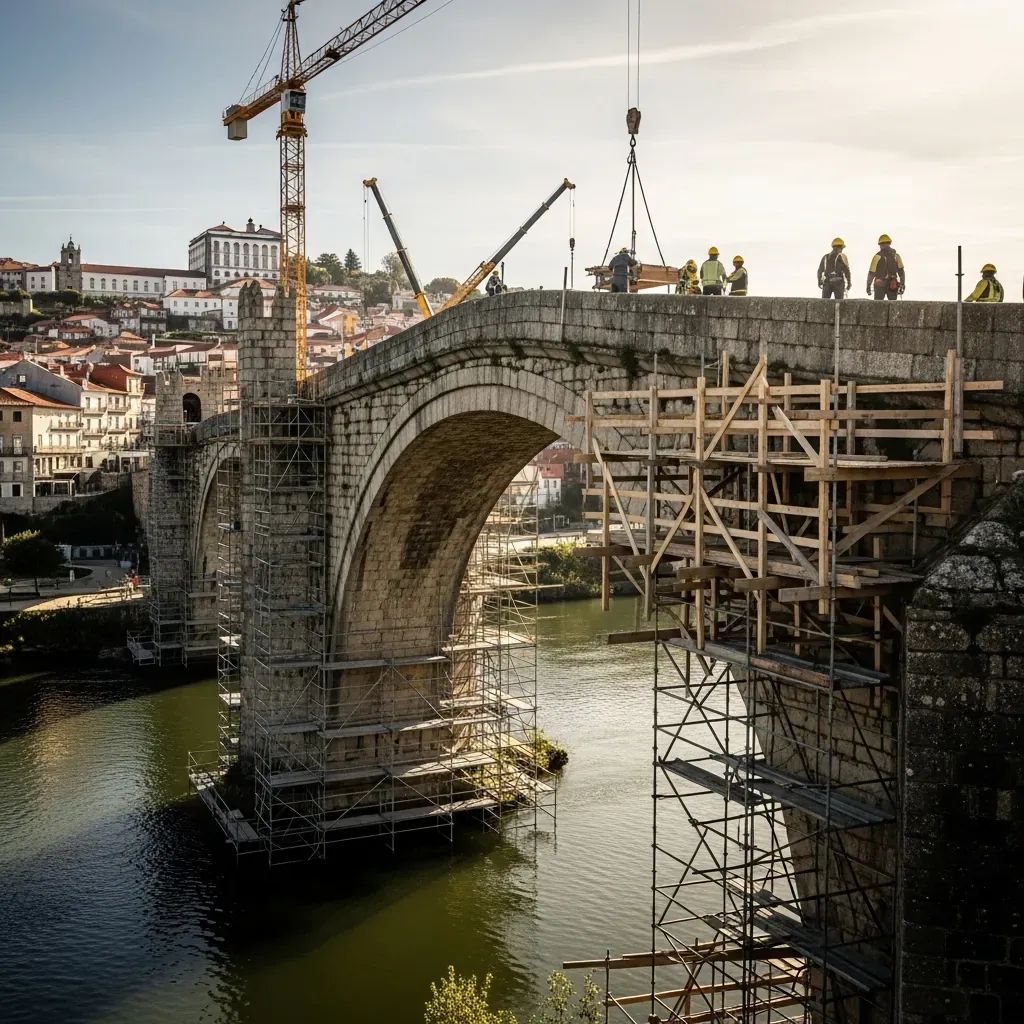
A quiet icon of the Algarve is finally moving from danger list to restoration site. Silves’s medieval stone bridge, closed to all traffic since mid-2024 after engineers flagged a "very high" risk of collapse, is now seeing cranes, masons and archaeologists working side by side. If all goes to plan, locals could once again stroll over the Arade on historic paving blocks in late summer 2026—the first time in a decade the crossing will be safe.
At a glance
• Entirely pedestrian future: no cars will ever return to the deck.
• €700 000 price tag, 60 % subsidised by EU funds under Algarve 2030.
• 300-day works schedule restarted in October 2025 after the first contractor walked off site.
• Stone from the original Silves sandstone quarry is being used for replacements.
• Final lighting design aims to create a nighttime landmark visible from the castle walls.
Why the centuries-old crossing matters today
The so-called Roman Bridge is, in truth, a late-medieval structure—built somewhere between the 1300s and the 1400s when Silves was still an inland trading hub tied to river traffic. For modern residents it is less about logistics and more about identity: the five-arch span is the postcard view that links the gothic cathedral, the moorish castle and riverside cafés into a single photograph. Losing the bridge would erase a visual anchor that defines the town’s skyline and, by extension, much of its tourist economy.
A repair saga: delays, resignations and fresh funding
The municipality’s first attempt to stabilise the bridge began in June 2024 but unravelled quickly. The appointed builder executed barely 30 % of the contract before abandoning the project, citing soaring material costs. A fresh tender would have prolonged the legal wrangle, so City Hall opted for direct award to a specialist conservation firm last October. That reset the 300-day clock, meaning completion is now pencilled in for late summer 2026—assuming no further surprises from the riverbed.
What exactly is being repaired?
Engineers from LNEC diagnosed a cocktail of problems: scour around the piers, cracked masonry, vegetation in joints and insufficient waterproofing on the deck. The current programme therefore mixes archaeology with heavy civil works:• Structural reinforcement: discreet stainless-steel ties inserted through the arches.• Masonry conservation: every Silves sandstone block is cleaned, catalogued and either reset or replaced by a new stone from the original quarry.• Deck repaving: an estereotomia pattern created with hand-cut modules aims to echo medieval craftsmanship while meeting modern slip-resistance rules.• Lighting and drainage upgrades designed to stop future moisture ingress.These steps follow international charters for monument preservation, yet planners stress that the bridge will look “exactly as old as it always has—just no longer at risk of tumbling into the Arade.”
Money trail: Who pays the €700 000 bill?
Silves council locked in €742 000 for the current phase—up from the initial €617 000 estimate because of inflation and stricter safety requirements. Brussels will shoulder roughly 60 % through Algarve 2030 funds; the remainder comes from the municipality’s 2025 budget, which rose to €80 M to accommodate several big heritage projects. Earlier pleas to Portugal’s cultural safeguard fund were declined, highlighting how competitive national money for small-town monuments has become.
From commuters to visitors: life without the bridge
While vehicles have been banned since 1963, pedestrians continued to use the span until August 2024, when fencing went up. Shop owners on Rua da Ponte Velha report a 15 % dip in footfall, attributing slower trade to tourists rerouting via the modern road bridge 250 m downstream. The council has offered no direct compensation, betting instead that a fully restored landmark will repay short-term pain with long-term visitor growth. A pop-up footpath along the riverbank and extra signage from the castle are the only interim measures in place.
What happens next?
Project managers plan to lower scaffolding by spring to allow archaeologists a final inspection of the foundations during the summer dry season. If no hidden voids are discovered, reopening is pencilled in for late summer 2026, just ahead of the Algarve’s peak holiday rush. Until then, residents will have to keep photographing their beloved bridge through a forest of protective metal—but at least they now know that those steel tubes are buying the monument several more centuries of life.


