
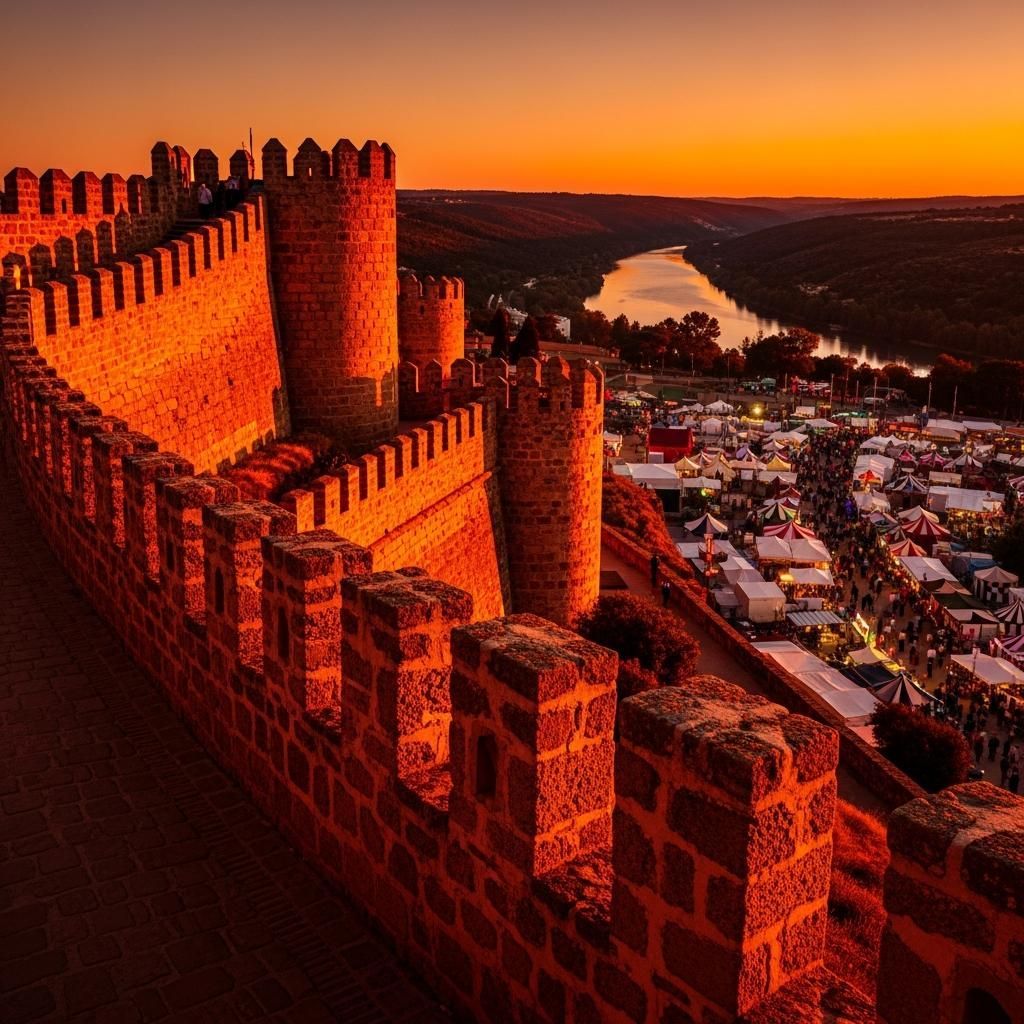
Silves has always traded on romance, yet in 2025 its allure is backed by pragmatic reinvention. The red-tinged skyline, the 20-year-old Medieval Fair, and a wine sector beating national trends share the stage with an orange industry reeling from drought. Walk its streets and the contrast is palpable: Islamic arches overlook construction cranes, and café chatter drifts across new exhibition halls rising inside a Victorian cork factory.
Why Silves commands attention in 2025
The inland Algarve city that once answered to the name Xelb has reclaimed headlines for more than nostalgia. A wave of cultural tourism surge, powered by the former Moorish capital narrative, now coincides with the 20th Medieval Fair, an ongoing cathedral restoration, embryonic Arade riverfront plans, a wine renaissance and a very real citrus emergency. Municipal officials estimate that visitor numbers have climbed in tandem with a 25 % jump in overnight stays recorded across rural accommodation since spring.
A citadel glowing crimson
Nothing prepares newcomers for the way the sandstone walls ignite under late sunlight. From the panoramic ramparts the entire Arade valley rolls out like a tapestry, while the fortress itself—Portugal’s best-preserved Islamic fortification—reveals archaeological layers that pre-date the Reconquista. Below, the Roman bridge mirroring in still water teams with SUP boards at weekends, and by dusk the battlements provide the region’s definitive twilight spectacle.
Streets where Moorish echoes meet Portuguese rhythms
Steep calçadas climb under cascades of bougainvillea, linking the iron-grilled balconies of artisans to tucked-away wine bars. At the Sé Cathedral, erected on a former mosque, scaffolding surrounds the nave as specialists replace cracked tiles in a €1.5 M project funded by the Recovery and Resilience Plan. Yet children play tag around the stone lions, and a vendor still presses juice from the season’s last sun-scarred oranges. The Municipal Archaeology Museum, carved out of an 18-metre Moorish cistern, sets flint arrowheads beside Islamic astrolabes, illustrating two millennia of layered occupation.
Festivals reinventing the past
Every August the town morphs into a stage where berber tents, falconry displays, and torch-lit processions collapse centuries into an evening stroll. For its twentieth edition, the Medieval Fair ups the ante with two daily armoured jousts, an immersive castle show titled “Xilb, Conquest Final”, and a midnight fusion of music, dance and fire that pools around the keep’s silhouette. July’s Silves Beer Festival then hands the microphone to craft brewers, pairing IPA flights with Xarém and fado in the Arab-inspired Praça Al-Mu’tamid.
An economy between drought and vineyards
The scent of orange blossom that once defined the city is fading. Growers in the Silves-Lagoa-Portimão irrigation block forecast a 90 % production collapse by year-end, translating into €8.6 M in lost revenue. At the same time, the Algarve wine harvest has notched a 20 % increase, bucking a nationwide decline triggered by mildew. Estates such as Quinta do Francês report that keen UK and Nordic buyers are pushing demand for single-varietal reds while restaurants from Lisbon to Porto fight for limited allocations of Monchique-cooled rosés. Local economists argue that wine could cushion—though not erase—the financial shock now rippling through 6,300 micro-enterprises tied to citrus.
Town hall’s blueprint for tomorrow
City hall is moving quickly. Under an €80 M municipal budget, sixty public-works contracts are either in tender or under way, from granite-paved alleys that deter flash floods to the conversion of the English Factory into a contemporary arts hub with black-box theatres and maker studios. Housing policy also leans on the First-Right programme to refurbish empty town-house shells, aiming to pull families back inside the medieval walls and temper the drift toward Airbnb-only neighbourhoods.
River Arade: lifeline in flux
Silves was once a maritime port; today the Arade estuary serves as a canoeist’s playground. While there are no immediate plans to dredge the entire upper river, the Port of Portimão will begin maintenance works in 2026 to handle larger cruise ships. Those engineering works have unlocked €3.4 M for Project MUSA, an underwater archaeology campaign expected to catalogue Phoenician anchors and Moorish amphorae lying between Portimão and Lagoa. Residents hope the findings will eventually travel upriver to a new interpretive centre beside the whitewashed riverfront warehouses.
Beyond the walls: rural serenity a short ride away
Five kilometres outside town, cork oaks patchwork rolling hills where lavender and wild thyme burst each spring. Cyclists favour the route toward São Bartolomeu de Messines, while hikers chase the scent of eucalyptus up the slopes of Serra de Monchique. When the Atlantic calls, the nearest beach at Armação de Pêra lies merely thirty minutes by car, yet crossing back into Silves after a swim feels like flipping the page of a different book.
Leaving Silves: what lingers
Night settles slowly here. Grilled sardines plot grey smoke across alleys, conversations tilt from football to water politics, and occasionally a melancholic fado slips through an open door. The fortress fades from crimson to umber, but its outline remains—a reminder that time may weather stone, yet it also furnishes the backdrop against which an inland Algarve city keeps writing the next act of its story.


