

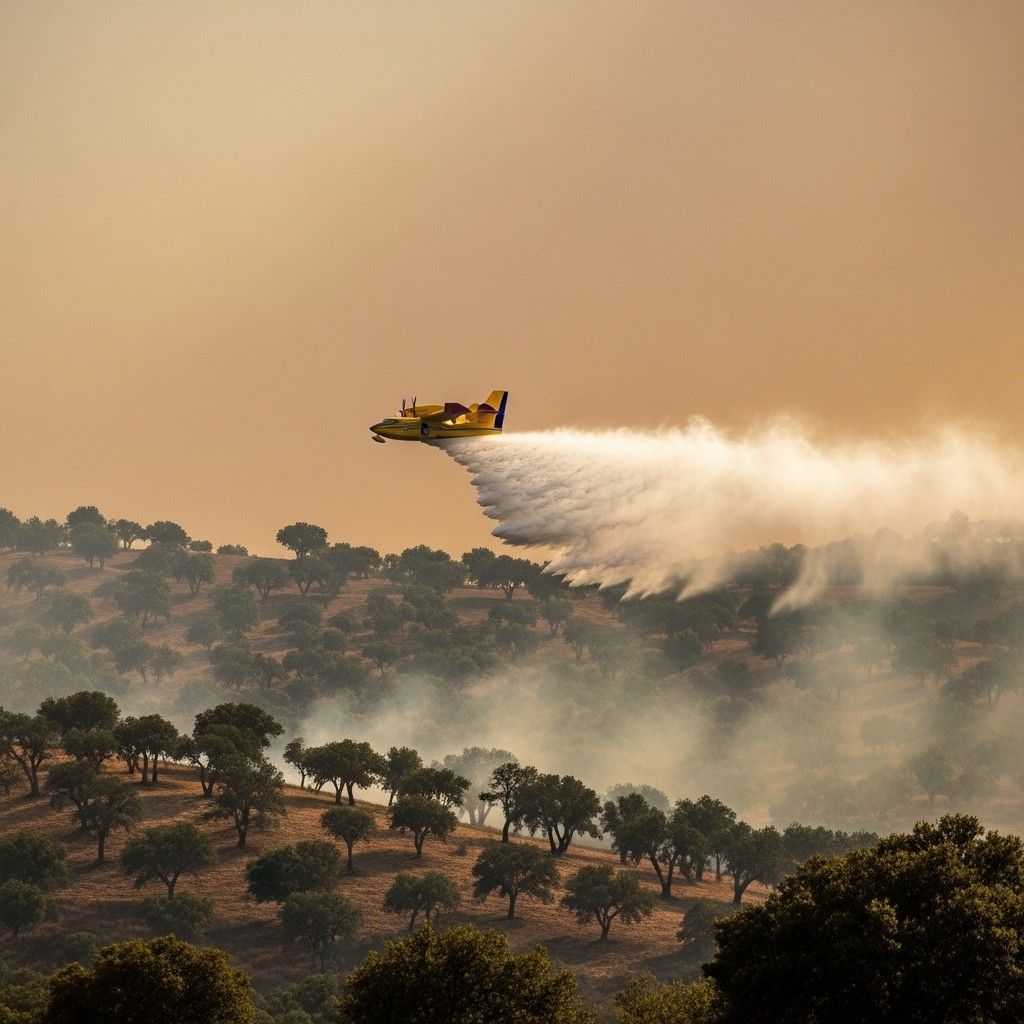
The Portugal National Republican Guard (GNR) command in Santarém has locked in its operational focus for the months ahead: curbing a sharp rise in road deaths and confronting the escalating threat of forest fires in a district where agricultural and woodland areas dominate the landscape. Both threats intensified significantly in 2025, with the first half of the year marking a dramatic 90% spike in road fatalities compared to the same period in 2024, while wildfire incidents surged by 23% across the full year.
Why This Matters:
• Road fatalities in the first half of 2025 jumped 90% compared to the same period in 2024, with 19 deaths recorded—a concerning trend even as full-year 2025 deaths reached 30, up from 28 in 2024.
• Forest fires climbed from 342 incidents in 2024 to 419 in 2025, with three arrests made for fire-related offenses.
• Residents in rural areas face heightened vulnerability to property crime and domestic violence, both priorities for intensified policing.
• Early 2026 data shows ongoing pressure: 16 people died on Santarém's roads between January 1 and April 6, including five fatalities in a single week in late March.
New Leadership, Familiar Terrain
Coronel João Paulo Santos, 50, has been at the helm of the GNR Santarém Territorial Command since February 20, marking two months in the top post as of today. A native of Alvega in Abrantes, Santos is not a newcomer to the district's policing challenges. He previously led detachments in Abrantes and Ponte de Sor, served as deputy commander since 2023, and held operational roles in the GNR Territorial Command of Leiria. His appointment follows the departure of Duarte da Graça.
Santos describes Santarém as a district of contrasts: urban hubs coexist with sprawling rural and forested zones, while high-traffic motorways cut through agricultural plains. This geographic and demographic complexity demands what he calls "flexible management" of personnel and resources, blending highway patrols, rural outreach, and environmental enforcement.
Road Safety Under the Microscope: Where Residents Face Greatest Risk
The district's road network is among the busiest in central Portugal, with the A1, A13, A15, and A23 motorways channeling commuter and commercial traffic daily. Looking at 2025 data, the statistics paint a grim picture. In the first six months of 2025 alone, 811 accidents involving injuries occurred in Santarém, a 1.6% increase over 2024. More alarming, the number of serious injuries rose 16.2% to 122 cases, placing Santarém as the second-highest district nationally for severe road trauma, trailing only Lisbon.
The most dangerous stretches for residents include the A1 corridor near Santarém city and Torres Novas, where overtaking maneuvers and high-speed collisions concentrate. The A13 between Ourém and Alcobaça, and the A15 near Tomar, also account for a disproportionate share of serious incidents. Municipal roads connecting isolated villages to urban centers have similarly high incident rates.
The death toll for the full year 2025 reached 30, with incidents concentrated on overtaking maneuvers, single-vehicle collisions, and high-speed crashes. Early data for 2026 show no respite: between January 1 and April 6, 16 people died on Santarém's roads. In one week alone in late March, five fatalities were recorded alongside 100 accidents—underscoring the urgency of the challenge.
Santos attributes much of the carnage to driver behavior: speeding, alcohol-impaired driving, unlicensed operation, and mobile phone use behind the wheel. During a single enforcement week in April 2026, the GNR detected 241 speeding violations in the district. "We have too many victims from rollovers and head-on collisions tied to reckless overtaking," Santos said. "This demands defensive driving and a strong Guard presence."
What Residents Should Know: Practice extra caution on the A1, A13, and A15 during peak traffic hours. Avoid overtaking in low-visibility conditions, reduce speed in heavy traffic, and remain alert to erratic driving behavior from commercial vehicles.
The command has responded with permanent patrols on major routes and targeted enforcement blitzes, but the human cost remains stubbornly high.
Forest Fire Threat Escalates
Santarém's extensive forestry and agricultural belts make it one of the most fire-prone districts in the country. Looking at 2025 data, the 419 wildfire incidents recorded represent a 23% jump from the previous year, underscoring the challenge facing firefighting and law enforcement agencies.
The GNR's role extends beyond emergency response: officers conduct surveillance patrols, enforce burning bans, and investigate suspected arson. In 2025, three individuals were arrested in connection with fires, and 22 suspects were identified—an uptick from 13 suspects and zero arrests in 2024. Five people were formally designated as defendants in fire-related cases.
The Service for the Protection of Nature and the Environment (SEPNA), embedded within the GNR command, acts as a frontline unit for environmental crimes, including illegal agricultural burns, unauthorized use of heavy machinery during high-risk periods, and violations of firebreak maintenance rules.
Authorities have intensified preventive measures ahead of the 2026 fire season. The "Floresta 2050, Futuro + Verde" national plan, approved in September 2025, prioritizes controlled burns, maintenance of primary fuel management strips, and invasive species control. Locally, Santarém's municipal fire prevention commission—active since 2005—has imposed strict regulations on agricultural burning and coordinates controlled burns with fire brigades.
A complicating factor emerged in February 2026, when Storm Kristin destroyed access roads and firebreaks across the district, prompting the Portuguese Firefighters League to call for an emergency contingency plan. The Santarém Municipal Aerodrome, requalified in July 2025 with a €300,000 investment, now serves as a strategic base for medium bombers and helicopter units, including the GNR Emergency Protection and Rescue Unit (UEPS).
What This Means for Residents
For those living in Santarém's interior villages and aging communities—particularly in Tomar, Ourém, Benavente, and rural municipalities—the dual threat of road danger and fire risk is compounded by isolation and limited services. Santos has pledged to prioritize proximity policing, particularly in rural zones where elderly residents face heightened vulnerability to property crime, domestic violence, and social exclusion.
The command runs targeted programs for isolated seniors, part of a broader institutional commitment Santos describes as "a responsibility assumed before society." Overall crime in the district rose from 9,471 incidents in 2024 to 9,860 in 2025, though violent and serious crime fell from 232 to 214 cases. Domestic violence reports dropped from 751 to 700, a modest decline authorities attribute to improved prevention and victim support.
Santos acknowledges the strain on resources. "We cannot leave an incident unanswered," he said. "The challenge is setting priorities and managing available means efficiently." Human resource constraints remain a persistent issue, particularly in a district where operational demands span highway enforcement, forest patrols, and community outreach.
Broader Context: Interior Vulnerabilities
Santarém shares many challenges with other interior districts: depopulation, aging demographics, and economic fragility. Yet it stands out for a troubling trend. Between 2023 and 2024, Santarém recorded the largest increase in violent crime nationwide, even as overall crime dipped. Nearly 20% of property and personal crimes in the district target elderly victims, placing Santarém in the top six nationally for crimes against seniors.
The district's crime hotspots—Santarém city, Ourém, Tomar, Torres Novas, and Benavente—accounted for nearly half of all criminal incidents. Drug trafficking remains a persistent problem, exemplified by the seizure of speedboats linked to narcotics operations in Benavente in 2025.
National strategies, including the Integrated Urban Security Strategy (EISU) and Local Security Contracts (CLS), aim to tailor policing to territorial specifics. The GNR's Special Proximity Policing Programs (PEPP)—such as "Safe Residence" and "Seniors in Safety"—are being rolled out across rural areas, though their impact in Santarém remains to be fully measured.
The Road Ahead
Santos is candid about the scale of the task. "Santarém is a district that is simultaneously urban and rural, with high mobility, territorial diversity, and very distinct realities," he said. "This requires action based on daily presence, predictability, and the trust of the population."
The coming months will test whether intensified enforcement, updated fire prevention infrastructure, and community policing can bend the curve on road deaths and fire risk. For now, the message from the GNR Santarém command is clear: the district's geographic complexity and demographic vulnerabilities demand a policing model that is both visible and adaptable, capable of responding to a motorway pileup one hour and a rural arson investigation the next.
Residents, particularly those in isolated hamlets and aging towns, are being urged to report suspicious activity, adhere to fire safety protocols, and practice defensive driving. As the 2026 fire season approaches and traffic volumes remain high, the stakes for public safety in Santarém have rarely been higher.


