
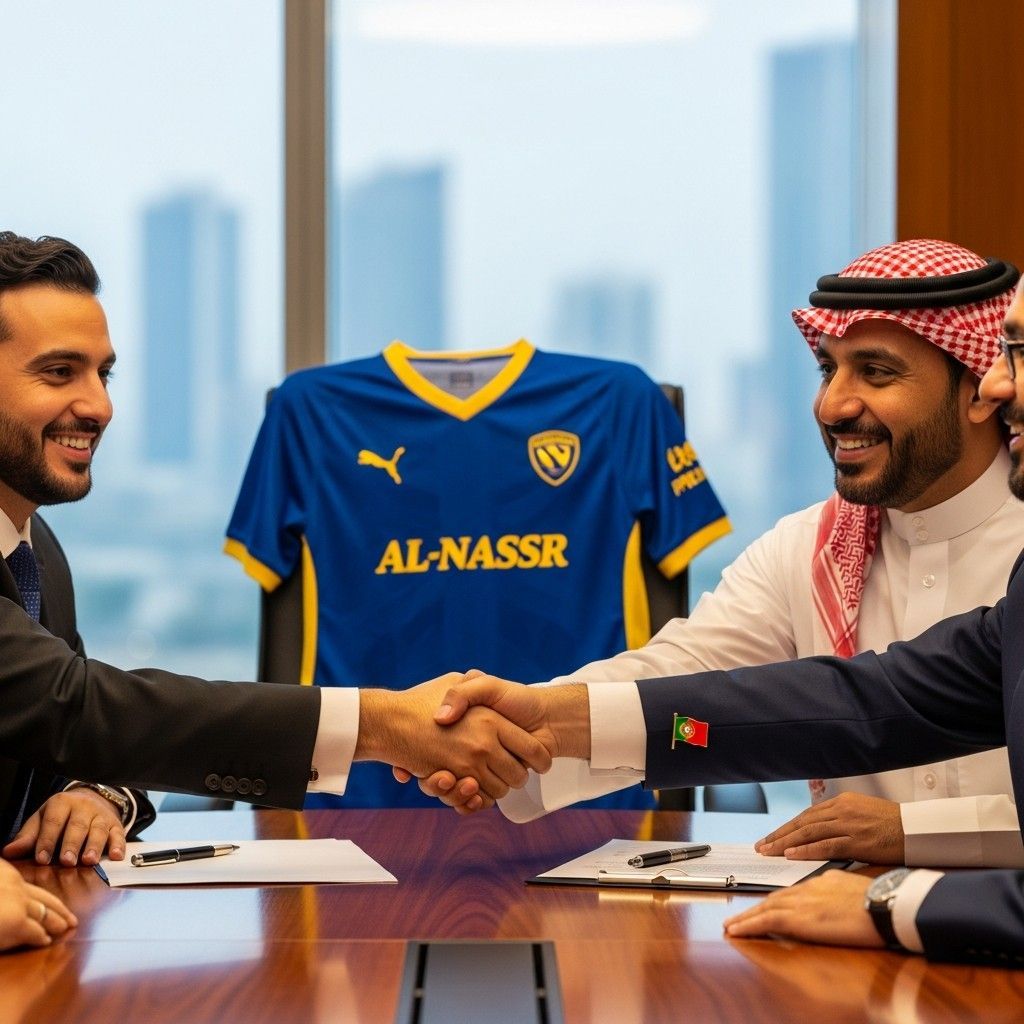
Portuguese officials believe they have found an unlikely shortcut into the Gulf’s vast reservoirs of capital and high-spending travellers: Cristiano Ronaldo’s celebrity aura. The striker’s presence at Al-Nassr in Riyadh, combined with his unrivalled following across the kingdom, is being treated in Lisbon as a once-in-a-generation lever to raise Portugal’s profile in a part of the world where the country was until recently little more than a footnote.
A government strategy built around a global idol
The Minister of Economy, Castro Almeida, wasted no time spelling out the plan during a November trade mission that included more than fifty Portuguese companies. In his words, Saudi fans ‘almost regard Ronaldo as one of their own’. For policymakers, that sentiment translates into a ready-made channel through which Portugal can advertise its political stability, its favourable tax regime and the quality-of-life narrative that has lured a growing roster of foreign investors over the past decade. Every business meeting in Riyadh, the minister noted, opened with a reference to the forward from Madeira, turning what might have been polite introductions into warmer, more personal conversations.
Boardrooms and balance sheets
Executives on the trip confirm that doors swing open faster when the conversation starts with football. A leading Porto-based tech firm secured a follow-up meeting with a Saudi sovereign wealth fund only minutes after presenting a slide that paired its artificial-intelligence platform with Ronaldo’s image as an informal ‘brand ambassador’ for Portugal. AICEP’s new outpost in the Saudi capital is banking on that same emotional connection to shepherd everything from renewable-energy joint ventures to boutique hotel projects in Lisbon’s historic centre. Concrete numbers are still thin: Riyadh and Lisbon have yet to release investment tallies for 2025. Yet bankers on both sides already talk of a pipeline that could reach ‘hundreds of millions of euros’ once due-diligence cycles run their course.
Chasing high-spending holidaymakers
Tourism officials are equally animated. Saudis rank among the world’s top per-capita travel spenders, shelling out more than $6,000 on average per international trip. With no direct flight to Lisbon, visitor totals remain modest, but TAP and Saudia confirm they are negotiating a Riyadh–Portugal route that could launch as early as next summer. The hope is that Ronaldo’s social-media reach—close to 630 million Instagram followers—will do heavy lifting that no billboard campaign could match. Hoteliers in the Algarve and Porto have already started training Arabic-speaking concierges and adjusting halal dining options, betting that the footballer’s posts will eventually translate into real arrivals.
Applause—and raised eyebrows
Not everyone is comfortable with the tactic. Human-rights groups argue that Riyadh’s courtship of Ronaldo forms part of a broader ‘sportswashing’ push designed to soften criticism of the kingdom’s domestic policies. Amnesty International’s Lisbon office laments that the forward has remained silent on those issues, calling it a missed opportunity to leverage his platform for good. Foreign-policy analysts counter that Portugal, a middle-sized economy keen to diversify away from European markets, can ill afford to ignore the soft-power currency Ronaldo provides. The debate captures a broader dilemma for smaller nations navigating an era in which celebrity endorsement increasingly blurs with statecraft.
Looking beyond 2025
Ronaldo’s contract extension with Al-Nassr until 2027 ensures that this unconventional diplomatic channel will remain open for at least two more seasons. At the same time, speculation lingers over whether he will back Saudi Arabia’s prospective 2030 World Cup bid—a campaign that would put him in the awkward position of promoting a rival to Portugal’s own joint candidacy. Lisbon’s cabinet brushes off the potential clash, insisting that the footballer’s top priority is still ‘the national interest’. Whatever happens, one fact is clear: for the Portuguese government, the world’s most recognisable No 7 has become far more than a prolific goal-scorer; he is now a central actor in the country’s push to court Gulf wealth and diversify its tourism base.
The coming year will show whether that gamble pays off in hard statistics—investment announcements, hotel occupancy spikes, and perhaps that long-awaited direct flight. Until then, every time Ronaldo finds the net in Riyadh, Portuguese officials will be hoping that a few more Saudi riyals inch closer to Lisbon.


