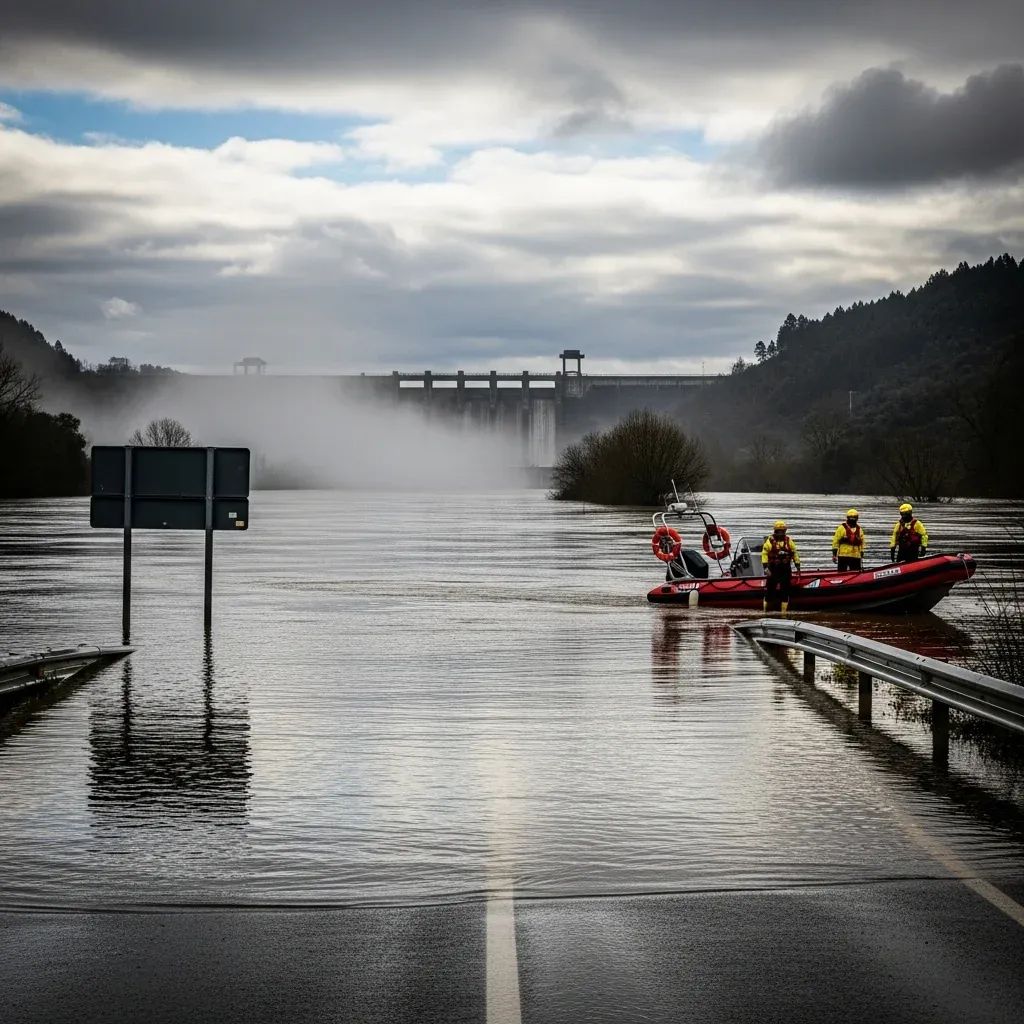
Relentless winter fronts are marching across Portugal and its islands, keeping almost the entire territory under successive yellow weather warnings for rain, wind and rough seas. After triggering floods in the north earlier this week, the unstable atmosphere is now pushing rain bands toward the south while coastal areas brace for waves topping 5 m.
At a glance – what matters right now
• 16 mainland districts face rain or wind alerts at different times through Saturday.
• North-west waves of 4–5 m are forecast for most of the Atlantic coast, with a short upgrade to orange Friday night when crests could reach 5.5 m.
• Mountain gusts may peak near 90 km/h, and 75 km/h is possible along exposed shorelines.
• Madeira and Porto Santo remain on watch for rough seas and downpours; the Azores deal with a similar mix of hazards.
• Flood-prone spots in Viana do Castelo, Braga and low-lying Lisbon should expect renewed ponding during the heaviest spells.
Rain belts shuffle south
The current system – the third to sweep across Iberia in a week – shifted its core rainfall from Minho to the Tejo and Sado basins overnight. IPMA predicts persistent, occasionally torrential showers in the Lisbon metropolitan area until late afternoon, a set-up that often swamps under-dimensioned drainage grids near Alcântara and Chelas. By evening the focus is forecast to slide toward the Algarve, where saturated soils around Silves and Tavira increase run-off risks.
Residents in Viana do Castelo and Braga experienced a preview when under-bridge stretches such as Rua de Limia went under water on Tuesday. Civil Protection logged dozens of interventions, mostly vehicle rescues and basement pumping. Although the Minho sky has cleared for now, forecasters warn another pulse could arrive Friday night.
Coastlines under pressure
The combination of a deep Atlantic low and strong north-westerly fetch promises powerful surf along the exposed western seaboard. From Caminha to Cabo Espichel, breakers are expected to hold near 4 m through Friday afternoon before a brief overnight surge. Authorities have pre-emptively closed several seaside promenades in Figueira da Foz and Matosinhos and recommended that small-boat operators remain in port.
Farther south, the south coast of Madeira and Porto Santo keep a yellow flag up for similar seas – a reminder for winter hikers on the island’s coastal trails that spray can reach far inland around Ponta de São Lourenço.
Gusts raking the high ground
While the main headlines revolve around rain and waves, strong winds pose their own danger in the mountains. Serra do Gerês and the ridges around Lousã may record gusts near 90 km/h, enough to dislodge branches and turn unsecured objects into projectiles. ANEPC advises hikers to postpone outings above the tree line and warns drivers on the A24 and A25 to account for cross-winds when overtaking heavy goods vehicles.
How officials are preparing
Local councils in Porto, Setúbal and Faro activated contingency teams overnight, clearing drainage grids and positioning pumps near habitual flood-spots. Lisboa’s fire brigade kept additional crews on standby in Ajuda and Beato after traffic snarls in previous storms. Maritime Police have extended bar closures at Leixões, Aveiro and Sesimbra.
Proteção Civil repeats the usual checklist: keep gutters free, avoid underground car parks during cloudbursts, stay away from cliff edges in rough surf and respect temporary roadblocks even if water appears shallow.
Climate trend – storms no longer the exception
Climatologists such as Filipe Duarte Santos emphasise that the parade of January warnings is not a statistical fluke. A warming Atlantic increases the moisture available to mid-latitude lows, translating into more extreme rain events, while rising sea levels amplify coastal erosion during storm swell. IPMA data show that although total precipitation may decline over the decades, the share falling in intense bursts has been rising – a pattern scientists label “extremos compostos.”
Quick safety checklist before the next front
Review evacuation routes if you live near streams or coastal cliffs.
Store garden furniture; trim any loose tree limbs.
Keep a torch and power bank charged; outages remain possible when lines are hit by branches.
For commuters, allow extra time and favour main roads, which are cleared first.
Fishermen and surfers: track IPMA updates and respect bar closures – fines apply.
Portugal’s winter weather has always demanded respect, but the current stretch underscores how rapidly conditions can flip from calm to hazardous. Staying updated and adopting simple precautions will remain the best defence as the Atlantic sends its next test toward the coast.