
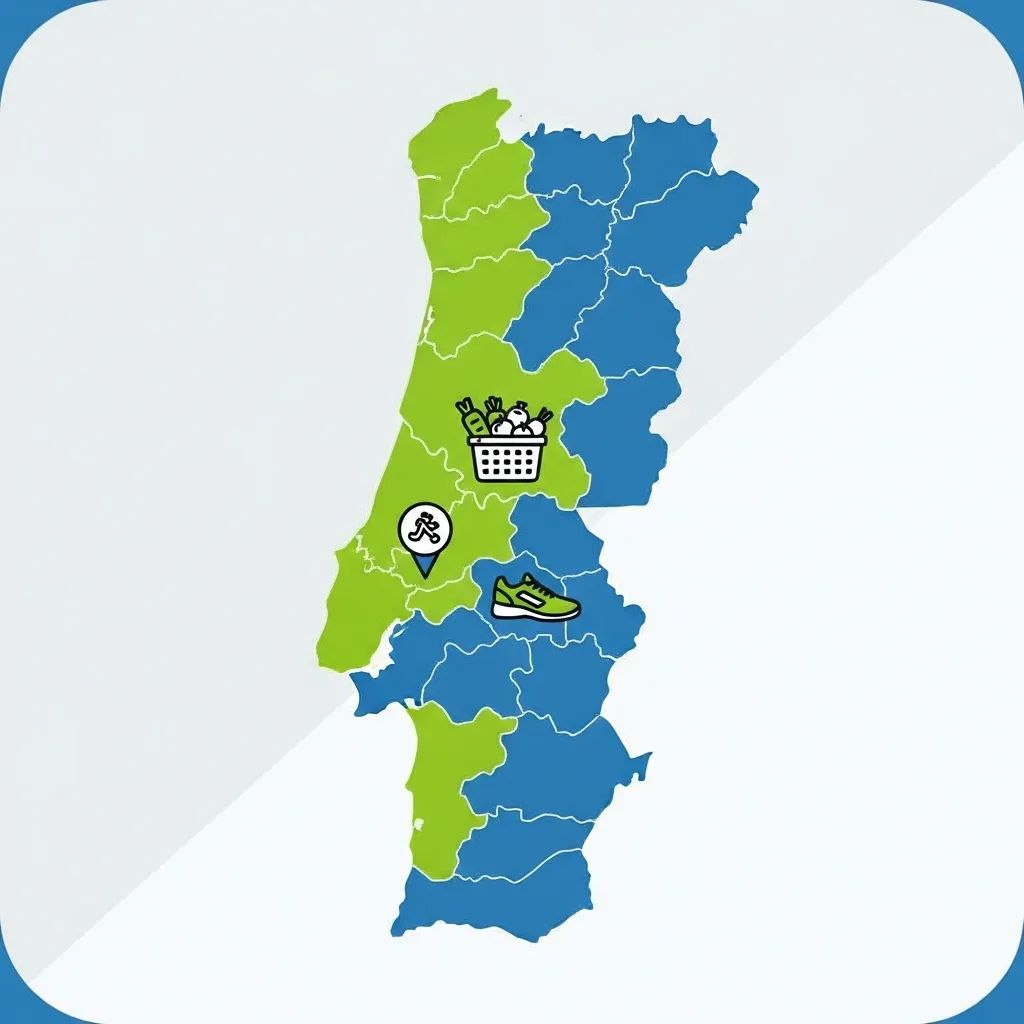
The European research programme that might quietly transform everyday life in Portugal’s rural south has now entered its decisive design phase. From the dry plains of Alentejo to the highlands of Aragon and the Anatolian steppe, scientists are mapping exactly where and why residents struggle to find affordable fresh food or safe places to be physically active. The outcome could determine which villages receive new cycle lanes, mobile markets, or subsidies for local produce over the next decade.
Quick Glance: What Portuguese readers should know
• Alentejo is the sole Portuguese region in the international study, funded by a €1 M ERA4Health grant.
• Researchers are measuring “food deserts” and “exercise deserts”—areas short on fresh groceries or public sports facilities.
• Early fieldwork suggests a link between population ageing, poor transport links and limited dietary choice.
• Findings will feed into EU‐level health policy discussions in 2026 and Portugal’s own Plano Nacional de Saúde review.
• Completion is due in 2027, but municipalities may start applying for infrastructure funds as soon as 2026.
Why Alentejo, and why now?
Alentejo’s landscape is beautiful yet unforgiving. Vast distances, a density below 30 inhabitants/km² and an ageing index near 200 % make daily errands a logistical puzzle. Elderly residents in Grândola, Odemira or Serpa often rely on weekly vans to buy fresh vegetables. When transport falters, the diet tilts toward processed, long‐life products. Simultaneously, many villages lack safe pavements, let alone a gym or indoor pool.
Those factors place Alentejo on the frontline of Europe’s debates about regional equity. While cities such as Lisbon benefit from e-grocery apps and urban cycling lanes, Portugal’s interior risks falling behind on the EU Farm‐to‐Fork and Beating Cancer plans, both of which assume citizens can access healthy choices.
Inside the DESERT project
The study—formally titled DESERT (Diet and Exercise Strategies for Equity in Rural Territories)—is coordinated by the University of Zaragoza and involves institutions in Spain, Turkey and Portugal. In Portugal, the University of Évora’s Department of Sport and Health leads field operations, supported by the Comprehensive Health Research Centre (CHRC).
Researchers combine satellite imagery, municipal land-use data and on-site questionnaires to draft what they call a "granular health profile" of each parish. By overlaying the availability of fresh produce outlets, public transport frequency, income data and existing sport infrastructures, the team will assign a vulnerability score. That score is expected to guide ERDF and national budget allocations after 2026.
Portuguese voices on preliminary findings
Jorge Bravo, principal investigator in Évora, told reporters that "distance to the nearest supermarket can exceed 40 km" in some parishes. The result, he argues, is a dietary pattern heavy on cured meats, canned fish and white bread—foods that keep well but push cardiovascular risk upward.
Early surveys of nearly 1 500 households also reveal that more than 60 % of respondents aged over 65 find local roads unsafe for walking or cycling. Surprisingly, younger adults cite "lack of time and cultural habits" more than facility shortages.
Bravo stresses that the project is not about blaming residents but about designing context-sensitive incentives. Examples under discussion include:– rotating mobile farmers’ markets aligned with pension pay-out days;– converting disused schoolyards into outdoor fitness circuits;– subsidised mini-bus routes timed for grocery shopping and medical appointments.
Funding pipeline and political traction
DESERT is one of the flagship actions under ERA4Health, the European Partnership that pools 27 national research agencies, including Portugal’s FCT and AICIB. Because Brussels wants demonstrable impact, local councils that align their investment plans with DESERT’s evidence base could gain priority access to Cohesion Fund envelopes and the forthcoming "Healthy Regions" strand of the EU budget.
Lisbon’s Ministry of Health confirms it will integrate DESERT data into the next National Health Plan 2030 draft. Meanwhile, the Ministry of Infrastructure is exploring a co-financing mechanism with inter-municipal communities to fast-track small-scale transport upgrades—cycling lanes, shaded walking paths, even refrigerated lockers for online grocery deliveries.
What happens between now and 2027?
The project timeline foresees three major milestones:
Mid-2026: publication of the first continental map of exercise deserts.
Early-2027: release of policy toolkits with cost–benefit calculators for mayors.
May 2027: final recommendations submitted to the European Commission and national governments.
For Portuguese stakeholders, the crucial window opens in autumn 2026, when Brussels finalises the post-2027 regional funds architecture. Municipalities that already possess data-driven action plans stand a better chance of securing money.
How can local actors engage today?
– Municipal planners should start aggregating land registry and health data to match DESERT’s methodology.– Civil-society groups can pilot pop-up produce stalls or walking clubs and feed results into the research team.– Businesses—especially agri-food and logistics firms—may find incentives for last-mile solutions in low-density areas.
Bottom line for Portugal
If the consortium delivers on its promise, the cartography of inequality drawn over Alentejo will become a blueprint for tackling rural health gaps across Europe. For once, Portuguese towns might influence continental policy instead of merely adjusting to it. The next 18 months will reveal whether local authorities seize that opportunity—or watch it pass by, kilometre after kilometre of open road.


