
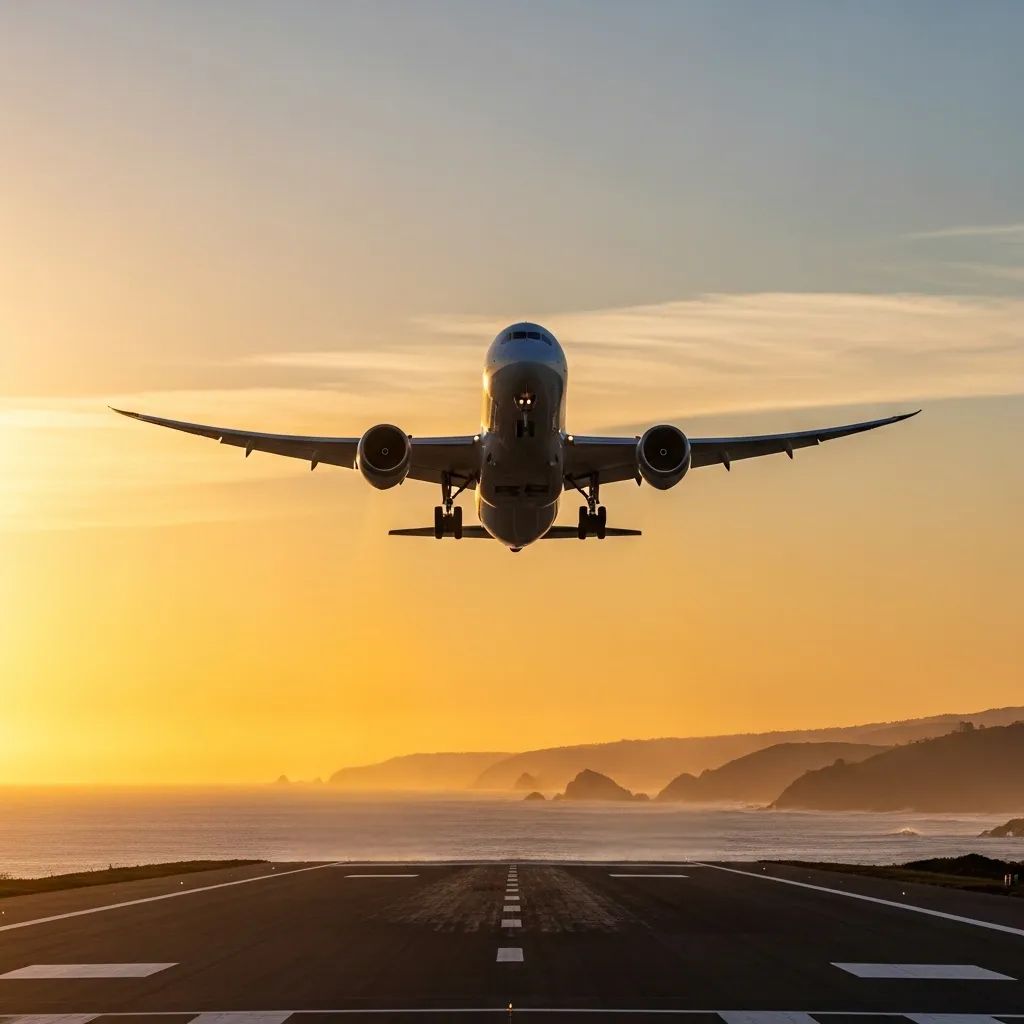
Lisbon’s departure boards have rarely looked so Brazilian. Travel agents report full flights, airlines are adding frequencies and Portuguese Instagram feeds are filling up with Copacabana sunsets. 2025 closed with a level of Portugal–Brazil traffic unseen since the pre-smartphone era, turning the South-Atlantic corridor into one of Europe’s busiest long-haul leisure routes.
At a glance
• 273,483 Portuguese visitors crossed the Atlantic in 2025
• Growth of 25 % compared with 2024
• Portugal is now Europe’s Nº 2 source market after France
• Average stay: 18 nights, longest among major markets
• Daily spend hovers around US$ 165
• 9.3 M international tourists chose Brazil overall – an all-time record
• Direct flights to 14 Brazilian cities from Lisbon and Porto
• Embratur reopened a “Visit Brasil” office in Lisbon to keep momentum
Why Brazil has reclaimed Portuguese hearts
Until recently, Cancún, Cape Verde and even Thailand were stealing the limelight from Brazil. A mix of stronger real-estate ties with the Northeast, competitive airfares and Brazil’s newly rebranded image has reversed that trend. Embratur’s Lisbon headquarters, relaunched last March, saturates Portuguese social media with snippets of Bahian acarajé, Amazon river cruises and forró dance nights. Airline executives credit the buzz to "a sense of cultural kinship plus the promise of winter-proof beaches"—a combination neither the Caribbean nor the Mediterranean can rival for Portuguese holidaymakers.
Record arrivals: the cold, hard numbers
Embratur’s end-of-year audit shows 273,483 Portuguese passports were stamped at Brazilian immigration counters in 2025. That is 54,000 more than the year before and the highest figure since 2007. On the broader canvas, Brazil welcomed 9.3 M foreign tourists, smashing its previous record by 37.1 %. December alone delivered 896,488 visitors, signalling that the growth curve is still climbing rather than plateauing. In European terms, only the French market (293,000) tops Portugal, leaving traditional heavyweights such as Germany, Spain and the UK trailing.
Sun, samba and something extra: what drives Portuguese travellers
Surveys conducted at Galeão and Guarulhos airports paint a clear picture:
Beach culture remains the prime magnet – from Ipanema to Porto de Galinhas.
A thirst for authentic cultural immersion: caipirinha masterclasses, samba school rehearsals and street-food tours.
Growing demand for nature-based escapes such as Pantanal safaris and Amazon lodge stays.
A smaller yet rising segment seeks heritage routes, linking colonial towns like Ouro Preto to Portugal’s own architectural lineage.
Football is never far away; tickets for Flamengo or Palmeiras matches frequently feature in package deals.Portuguese visitors typically travel in pairs or small family groups, skew towards the 30-55 age bracket, and prefer boutique hotels or well-reviewed Airbnb apartments over large resorts.
Where they actually land
Despite Brazil’s continental scale, Portuguese arrivals concentrate in a few gateways:
• São Paulo – the chief entry point, praised for its gastronomy boom and business add-ons.
• Rio de Janeiro – still the iconic postcard, especially around Carnaval and Réveillon.
• Bahia’s Salvador – favoured for its Afro-Brazilian heritage and music scene.
• Rio Grande do Sul – wine routes in Bento Gonçalves and the alpine charm of Gramado lure winter travellers.
• João Pessoa & Natal – rising stars among those chasing warmer Atlantic waters without crowds.The popularity map lines up neatly with TAP Air Portugal’s network, which now touches 14 Brazilian airports, plus Azul’s new Porto–Recife seasonal link.
Spending patterns and economic ripple
With an average daily outlay of US$ 165 and stays close to 18 nights, Portuguese tourists pump an estimated US$ 810 M into Brazil’s economy annually. Accommodation claims 21 % of that wallet, followed by food (17 %), domestic flights (16 %) and tours. The lengthy itineraries mean money spreads beyond big cities into interior towns that seldom see European currency, a fact regional governors are quick to note when lobbying for more flights.
Inside Embratur’s Portuguese playbook
Brazil’s tourism agency adopted a two-pronged strategy: relentless digital storytelling and on-the-ground trade courting. The flagship campaign “Não há lugar como o Brasil” pushes 90-second mood films on Instagram and TikTok tailored for Portuguese audiences. Offline, Embratur sponsors Portugal Fest in São Roque and keeps Brazil’s stand at the Lisbon Travel Market (BTL) among the fair’s busiest. A bilateral cooperation pact with Turismo de Portugal facilitates data sharing, joint roadshows and, crucially, a push for sustainable tourism practices that resonate on both sides of the Atlantic.
What it means for Portuguese airlines and agencies
TAP, already deriving 17 % of its long-haul revenue from Brazil, has announced extra frequencies to Recife and Belém for 2026. Azores Airlines is eyeing a Ponta Delgada–Fortaleza seasonal route. Meanwhile, chain hotels in Lisbon note a spike in Brazilian inbound traffic, hinting at a symbiotic flow fuelled by mileage programmes and code-shares. Boutique tour operators are designing “roots itineraries” for Luso-Brazilian families interested in genealogy—a lucrative niche with high-end price tags.
Quick guide for would-be travellers
Before packing that bottle of Madeira wine as a gift, potential visitors should keep in mind:
• Citizens can enter Brazil visa-free for up to 90 days but need a passport valid for the entire stay.
• December–March is peak season; prices fall by as much as 40 % between April and June.
• Domestic e-SIMs are cheap and essential for cashless payments.
• Carry proof of yellow-fever vaccination if heading to Amazonian states.
• Book internal flights early; Brazil’s geography makes overland travel time-consuming.
The bottom line
An alignment of strong airline capacity, savvy marketing and the timeless allure of shared language has restored Brazil to the top tier of Portuguese holiday wish-lists. With both governments pledging deeper tourism cooperation, 2026 could see the Atlantic bridge grow even busier—and, for Portuguese sun-seekers, that long-haul bet now feels as routine as a weekend in the Algarve, only with a different accent and an extra squeeze of lime in the caipirinha.


