

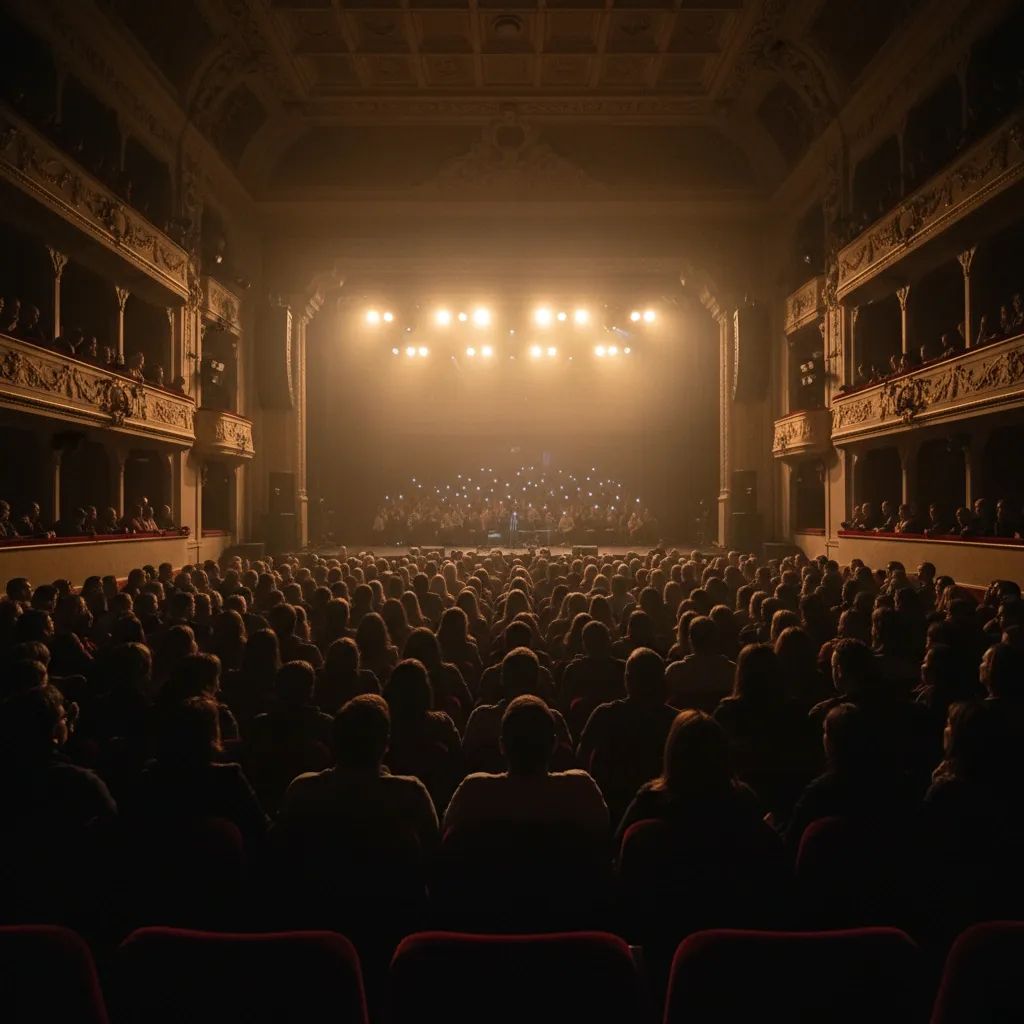
When one of Portugal's most consequential alternative rock acts returns to a stage after real time has passed—not for a quick nostalgia contract but with their actual creative lineup intact—it matters. Rádio Macau has scheduled two performances this October at the Coliseu dos Recreios in Lisbon (October 2) and the Coliseu do Porto Ageas (October 15), marking a genuine reconnection with an audience that either grew up alongside them or is discovering them fresh through streaming platforms. These are significant moments for Portuguese rock culture.
Why This Matters
• Fixed October dates in Portugal's two largest urban centers — limited geographic reach suggests these will be farewell appearances rather than the beginning of an extended run, making early attention strategically wise.
• Ticket access begins March 4 via presale registration (www.radiomacau.pt), with general availability from March 6 at 09:00; pricing runs €18–€45 in Lisbon, €18–€37 in Porto, placing these concerts in the accessible tier compared to festival equivalents.
• Listener behavior from comparable reunions shows strong ticket demand — when Trovante performed their reunion tour in March 2026, ticket demand was exceptionally high, leading to additional dates being announced immediately.
The Band's Architectural Moment in Portuguese Music
Rádio Macau did not emerge by accident. In 1980, three musicians from the Algueirão district began crafting something that would not quite fit the established templates of Portuguese rock. The country was still processing the cultural consequences of its recent democratic transition; institutional rock bands existed, but there was hunger for something texturally different, something that fused the urgency of post-punk with Portuguese-language lyricism and melodic sophistication that refused to sound foreign.
By 1983, they had settled on the name Rádio Macau and completed their core membership with the essential lineup. A demo recording found airplay on influential Portuguese broadcasters. Rather than door-knocking multiple labels, they approached a major label—and the relationship took. Their first album in 1984 opened with a signature track that music writers would later cite as emblematic of Portuguese rock's generational shift: the capital waking, society finding new vocabulary, artists no longer requiring anglophone reference points to achieve authenticity.
Building a Discography That Refused Simplification
The band's five-album run through the 1980s and early 1990s demonstrated something rarer than technical consistency: willingness to evolve without abandoning their core sensibility. Albums from this period became their strongest-selling works; tracks achieved genuine radio presence while preserving artistic credibility—a feat that most bands fail to accomplish when commercial and critical value collide.
The late 1980s and early 1990s saw the band experimenting with novel production strategies and textural layering. By the early 1990s, the members needed space. The band reunited in 1999, recording in 2000 and continuing through subsequent releases. They remained active through later decades, with periodic recordings and retrospective compilations signaling their awareness of their place in Portuguese rock history.
What Lisbon and Porto Audiences Should Anticipate
These are not ceremonial revival shows. The promoter's commitment to "a setlist traversing multiple phases of their journey" signals intention: audiences will navigate material from four decades, spanning the rawer post-punk voltage of their debut, the refined architecture of their mid-period work, the expansive experimentation of the early 1990s, and selections from their later catalog. The exact lineup represents the configuration that consolidated their canonical work.
Venue selection amplifies this precision. The Coliseus are not arena sprawls or festival grounds; they are theaters with defined acoustics and sightlines that function almost as concert halls despite their size. For a band built on distinctive vocal delivery and lyrical intelligibility, these spaces favor intensity over spectacle. Songs rely on textural clarity; the Coliseus provide it.
Portugal's Reunion Climate and Strategic Timing
Rádio Macau arrives in a cultural moment already primed for legacy acts. The phenomenon reflects multiple currents: aging audiences reconnecting with formative soundtrack material, younger listeners discovering canonical work through algorithmic recommendation, and promotional infrastructure recognizing that "the band that defined an era returns" functions as reliable cultural narrative.
Rádio Macau's October positioning is strategically intelligent: it arrives after peak summer festival activity, in a seasonal window when audiences migrate toward indoor venues and intimate consumption, but well before holiday-season programming crowds out cultural space.
The Logistical Reality of Access
Pre-sale registration opens March 4, 2026 at 09:00 on www.radiomacau.pt; individuals registering gain access to early inventory. General sale commences March 6 at 09:00. Early registration is advisable for anyone seeking reliable ticket access.
Pricing is notably accessible relative to comparable reunion tours. Lisbon tickets span €18–€45; Porto tickets €18–€37. These represent the practical reality of mid-sized venue constraints, but they position Rádio Macau as consumer-friendly. For a band staging what may constitute their final public engagement, the pricing reflects acknowledgment of their aging core audience and the need to make attendance feasible for people managing family budgets and professional obligations.
Geographic Significance and the Cities Themselves
The selection of Lisbon and Porto carries specific meaning. The band's signature songs are deeply connected to Lisbon's urban geography and cultural identity. Porto represents a necessary counterpoint—historically, the city receives fewer touring dates than its cultural weight and population warrant, often subordinated in promotional hierarchy to the capital. Rádio Macau's decision to include Porto signals that this is not a capital-centric nostalgia project but a statement about the band's reach across the country's major musical centers.
Practical Entry Points for New and Returning Listeners
If you have not encountered Rádio Macau's work, their most commercially successful album from the mid-1980s captures the band's melodic architecture, distinctive vocal presence, and the moment when Portuguese alternative rock felt genuinely alternative rather than derivative.
If you grew up during the 1980s or 1990s in urban Portugal, these songs likely function as temporal markers, anchoring specific emotional and cultural moments that few recordings can reconstruct with equivalent precision.
If your interest lies in Portuguese music history and the structural scaffolding of rock culture in the country, these shows offer direct exposure to a band whose influence persists throughout contemporary indie and alternative work, often without explicit acknowledgment.
Practical Details at a Glance
Pre-sale registration: www.radiomacau.pt (March 4, 2026 at 09:00)General ticket sales: March 6, 2026 at 09:00
Lisbon: Coliseu dos Recreios | October 2, 2026 | €18–€45Porto: Coliseu do Porto Ageas | October 15, 2026 | €18–€37
The band has provided no indication of future activity beyond these two performances. For a group at this stage of their career, with this interval since their last major activity, reunion engagements are finite events. October in Portugal just became consequential for anyone with serious investment in the country's rock infrastructure or personal history anchored to these songs.


