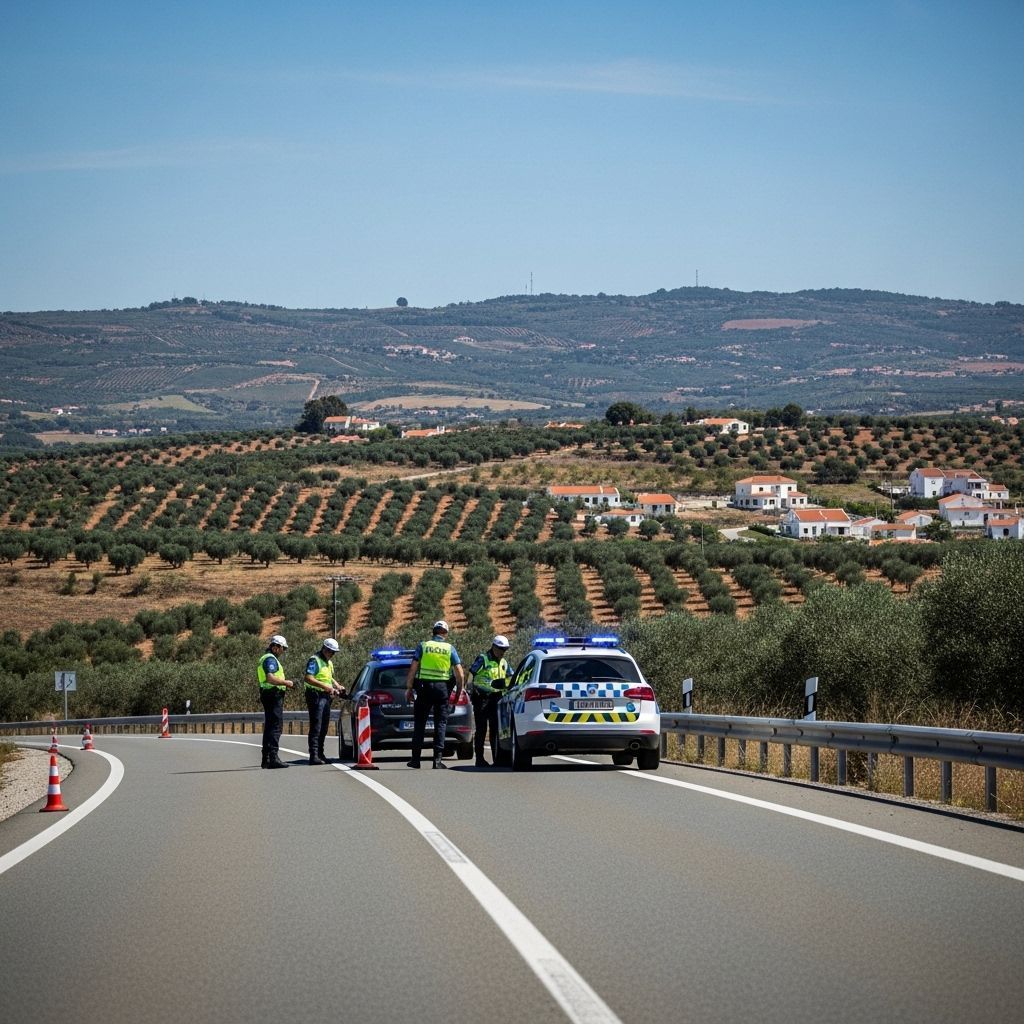
The Portugal Directorate-General for Prison and Reintegration Services (DGRSP) faces a potential month-long strike by its elite prisoner transport unit, escalating a dispute over unpaid overtime regulations that has lingered since 2018. The National Union of the Prison Guard Corps (SNCGP) has filed a strike notice covering 3 to 31 March 2026, targeting operations of the Special Intervention and Security Group (GISP), the specialized unit responsible for high-risk prisoner transfers, extraditions, and court escorts nationwide.
Why This Matters
• Nationwide disruption: GISP handles all extraditions and high-security prisoner movements across Portugal, despite operating from only Lisbon and Porto hubs.
• Pay dispute unresolved since 2018: Guards say a promised overtime payment regulation has been delayed for eight years, preventing lawful compensation.
• Government deadline missed: After a 14 December meeting, DGRSP pledged a two-month resolution timeline—now expired with no proposal delivered.
Eight-Year Regulatory Stalemate
Frederico Morais, president of SNCGP, told Lusa news agency that without formal regulations, the new supplementary work payment regime cannot be implemented in full. The union escalated its demands in a 14 December meeting with DGRSP leadership, which committed to finalizing the matter within 60 days. That deadline has passed with no action.
"The work schedule regulation has been awaiting approval since 2018," Morais stated, underscoring the prolonged institutional inertia. He confirmed the strike notice specifically targets GISP operations, which despite its limited geographic footprint executes critical national and international prisoner transport missions, including cross-border extraditions under EU cooperation agreements.
An official DGRSP spokesperson responded late in the week, stating that "on Friday, the document regarding GISP work schedule regulation will be sent to the unions and the ministry." Whether this last-minute submission will satisfy union demands or prevent the strike remains unclear.
Impact on Portugal's Justice System
The threatened action would paralyze a linchpin of Portugal's criminal justice logistics. GISP guards are responsible for moving detainees between facilities, escorting prisoners to court hearings, and executing international extradition orders—a function critical to Portugal's obligations under European Arrest Warrants and bilateral treaties.
A month-long strike would force courts to delay hearings, strain alternative security arrangements, and potentially breach international legal timelines for extraditions. Legal observers note that prolonged disruptions could trigger complaints from foreign jurisdictions and expose Portugal to reputational damage within EU judicial cooperation frameworks.
Parallel Labor Turmoil: Teachers and Labor Law
The prison guards' dispute unfolds against a backdrop of broader labor unrest across Portugal's public sector.
Teachers Launch National Caravan Campaign
Educators affiliated with the National Federation of Teachers (Fenprof) launched a nationwide caravan tour, accusing the Portugal Ministry of Education of "pushing problems down the road" and violating EU labor directives through chronic temporary contracts. The campaign began in Porto and will visit schools including the Soares dos Reis Artistic School, where some teachers have been hired on 15-year rolling temporary contracts—a practice Fenprof secretary-general Francisco Gonçalves describes as "clear abuse of fixed-term hiring."
"There is a Community directive that prohibits abuse of fixed-term contracts. But this happens in almost all secondary schools across the country in vocational and artistic education," Gonçalves told Lusa. He cited cases at Soares dos Reis and Lisbon's António Arroio School, where teachers hired as "specialized technicians" receive static salaries with no career progression, violating both EU law and basic labor standards.
Education Minister Fernando Alexandre defended a proposed Teacher Career Statute revision, rejecting accusations of facilitating unqualified hires. Speaking in Braga at the University of Minho's 52nd anniversary, he emphasized that the new statute retains a one-year experimental period (formerly called probationary) after candidates complete Portugal's "longest pedagogical training in Europe." He signaled openness to union feedback but insisted the proposal balances rigor with workforce needs.
Alexandre also confirmed the government is studying whether to extend the mobile phone ban in schools to 9th grade, currently prohibited only through 6th grade. "If the benefits are evident, the Government will have no problem" expanding the measure, he said.
Labor Law Talks Collapse Amid Procedural Chaos
Negotiations over the contentious "Work XXI" labor law reform descended into procedural chaos this week when a scheduled ministerial meeting collapsed before it began. Labor Minister Maria do Rosário Palma Ramalho convened employer confederations on 18 February to discuss amendments, but the session proceeded without either major union federation.
The General Confederation of Portuguese Workers (CGTP) was not invited, while the General Union of Workers (UGT) declined to attend, calling the meeting "extemporaneous" and criticizing the government for announcing it publicly after UGT had already communicated scheduling conflicts.
"In practice, there was no meeting," said Francisco Calheiros, president of the Confederation of Tourism of Portugal (CTP), speaking for all four employer groups (CIP, CCP, CAP, CTP). The business leaders expressed willingness to negotiate but said the absence of UGT rendered the session meaningless. The ministry rescheduled for Monday, 23 February, with UGT confirming attendance.
CGTP secretary-general Tiago Oliveira told Lusa his organization has been systematically excluded from technical working groups. "We have not been convened for anything," he said, characterizing the government's approach as an attempt to "sideline CGTP from this entire process" and pursue "profoundly anti-worker" reforms through procedural maneuvering. CGTP plans a national demonstration on 28 February in Lisbon and Porto.
What's at Stake in "Work XXI"
Introduced by the Montenegro government (PSD-CDS coalition) in July 2025, the reform package includes:
• Individual hours banks: Allowing employers and workers to agree on two extra daily hours without collective bargaining.
• Relaxed fixed-term contracts: Easing restrictions on temporary hiring.
• Outsourcing liberalization: Removing prohibitions on subcontracting after layoffs.
• Shortened probation: Eliminating the 180-day trial period for first-time employees.
Both CGTP and UGT rejected the initial proposal, jointly organizing a general strike on 11 December 2025. The government subsequently offered UGT minor concessions but refused to withdraw core provisions. UGT submitted a counterproposal on 4 February, drawing "red lines" around hours banks, termination rules, and collective bargaining protections.
Former Minister Condemns Exclusionary Tactics
Ana Mendes Godinho, who served as Labor Minister under Socialist Prime Minister António Costa, criticized the government's handling of the negotiations. "It is unacceptable to hold a meeting without worker representatives," she told SIC Notícias. "Social concertation requires the participation of everyone in negotiations, even if they do not ultimately sign."
Mendes Godinho, who personally traveled outside Lisbon to secure signatures during the 2023 income agreement, said excluding CGTP and proceeding without UGT reflects "ideological obsession" rather than genuine dialogue. "Negotiating is the ability to find solutions together—it is demanding, but it is clearly possible," she added.
What This Means for Residents
For those living in Portugal, these converging labor disputes signal potential disruptions across critical public services:
• Justice delays: If prison guards strike, expect court hearing postponements and slower processing of criminal cases requiring detainee presence.
• Education instability: Teacher contract abuses could trigger broader walkouts, particularly in vocational and artistic schools where precarity is acute.
• Workplace regulation uncertainty: The "Work XXI" stalemate leaves employers and employees in limbo regarding contract rules, overtime, and termination procedures—key concerns for both Portuguese workers and foreign residents navigating local labor law.
• Social dialogue breakdown: The procedural chaos surrounding labor negotiations undermines the Social Concertation Commission, Portugal's tripartite forum for balancing employer, union, and government interests—a pillar of the country's post-dictatorship democratic framework.
The government's ability to resolve these disputes will test both its negotiating capacity and its commitment to the consensual policymaking traditions that have historically stabilized Portugal's labor relations.