
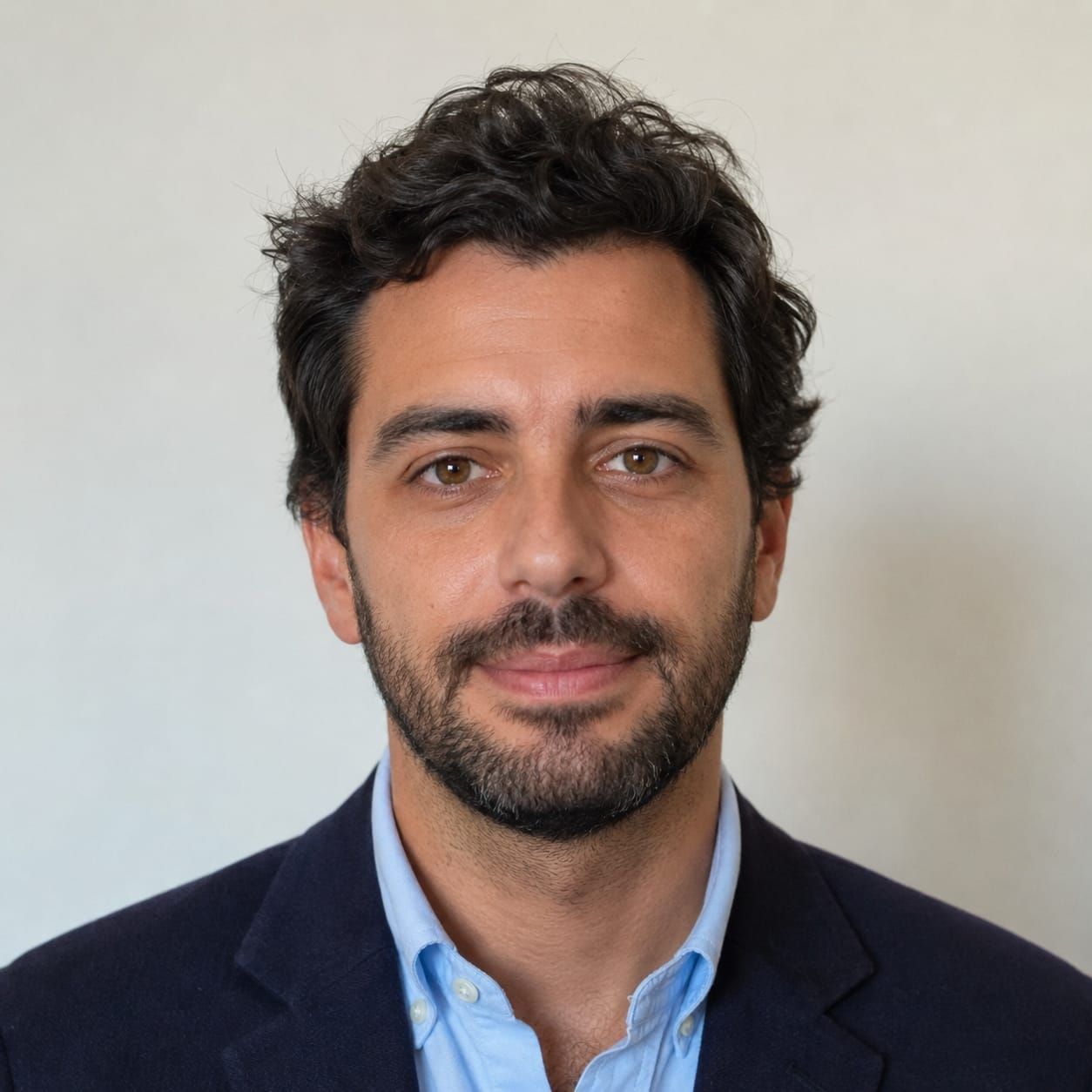

The Sport Integrity Global Alliance (SIGA) has confirmed that Emanuel Macedo de Medeiros, a Portugal-based governance and integrity specialist, will serve a third consecutive term as the organization's Global CEO through 2030. The decision positions the Portuguese lawyer to lead the world's largest independent coalition for sports integrity during a critical period when certification and compliance are set to transition from voluntary initiatives to institutional mandates.
Why This Matters
• Portugal's influence in global sports governance: A Portuguese national will steer the international standard-setting body responsible for certifying sports organizations worldwide.
• Lisbon as decision hub: The formal ratification will occur at SIGA's Annual General Assembly on April 14 in Lisbon, reinforcing Portugal's role as a neutral venue for international sports diplomacy.
• Final term: This marks Medeiros' third and statutorily final mandate under SIGA's term-limit rules, making the 2026-2030 period decisive for entrenching integrity frameworks across global sport.
• Ethical oversight at home: Medeiros now simultaneously chairs the Portuguese Football Federation (FPF) Ethics Committee, a dual role that underscores the alignment of Portugal's domestic football governance with international best practice.
From Voluntary Pledge to Institutional Obligation
Medeiros, who co-founded SIGA and has led the alliance since 2018, ran unopposed for re-election. His candidacy, submitted on March 2 under the manifesto titled "Making Integrity Irreversible," signals a strategic pivot away from aspirational commitments toward enforceable accountability.
"The mission remains clear, and today it is more important than ever: to ensure that all sports organizations, in every country, can demonstrate compliance with SIGA Universal Standards on Sport Integrity through independent verification, assessment, and certification," Medeiros stated following the SIGA Council's unanimous vote. "Only then can sport earn the trust of people worldwide and fulfill its full potential."
The emphasis on verification reflects a departure from the soft-power approach that has historically characterized sports governance reform. Over the next four years, Medeiros has committed to transforming what he describes as "voluntary alignment" into "institutional obligation," a shift that would require sports bodies to submit to external audits or risk reputational and potentially financial consequences.
The Portugal Connection: Why Lisbon and Why Now
The choice of Lisbon for the April ratification ceremony is neither ceremonial nor accidental. Portugal has positioned itself as a pragmatic broker in European sports policy, hosting regional forums and serving as a testing ground for governance initiatives that later gain EU-wide traction. The country's compact size, stable institutions, and multilingual workforce have made it an attractive venue for organizations seeking neutral ground outside the traditional power centers of Brussels, Geneva, or London.
Medeiros' appointment to lead the FPF Ethics Committee on March 10—less than a week before his SIGA re-election—further cements this alignment. The FPF has faced scrutiny over transparency and financial oversight in recent years, and the creation of a dedicated ethics body led by an internationally recognized figure represents an attempt to rebuild public confidence. For residents and football fans in Portugal, this dual mandate means domestic governance reforms will increasingly mirror the international standards Medeiros is tasked with enforcing globally.
What the Universal Standards Actually Require
The SIGA Universal Standards on Sport Integrity (USSI) cover four pillars: Good Governance in Sport, Financial Integrity and Transparency, Integrity in Sports Betting, and Youth Development and Protection. Organizations are assessed through the SIGA Independent Rating and Verification System (SIRVS), which assigns Bronze, Silver, or Gold certifications based on implementation depth.
The standards are designed as "living documents," acknowledging that a small national federation cannot adopt the same protocols as a multi-billion-euro league overnight. However, the flexibility also creates ambiguity: critics argue that without binding enforcement, certification becomes a branding exercise rather than a governance guarantee.
Challenges persist. The diversity of the global sports landscape—from under-resourced national bodies in developing regions to commercial leagues resistant to external oversight—makes uniform adoption difficult. Cultural barriers, capacity constraints, and the voluntary nature of compliance continue to limit impact. Medeiros' strategy for his final term explicitly targets these gaps, with plans for expanded regional structures (a SIGA Asia branch is in advanced planning) and tailored capacity-building programs.
The Madeira Factor: A Career Built on Coalition-Building
Medeiros hails from Madeira, Portugal's autonomous island region, and his career trajectory reflects a talent for constructing frameworks that bridge competing interests. Before SIGA, he spent nearly two decades leading the European Professional Football Leagues (EPFL) and the World League Association, representing professional football's commercial interests against governing bodies like FIFA and UEFA.
His résumé includes stints on the FIFA Club Football Committee, the UEFA Professional Football Strategy Council, and the EU Expert Group on Good Governance in Sport. He also sits on the Court of Arbitration for Sport (CAS) and advises the OECD Task Force on Combating Illicit Trade. Since 2012, he has held the title of Portugal's Ambassador for Sports Ethics, a largely symbolic role that nonetheless signals official backing.
This background explains Medeiros' pragmatic approach: he understands that leagues, broadcasters, sponsors, and governing bodies rarely share aligned incentives, and that integrity frameworks succeed only when they accommodate—or compel—diverse stakeholders.
What This Means for Residents and Investors
For individuals living in Portugal, the implications extend beyond football. As SIGA expands its certification reach, Portuguese sports federations, clubs, and even municipal sports programs may face growing pressure to adopt USSI standards, particularly if EU funding or commercial partnerships begin to require verified compliance.
Investors and corporate sponsors, meanwhile, should note the emerging liability landscape. The shift from voluntary to obligatory integrity checks means that companies associating with non-certified organizations could face reputational or regulatory risk, especially in jurisdictions—like the EU—where anti-money-laundering and governance due diligence are increasingly stringent.
Medeiros' term runs through 2030, aligning with the next FIFA World Cup cycle and the conclusion of the EU's current multi-annual financial framework. Whether SIGA's model achieves genuine leverage or remains a consultancy with a moral mandate will depend on adoption rates, enforcement mechanisms, and the willingness of major sports properties to submit to independent scrutiny.
The Road to April and Beyond
The formal ratification on April 14 in Lisbon is expected to pass without controversy, given Medeiros' unopposed candidacy and unanimous Council support. Observers will be watching for announcements on SIGA's commercial arm, SIGA Sports Solutions, which is in final stages of incorporation and aims to monetize governance consulting services.
The organization has also rebranded its annual Sport Integrity Week into a month-long initiative, signaling ambitions for broader public engagement. A global campaign titled "TAKE ACTION" is scheduled to mark SIGA's 9th anniversary, urging governments, corporations, and civil society to treat sports integrity as a shared priority.
For Portugal, the spotlight is both opportunity and test. Hosting the ratification and fielding the CEO places the country at the center of a global conversation about accountability in sport—but also invites scrutiny of whether domestic institutions practice what they preach. Medeiros has positioned himself as the architect of irreversibility. The next four years will determine whether that vision translates into enforceable reality or remains an elegant aspiration.


