
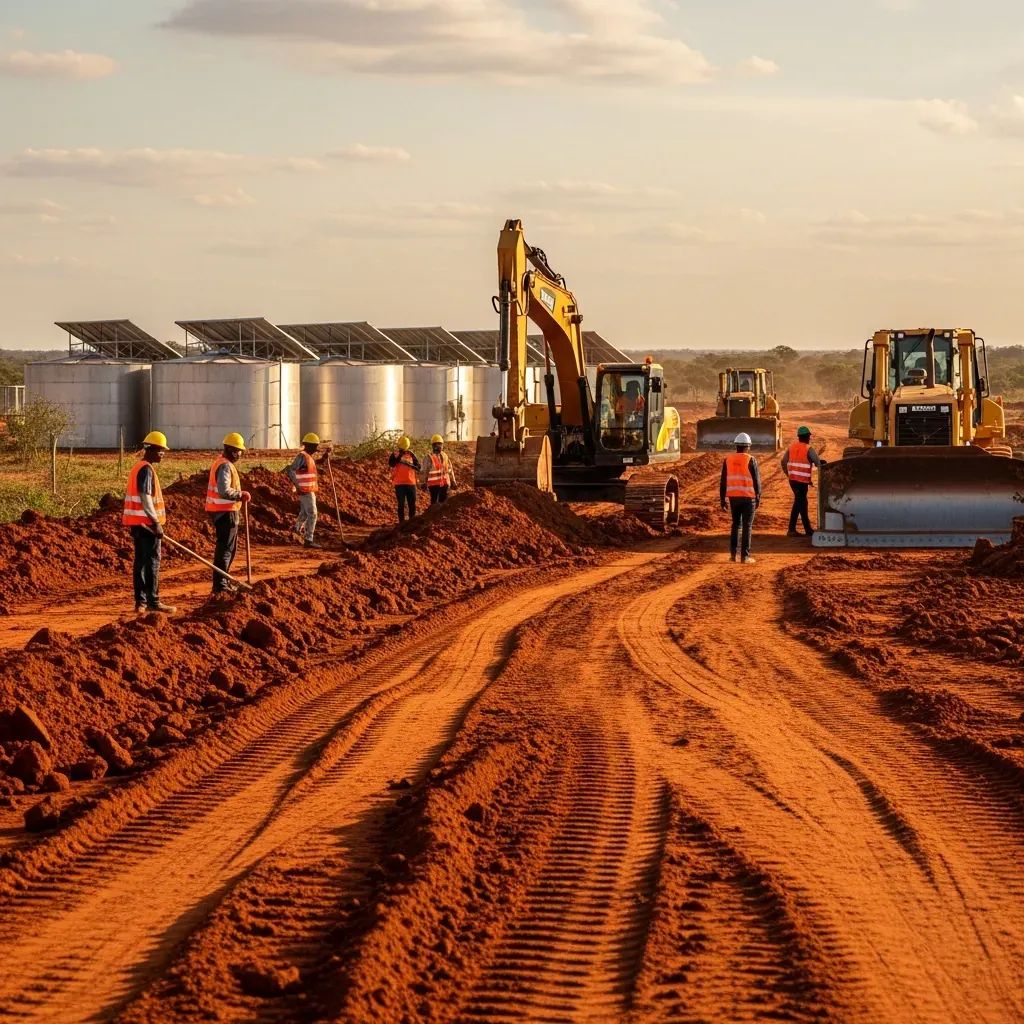
A sigh of relief for Portugal’s construction sector arrived this week: a fresh injection of multilateral cash is unlocking long‑awaited contracts in Luanda, and the immediate beneficiary is Mota‑Engil, the largest Portuguese builder operating abroad.
Quick glance
• $214M World Bank package routed through the International Bank for Reconstruction and Development (IBRD)
• Funds earmarked for roads, water networks and logistics hubs across six Angolan provinces
• Lisbon’s Mota‑Engil secures the engineering, procurement and construction (EPC) mandate
• Project rollout expected to create 2,500 direct jobs in Angola and bolster Portuguese exports of cement, machinery and design services
• Financing combines a 25‑year tenor with a 0.75% service charge, easing currency risk
Why this matters in Portugal
For Portuguese households holding pension-fund units or shares on Euronext Lisbon, the deal provides a welcome shot of predictable foreign revenue, at a time when domestic public-works tenders remain scarce. Mota‑Engil Africa already generates nearly 70% of the group’s EBITDA, so every additional contract on the continent reverberates back to Porto and Lisbon through taxes, dividends and payroll. The broader supply chain — from Viana do Castelo steel mills to Aveiro engineering consultancies — stands to gain fresh export orders.
What the money will build
World Bank documents reviewed by the Portuguese press point to three flagship components:
Rehabilitation of 420 km of national and secondary roads linking coastal Benguela to the mineral-rich hinterland.
Installation of solar-powered water treatment units in peri-urban Luanda, designed to serve 1.3M residents.
Construction of a dry-port logistics platform near Huambo, aimed at cutting freight times to Namibia by 40%.
Angola’s infrastructure push picks up pace
President João Lourenço has put transport corridors and basic services at the center of his post-oil diversification plan. Yet lower crude prices and high borrowing costs forced Luanda to delay dozens of projects. The World Bank loan’s concessional terms — well below commercial rates — allow Angola to restart work without breaching fiscal targets agreed with the IMF. For Lisbon, a more connected, faster-growing Angola is a win: bilateral trade already tops €1.2B a year, and smoother logistics tend to lift that figure.
Mota-Engil’s expanding African footprint
The Portuguese group, founded in 1946, now operates in 17 African markets, from Morocco to Mozambique. In Angola alone it has built 400 km of highways, two hydroelectric dams and the Luanda ring-road viaducts. Securing the new EPC mandate cements its status as the go-to contractor when Lusophone governments tap multilateral funding. Analysts at CaixaBI underline that a World Bank stamp often leads to follow-up work financed by the African Development Bank or the EU Global Gateway.
Financing mechanics and timelines
The $214M envelope combines $150M in direct IBRD lending with a $64M guarantee that lowers commercial co-financing costs. Disbursements begin in April 2026; completion is pencilled in for 2030. Mota-Engil’s contract, industry sources say, carries a margin in line with recent African road deals — roughly 8-9% pre-tax. The company must source at least 30% of inputs locally, a clause intended to boost Angolan SMEs while still leaving room for Portuguese high-tech exports.
Reactions in Lisbon and Luanda
Portuguese economy minister António Costa Silva hailed the agreement as proof that “Portuguese engineering is world-class and bankable.” Across the Atlantic, Angola’s public-works minister Carlos dos Santos stressed the social dividend: “Clean water and safer roads translate directly into lower health-care costs and higher school attendance.” Civil-society groups cautiously welcomed the deal but urged strict oversight to curb cost overruns, a common headache in the region.
What comes next
A separate $70M feeder facility for rural bridges is already under appraisal at the World Bank and could be signed in mid-2026, once environmental studies conclude. Should that follow-on financing materialise, Mota-Engil is widely expected to be on the shortlist, keeping Portuguese cranes, architects and software suppliers busy well into the next decade.
In short, the latest infusion of multilateral capital signals that Portugal’s construction flagship remains indispensable in Angola’s post-war rebuilding story — and that investors looking for exposure to high-growth African infrastructure may not have to look beyond the PSI index.


