

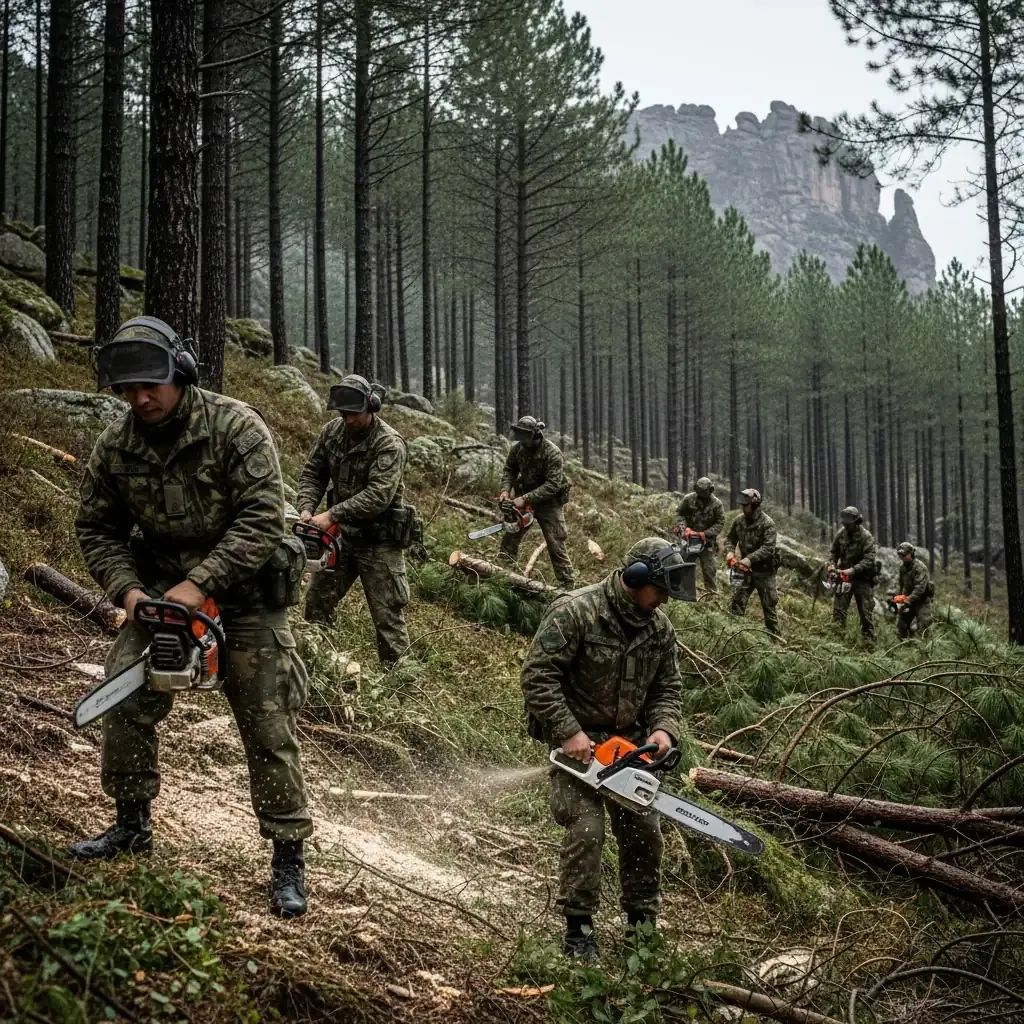
Portugal’s next presidential race has just fired up an old debate: should the nation’s soldiers trade training grounds for the tinder-dry hillsides every fire season? Education-union leader–turned-candidate André Pestana thinks so, arguing the Army could both cut spending and save villages by doing the hard work of clearing forest fuel in the cold months and mounting a front-line attack when the flames finally arrive.
Quick glance: what is on the table?
• Compulsory winter forest-clearance by military units
• Army aviation repurposed to replace rented firefighting helicopters
• Promise to slash millions in leasing costs and end what Pestana calls the “business of fire”
• Pushback focused on training, safety gear and mission creep
• Proposal lands amid historic drought forecasts for 2026 and a surge in insurance claims from last year’s fires
Why the pitch resonates in Portugal’s smokiest corners
Each summer, the Centro and Norte regions endure skies thick with ash while locals wonder why preventive work still falls to under-funded municipalities and volunteer bombeiros. Pestana taps into that frustration, insisting that “the President is commander-in-chief—so command!” His narrative of tax euros diverted to private aircraft charters, combined with the image of idle barracks in winter, strikes a chord in towns that watched 260,000 ha burn between 2022 and 2025.
Inside Pestana’s blueprint
The candidate’s plan revolves around three pillars:
Winter mobilisation: Infantry companies would spend January–March operating chainsaws and shredders, creating firebreaks on public and private land.
Reconfigured fleet: Army light helicopters and the Air Force’s C-295 could receive water-drop kits, mirroring Spain’s military model.
Permanent emergency regiment: Building on the existing Regimento de Apoio Militar de Emergência in Abrantes, Pestana envisions a 2,500-strong specialised brigade ready for rapid deployment.
He claims this shift could save €40 M a year, citing the current aerial-leasing bill released by the Ministério da Administração Interna, and insists the measure would finally disrupt “the powerful fire lobby,” a term he applies to operators of seasonal aircraft contracts and outsourced clearing crews.
The reality check: what the Army already does
Contrary to the impression of a force kept on the sidelines, the Army reported 3,700 troops, 1,600 vehicles and 301,000 km of patrol work in 2025 under Plano Lira. These missions cover vigilância, rescaldo and engineering teams that carve access tracks. Yet commanders stress their role is support, not substitution of civilian bombeiros, warning that full-scale frontline attack demands certified wildfire training, Type III PPE and respiratory protection—gear still scarce in many barracks.
Counting the euros and the fuel drums
Past international deployments offer a clue to price tags: Brazil’s Operação Verde Brasil 2 burned through €55 M in under 60 days. Defence economists in Lisbon estimate that outfitting Portuguese infantry with NFPA-standard suits, compressed-air tanks and thermal imaging drones could top €12,000 per soldier. Aviation retrofits add more: a single belly-tank kit for a UH-1H runs close to €450,000. Savings on lease contracts therefore hinge on the Army flying at least 400 hours a season, a flight regime some engineers say would cannibalise maintenance budgets.
Environmentalists and mayors: cautious welcome, conditional support
Forestis and FAPAS agree the winter-clearance angle makes sense, noting that 67 % of rural landholdings under 5 ha remain untreated each year. They fear, however, that a military-led blitz could ignore biodiversity corridors, turning scrub removal into clear-cutting. On the political front, PSD deputies remind voters of the tragic 1966 Sintra fire, when 25 soldiers died without modern respirators. They demand any new model include mandatory joint drills with ANEPC and union-backed safety audits.
Lessons from past uniformed fire fights
• The 2017 megafires proved that rapid initial attack matters more than sheer troop numbers.• Spain’s UME shows a dedicated brigade can mesh with civilians—if command hierarchies are crystal-clear.• Portugal’s trial of C-130 water kits in the 1990s faltered when peacetime budgets shrank.• After every season, reports cite the same gap: forest management 9 months before ignition.
What could happen next?
Pestana pledges to deliver a draft presidential decree within 30 days of taking office. Defence analysts say true change would still need the Council of Ministers and, crucially, the 2027 State Budget. For now, the debate places wildfire prevention—usually background noise in January—squarely on the electoral stage. Whether voters buy the idea of soldiers with chainsaws may depend less on ideology and more on the next smoke column rising over Serra da Estrela.


