

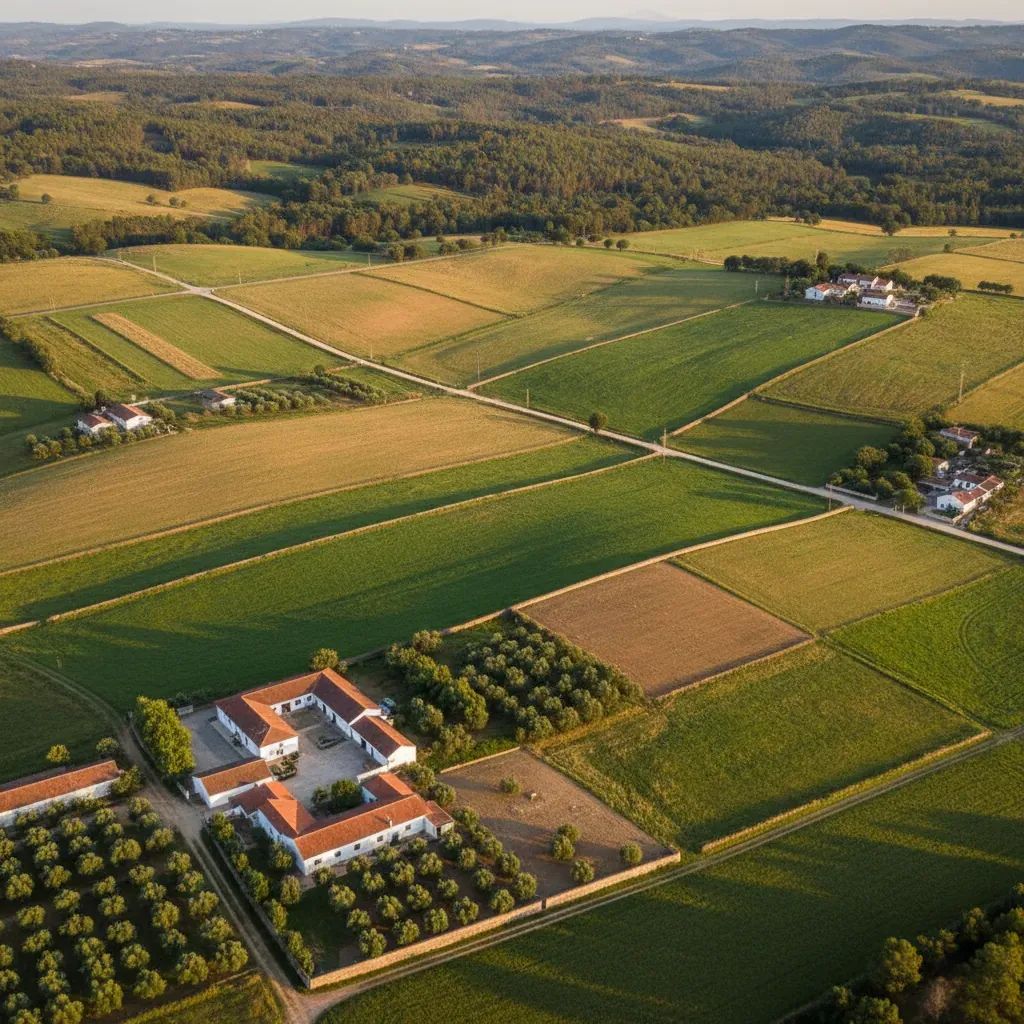
The Portugal government has extended free property registration through its digital land registry until September 30, 2026, giving landowners approximately five more months to map their rural and mixed-use properties before fees take effect—a move that could save owners of scattered plots up to €165 if they register multiple parcels by autumn.
Understanding BUPi: What You Need to Know
BUPi (Simplified Land Information System) is Portugal's nationwide digital property registry designed to create a comprehensive database of rural land ownership. The system captures geo-referenced graphic representations (RGG)—essentially precise digital boundaries of properties—replacing fragmented historical records. For foreign residents and Portuguese landowners alike, BUPi registration clarifies ownership, simplifies property transactions, and enables access to EU agricultural subsidies.
Why This Matters:
• Free window closing fast: Property owners with rural land (up to 50 hectares) can register and georeference boundaries at no cost until September 30, 2026. After that, each geo-referenced graphic representation (RGG) costs €15 for the first nine properties, then €10 per additional property.
• State and local authorities face 2028 deadline: Public entities including municipalities must register all government-owned land by December 31, 2027, accelerating Portugal's push for comprehensive land records.
• New sale requirement: Starting now, all property deeds transferring rural land ownership must include geo-referenced mapping—tightening transaction security but adding a procedural step.
• EU funding eligibility: Applications for European Union and national subsidies involving rural or mixed land now require RGG documentation, making registration essential for agricultural and forestry support.
Progress Lags Behind Targets Across Most Regions
The Simplified Land Information System Task Force (eBUPi) reports that 42% of targeted land area has been mapped across mainland Portugal and Madeira. While the system now operates in 158 of 173 municipalities that lacked formal land registries, the pace of citizen participation varies dramatically by region.
Mainland Portugal: 3.39 million properties have been identified out of approximately 8.9 million parcels requiring registration. Miranda do Douro in Bragança district leads with 68% of properties identified, followed by Amares (64%), Penedono (62%), Penalva do Castelo (61%), and Mondim de Basto (60%). By land area, Alfândega da Fé tops the list at 70% mapped, with Manteigas (68%), Mira (67%), São João da Pesqueira (66%), and Miranda do Douro (66%) also showing strong completion rates.
Madeira: Only 9% of properties (28,309 parcels) have entered the system across five municipalities without prior cadastral records. Porto Moniz leads regionally with 57% of land area mapped, yet property-level registration peaks at just 11% in Ponta do Sol and São Vicente.
Mainland Portugal has seen 506,451 citizens register their holdings with support from 761 assigned technicians, while Madeira recorded 7,239 participants assisted by 26 specialists. The eBUPi structure notes that 6% of national territory—primarily urban zones and public domain areas—cannot be geo-referenced under current methodology, and Madeira's data remains incomplete due to insufficient territorial base information.
What This Means for Property Owners
Decree-Law 87/2026, published in April 2026 and effective in May, fundamentally reshapes how rural property transactions and subsidy applications function. The legislation amends Law 78/2017, originally designed to improve national land planning and wildfire prevention policy.
For anyone buying or selling rural land, the geo-referenced representation requirement means transactions now demand precise boundary documentation. Eugénia Amaral, coordinator of the eBUPi mission structure, described the change as "awaited for some time" and pointed to the titling-stage RGG requirement as crucial for enhancing real estate transaction security. Parties can now verify "the location, boundaries, and area of the property being transacted" before finalizing deals.
Fee Impact: A property owner with twelve rural parcels would pay €165 after the October 1 deadline (nine plots at €15 each plus three at €10 each), compared to zero cost if completed by September 30. The special annexation procedure—designed to simplify merging adjacent rural parcels—carries a €250 base fee plus €50 per additional property starting October 1, compared to current free processing. This creates particular financial incentive for families managing multiple small parcels inherited across generations.
Agricultural producers face immediate pressure, as the EU funds and national subsidy application requirement takes effect now. Anyone seeking Common Agricultural Policy payments, forestry grants, or rural development co-financing must now submit geo-referenced documentation, creating a practical registration mandate regardless of ownership transfer plans.
For Foreign Residents: Practical Steps to Register
If you're a non-Portuguese resident or newly arrived in Portugal, here's what you need:
Required Documents:
• NIF (Número de Identificação Fiscal): Your Portuguese tax identification number, available from Finanças (tax office)
• Caderneta Predial: Your property tax document, issued by Finanças and showing tax registry entries for your land
• Existing property deeds or purchase documents
• Any boundary sketches or historical property descriptions
• Inheritance records if applicable
Online vs. In-Person:The BUPi platform (available at bupi.gov.pt) requires either a Portuguese Citizen Card or Mobile Digital Key for authentication. If you lack these documents, municipal BUPi service counters offer in-person assistance with multilingual support at many locations. Technicians help identify boundaries using aerial imagery, tax records, and field verification—a process that historically proved challenging in areas where physical markers disappeared decades ago and inheritance fragmented holdings across multiple descendants.
Processing Timeline: Start registration immediately if your property has boundary disputes or co-ownership complications. Given that September 30 arrives within months, processing times remain uncertain. Initiating registration now provides buffer time to resolve conflicts before paid fees begin.
Interoperability Push Targets Bureaucratic Friction
The legislative update advances Portugal's long-standing effort to synchronize three historically disconnected government databases: the Tax Authority (AT), the Directorate-General for Territory, and the Institute of Registries and Notaries. Amaral emphasized that ongoing platform improvements aim for "interoperability between systems" to eliminate redundant agency visits.
The goal: citizens complete registration in one interaction rather than shuttling between offices to resolve property matters. The eBUPi mandate extends through December 31, 2026, after which the Institute of Registries and Notaries (IRN) assumes operational responsibility.
BUPi launched in 2017 as a ten-municipality pilot before expanding nationwide to address Portugal's fragmented rural land ownership records. The system gained urgency following devastating 2017 wildfires that exposed how unmapped property complicated firefighting access and fuel management. Beyond fire prevention, comprehensive cadastral data supports infrastructure planning, environmental protection, taxation accuracy, and succession dispute resolution.
Regional Disparities Reflect Underlying Structural Challenges
The stark contrast between high-performing northern interior municipalities and lagging regions reveals deeper patterns. Districts showing strong completion—Bragança, Viseu, Braga—combine relatively stable rural populations, active agricultural sectors, and municipal governments that prioritized outreach campaigns. These areas also benefit from clearer historical documentation and fewer ownership disputes.
Conversely, municipalities with low registration rates often face aging populations unfamiliar with digital processes, abandoned lands with unclear ownership chains, and coastal or tourist-zone development pressure that complicates rural-urban boundary delineation. Madeira's unique topography and settlement patterns further complicate systematic mapping.
The 2028 public entity deadline carries particular weight for municipal land inventories. Many local governments lack comprehensive records of properties acquired through tax foreclosure, donation, or historical transfers. The requirement forces systematic catalog creation, potentially revealing ownership overlaps or gaps that delayed infrastructure projects and land-use planning.
What Happens If You Miss the September Deadline?
Registrations submitted after October 1, 2026 will incur the fee structure outlined above. However, registration does not become optional—it remains necessary for property transactions and EU subsidy applications. There are no penalties beyond the fees themselves for residential landowners, but the practical cost of ownership transfer increases significantly. Municipal authorities face compliance requirements with associated administrative costs.
Practical Steps Before the September Cutoff
Landowners should prioritize gathering documentation immediately: tax identification numbers, inheritance records, purchase deeds, and any existing boundary descriptions or sketches. While the system accepts incomplete documentation through special justification procedures, stronger evidence accelerates processing.
The BUPi platform (available at bupi.gov.pt) allows preliminary property searches using tax codes to verify current registration status. Owners unsure of precise boundaries can schedule appointments with assigned municipal technicians who assist with geo-referencing using satellite imagery and field verification. This service remains free through September 30.
For properties with contested boundaries or co-ownership disputes, initiating registration now provides essential time to resolve conflicts before paid fees begin. The special annexation procedure benefits anyone consolidating fragmented rural holdings—a common scenario that complicates land management and reduces agricultural viability. Consolidating ten inherited plots under current free registration saves €150 compared to post-deadline fees, while also simplifying future management and potential sale.
The combination of financial incentive, subsidy eligibility requirements, and enhanced transaction security positions the remainder of 2026 as a pivotal period for Portugal's rural property formalization. The September deadline functions as an intermediate milestone rather than completion target, with authorities expecting registration to continue at standard fees through the decade as property transactions and subsidy applications create organic registration pressure.
Whether the five-month extension proves sufficient depends heavily on municipal outreach effectiveness and landowner responsiveness. For residents managing inherited or recently acquired rural land, acting before September 30 represents the most cost-effective path forward.


