
Why Portugal's Refereeing Return Matters Now
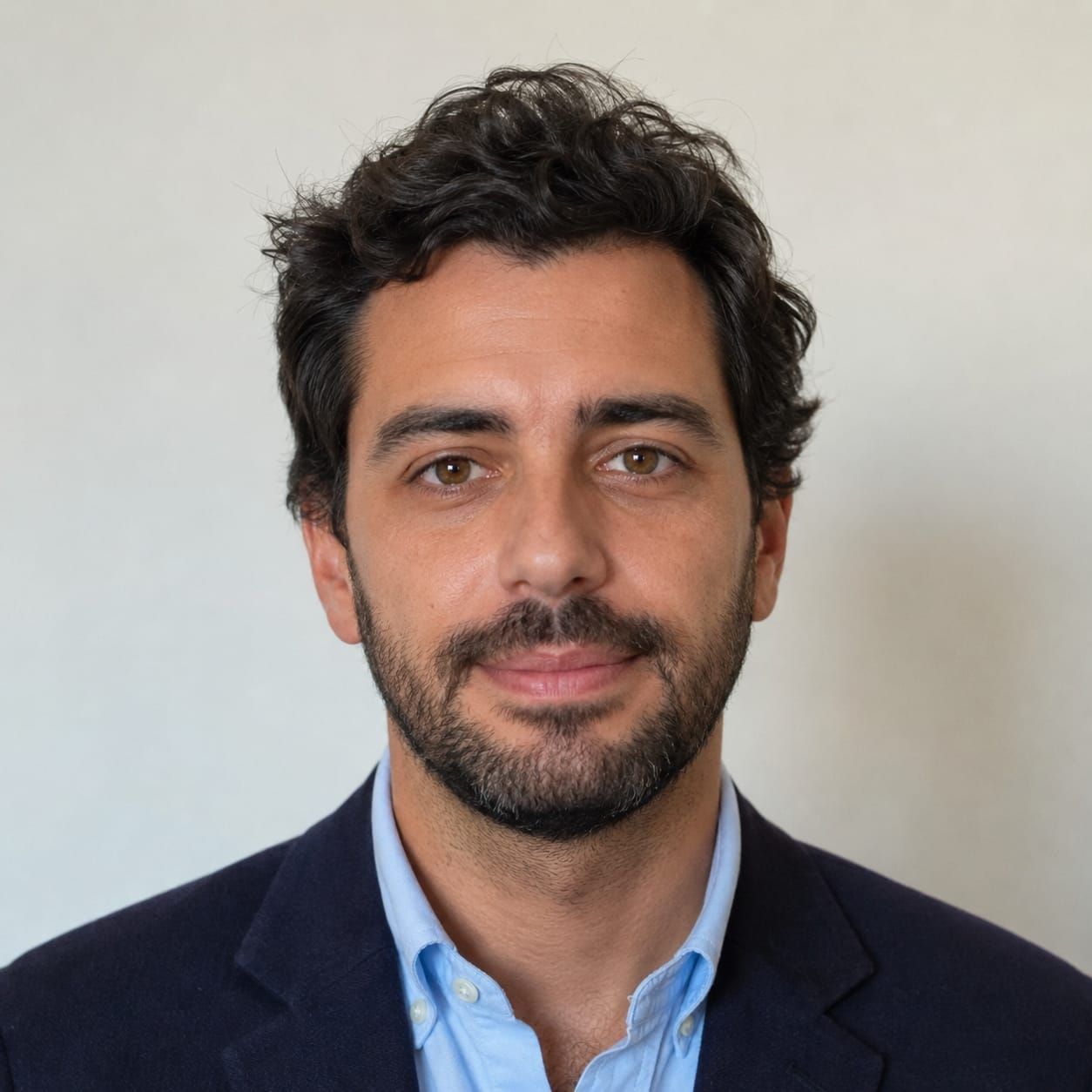
For the first time in 12 years, a Portuguese match official will take charge of a World Cup fixture. The FIFA Refereeing Committee has appointed João Pinheiro to join the officiating roster for the 2026 tournament spanning the United States, Canada, and Mexico. This appointment, confirmed in early April, represents far more than a ceremonial nod to Portuguese football — it signals the country's quiet emergence as a serious global force in sports governance and officiating standards.
Why This Matters
• Portugal ends a 12-year drought since Pedro Proença last officiated as a main referee at a World Cup in Brazil 2014
• João Pinheiro and his crew (Bruno Jesus and Luciano Maia) form Portugal's first complete officiating team at a World Cup since 2010
• Pinheiro anchors the middle of 52 match officials selected globally to oversee 104 fixtures from June 11 to July 19, 2026
• Portugal now ranks third worldwide and second in Europe for FIFA-badged referees across all disciplines — a credential that took two decades to build
What You'll See on TV: The Practical Reality for Portuguese Viewers
Here's what matters if you're planning to watch the 2026 World Cup from Portugal: you likely won't see João Pinheiro refereeing Portugal's matches. FIFA's conflict-of-interest protocols prevent him from officiating any fixture involving his home nation. With Portugal grouped with the Democratic Republic of Congo, Colombia, and Uzbekistan, Pinheiro's assignments will come from other group matches or, potentially, knockout rounds if Portugal advances far enough. However, seeing a Portuguese official on football's biggest stage carries real significance — it elevates Portugal's standing in FIFA governance, which influences how the country is treated in future tournament bids, development funding allocation, and infrastructure investment decisions that ultimately benefit domestic football.
The Long Climb Back
Portugal's relationship with World Cup officiating has been inconsistent. Olegário Benquerença last represented the country in South Africa in 2010, directing three matches before the nation faded from the tournament's officiating landscape. The 2014 appointment of Pedro Proença appeared to suggest Portugal had secured its place among elite refereeing nations, but the next three tournaments told a different story.
In Russia 2018, no Portuguese referee took charge of a match, though Artur Soares Dias and Tiago Martins worked as video match officials. That was itself a step backward from prior standards. By Qatar 2022, Portugal had vanished entirely — no field referee, no VAR official. The Portuguese Football Association of Referees (APAF) expressed quiet disappointment at the time, acknowledging that "sometimes ability alone does not carry the day."
This absence stung harder than raw statistics suggest. For a nation with Portugal's football heritage and its growing international standing in European competitions, missing consecutive World Cups signaled that the domestic refereeing ecosystem — however talented — had fallen out of favor with FIFA's selection apparatus. The institutional knowledge gap was real: younger Portuguese officials had no World Cup experience to draw from, and the country's refereeing body lost visibility in FIFA's decision-making circles.
Building the Case: Pinheiro's Quiet Rise
João Pinheiro's path to 2026 was methodical, marked by visible FIFA attention rather than sudden breakthrough. The 38-year-old Braga-based referee joined FIFA's registry in 2016 and spent nearly a decade climbing through European club competitions before earning promotion to UEFA's Elite Category in December 2024 — the highest tier of match official qualification in the continent.
That promotion was not accident. Pinheiro participated in a FIFA and UEFA training intensive in Viareggio, Italy, a crucial gatekeeping moment for European referees before final World Cup selections. The camp served as a de facto audition: only candidates deemed ready for tournament-level intensity advanced to consideration. Pinheiro passed it decisively.
His track record supports the appointment. During the 2024/2025 season, Pinheiro oversaw 33 matches across multiple competitions, accumulating 139 yellow cards and issuing 2 red cards while maintaining an average of 25.85 fouls flagged per game. His assignments included five UEFA Champions League matches — the continent's most scrutinized competition — plus games in the Europa League and Conference League. In August 2024, FIFA entrusted him with the UEFA Super Cup between Paris Saint-Germain and Tottenham Hotspur in Udine, Italy, where PSG won on penalties — a match that demanded maximum composure under extreme pressure. He delivered.
The current 2025/2026 season shows no drop-off. Pinheiro has already handled 21 fixtures, including seven Champions League assignments, with disciplinary numbers reflecting slightly stricter enforcement: 123 yellow cards and 7 red cards across his slate. His assignments in World Cup qualifying matches provided FIFA observers with direct evidence of his readiness for the tournament itself.
How FIFA Actually Picks Its Referees
Portugal's reemergence hinges on understanding FIFA's meticulous three-year selection process. The organization does not simply call up referee associations and request nominations. Instead, a rigorous machine evaluates hundreds of candidates across technical, physical, and psychological dimensions.
National federations begin the cycle by nominating their highest-ranked officials. FIFA's 16-member refereeing committee, led by the Deputy Chief Refereeing Officer, then constructs a long list of prospects spanning all confederations. These candidates enter continuous monitoring: their domestic league performances, international friendlies, and confederation tournaments are recorded, analyzed, and scored. Physical testing includes timed running circuits, agility drills, and sprint recovery protocols designed to ensure officials can maintain positioning for 90 minutes at professional intensity. Technical evaluation relies heavily on video analysis, with assessors grading decision-making, positioning, and communication across dozens of recorded matches.
Regional quotas ensure geographic distribution — FIFA will not stack one continent's officials while excluding another — but the stated principle remains "quality first." A candidate from an underrepresented confederation advances only if they meet the highest threshold.
João Pinheiro's selection reflects this rigor. He was not fast-tracked or given preference as a Portuguese candidate. Rather, his consistent performance across three seasons of elite European competition, combined with his technical proficiency demonstrated in the Viareggio camp, positioned him as a defensible choice among multiple qualifying candidates from UEFA.
What This Means for Residents and Football in Portugal
For people living in Portugal, Pinheiro's appointment is a win for national pride and carries practical, tangible weight. Refereeing is an underappreciated export industry for Portugal, much like coaching or player development. When Portuguese officials gain visibility at the world's biggest sporting events, it elevates the country's profile in global football governance — a sector that directly influences sponsorship allocations, broadcasting rights, youth development grants, and investment in domestic infrastructure.
High-profile international appointments correlate directly with domestic improvements. The Portuguese League (Liga Portugal) has incremented its VAR implementation and referee education programs, partly driven by FIFA's expectations for countries that supply World Cup personnel. These systems benefit every match played domestically, from top-tier fixtures to regional competitions. Referee standards influence player behavior, competitive integrity, and ultimately fan experience. When Portugal sits at FIFA's refereeing table, decisions made there eventually circle back to benefit domestic football.
This appointment also matters for Portugal's soft power in global football administration. Nations with strong refereeing representation gain informal influence in FIFA discussions about tournament expansion, rule changes, and development funding. Portugal's ascent from absent to present in World Cup officiating strengthens the country's voice on these issues — conversations that shape football's future and, by extension, Portugal's opportunities to host prestigious tournaments or secure development investments.
The Institutional Achievement
Pinheiro's appointment reflects broader institutional maturity in Portuguese football's refereeing sector. As of 2025, Portugal maintains 55 FIFA-badged referees across all disciplines — futsal, beach soccer, and 11-a-side — positioning the nation as the third-largest contributor of FIFA officials globally, trailing only Brazil and the United States. In Europe, Portugal ranks second only to Germany. This ascendancy is recent: eight years ago, in 2016, only 27 Portuguese referees held FIFA credentials. The 100% growth rate in less than a decade reflects institutional investment, training standardization, and a cultural shift toward refereeing as a serious career pathway.
The Portuguese Football Federation's Refereeing Council, led by president Luciano Gonçalves, framed Pinheiro's appointment as vindication of long-term strategic work. "This is more than recognition," Gonçalves stated. "It is fair acknowledgment of elite-level effort developed over years by a team that has brought substantial prestige to Portuguese football." The statement reflects genuine satisfaction but also measured realism — Portugal is not flooding the World Cup with officials, but it is no longer locked out.
The Expanded Global Stage
The 2026 World Cup represents an unprecedented scale for officiating. For the first time, the tournament expands to 48 teams — up from 32 — requiring the largest referee roster in history. FIFA assembled a "Team One" of historic size: 52 main referees, 88 assistant referees, and 30 VAR officials representing 50 member associations across all six confederations.
Brazil leads representation with nine total officials, including a record three main referees: Raphael Claus, Ramon Abatti Abel, and Wilton Pereira Sampaio. Portugal's single field referee appointment is modest in comparison, yet strategically sound. Bruno Jesus and Luciano Maia's inclusion as Pinheiro's assistants ensures the trio has extensive prior collaboration across domestic Portuguese league play and international matches — a distinct advantage when synchronization matters most in high-stakes competition.
Preparation and the Road Ahead
Before the tournament's opening fixture on June 11, Pinheiro will complete a mandatory 10-day pre-tournament seminar organized by FIFA. The curriculum is intensive: daily training sessions with local players, video analysis workshops deconstructing previous tournament matches, and live-action simulations replicating World Cup-level pressure. FIFA provides comprehensive support infrastructure: dedicated physical trainers, team physiotherapists, and a mental health specialist assigned to the officiating contingent. At this level, acknowledging and managing psychological pressure is considered essential rather than optional.
The FPF and APAF have already begun planning their own preparation protocols, coordinating with FIFA's timeline to ensure Pinheiro's crew arrives match-ready. Strong tournament performances often translate into future high-profile appointments and can shape an official's post-career trajectory in football administration and governance roles.
Portugal's 12-year gap is closed. The country does not return to the World Cup merely with a national team — it brings a custodian of its refereeing tradition, proof that domestic talent development works, and evidence that patience and systematic improvement eventually register in FIFA's calculations.