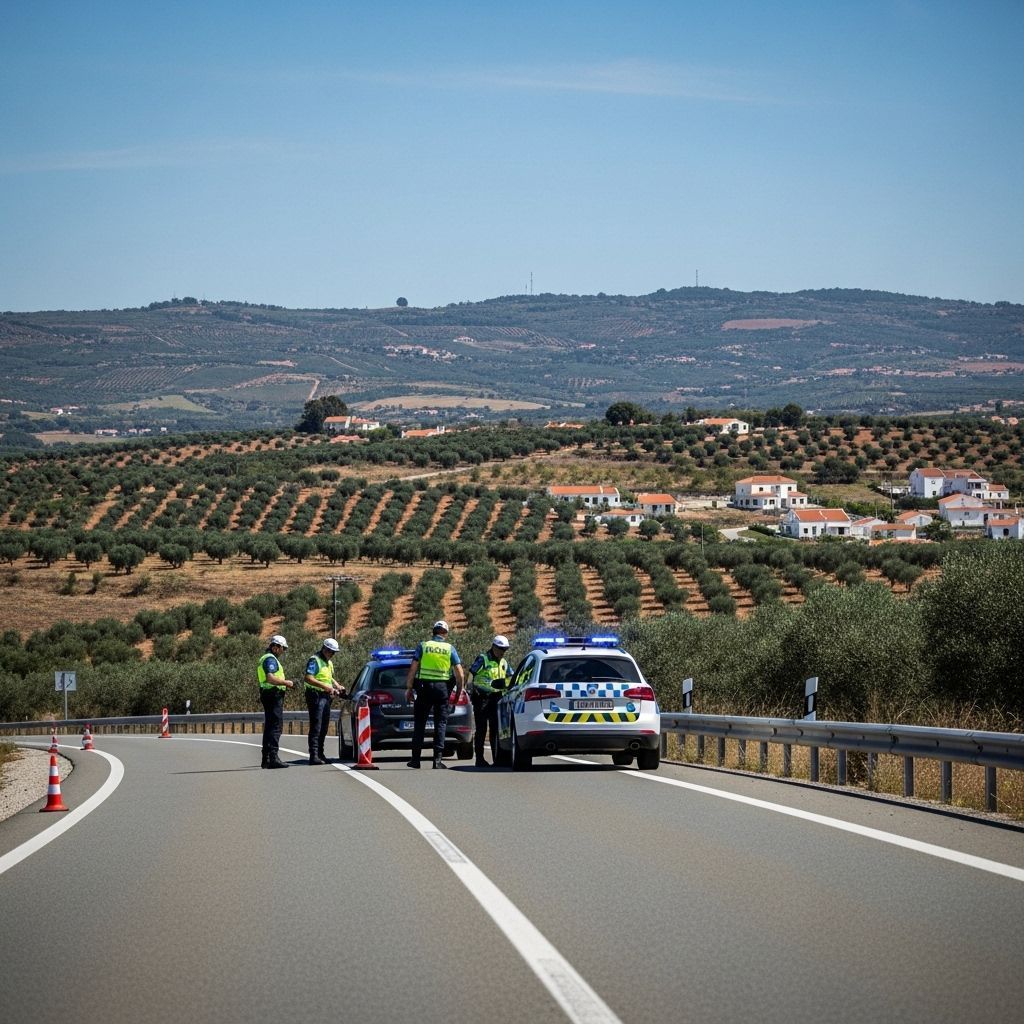
The Portugal Ministry of Internal Administration has authorized the pre-retirement of approximately 900 members of the Polícia de Segurança Pública (PSP), Portugal's main urban police force, this year—a move that will reshape the country's largest police service in what officials describe as the first net-positive recruitment balance in over 15 years.
Why This Matters
• Pre-retirement bottleneck broken: Nearly 900 officers—many in their 60s—will finally exit under long-stalled early retirement rules, thanks to two simultaneous training courses producing over 1,400 fresh graduates by year-end.
• Generational renewal at scale: The exits clear space for younger recruits entering a profession that, until recently, saw one-third of its 20,687-strong workforce aged 50–59.
• Salary boost sweetens the deal: Entry-level PSP pay has jumped 43% since 2023, reaching €1,704/month in 2026, while risk supplements rose from €100 to €400—the largest increase on record.
• Two-phase exit strategy: Departures align with academy graduations in May (600 officers) and December (800 officers), ensuring street patrols remain staffed during the transition.
The Pre-Retirement Backlog
For years, Portugal's police unions have complained that only a fraction of eligible officers—those with 55 years of age and 36 years of service, or category age limits—could access pre-retirement due to annual budget caps embedded in state finance laws. The Associação Sindical dos Profissionais da Polícia (ASPP/PSP), the main union representing PSP officers, filed three administrative lawsuits in March 2026 challenging what it calls "successive violations" of professional statutes, arguing that treasury-driven quotas trap qualified personnel in active duty long past eligibility.
Interior Minister Luís Neves, addressing the Assembleia da República's Constitutional Affairs Committee, confirmed that authorization for the 900 departures came after the PSP National Directorate formally requested permission. "This will only be possible because, for the first time in more than 10 years since 2015, the force is running two agent-training courses in the same calendar year," he explained.
A Ministry of Internal Administration source clarified that the exits will occur in two tranches: the first wave departs in May when 600 trainees complete their courses at the Torres Novas police academy (located in central Portugal, about 130 km northeast of Lisbon), and the second in December upon graduation of another 800 cadets. Many departing officers have already exceeded the legal thresholds, with several reaching 60 years old while waiting for clearance.
Record Recruitment Momentum
The latest admission cycle, which closed in December 2025, drew over 4,000 applicants—the highest total in five years. New eligibility rules raised the maximum entry age from 30 to 35 and lowered minimum height requirements for men to 1.60 meters, expanding the candidate pool. The next cohort is scheduled to begin training in the second half of June 2026.
Neves emphasized that the dual-course strategy represents a structural turning point. "Our forecast is to return to a positive balance, for the first time in more than a decade and a half, between entries and exits," he stated, noting that the PSP's aging workforce—where over half the force surpassed 40 years of age in 2024—has long hindered operational flexibility.
What This Means for Residents
The personnel refresh carries tangible implications for public safety and administrative efficiency. During his parliamentary testimony, Neves unveiled plans to strip administrative duties from patrol officers, replacing them with civilian staff to maximize street presence. "Police officers are meant to be on the street fulfilling their mission. Administrative tasks can be performed by others," he declared, ordering a full inventory of PSP members currently assigned to desk roles.
For daily life in Portugal's major cities, this means:
• Lisbon and Porto residents may experience temporarily uneven police presence during the May and December transition periods as new recruits deploy to neighborhoods. However, the goal is to increase overall street patrols once the reorganization stabilizes, potentially improving emergency response times and community visibility.
• Tourist-heavy areas, particularly in Lisbon's Baixa and Porto's riverside districts, should see relatively consistent coverage throughout the transition, as the PSP typically prioritizes these zones for security continuity.
• Administrative services at precinct counters may initially slow during the changeover but should improve once civilian administrative staff take over desk duties currently handled by police officers.
A reorganization of the PSP's Lisbon metropolitan command is already underway, designed to free up additional personnel for patrols and community engagement. The minister also signaled an end to the longstanding practice of Lisbon and Porto municipal police forces (distinct from the PSP, these city-specific forces handle local public order and traffic within their municipalities) recruiting exclusively from PSP ranks. "If I were president of one of these municipalities, I would recruit with my own career framework and disciplinary capacity," he remarked, confirming that both mayors have been briefed on the transition.
Neves coupled these announcements with a hardline stance on misconduct. "I will be absolutely inflexible toward deliberate wrongdoing," he told lawmakers, disclosing that he has signed "numerous dismissal orders—some involving cases many years old" since taking office in February 2026. He instructed the Inspector-General to accelerate disciplinary proceedings, stating that officers guilty of "gross and serious violations" must be expelled swiftly to prevent statute-of-limitations failures.
Union Demands Beyond Pre-Retirement
While the pre-retirement authorization addresses a key grievance, other tensions persist. Negotiations on pay scales, career progression, and supplement revisions—launched in January 2025—were suspended in March 2025 when the government fell. The ASPP/PSP abandoned talks late last year, accusing authorities of reneging on a July 2024 agreement that promised a comprehensive salary review.
The 2024 accord did deliver a phased €300 increase to the risk-and-service supplement, lifting it from €100 to €400 by 2026, and raised hourly rates for off-duty contracted work (known as gratificados—essentially paid security shifts for private events or businesses) from €26.50–€62.50 to €36.46–€85.96 per four-hour shift. Yet unions argue that base supplements have not been revised since 2009, and they continue to decry "widespread abuse" in cutting rest days to cover staffing shortages—a practice they link to burnout and mental health crises.
Neves pledged to reconvene "very soon" with PSP unions and Guarda Nacional Republicana (GNR) associations (the GNR is Portugal's gendarmerie-style force primarily responsible for rural areas, highways, and border control), promising proposals that account for their earlier submissions. The government has also committed €134.9 M for 2026 infrastructure and equipment upgrades, including delivery of nearly 1,300 new vehicles to both forces.
The Broader Security Overhaul
The pre-retirement wave coincides with other structural shifts. The GNR is standing up a reactivated Traffic Brigade with approximately 1,300 personnel—matching its current traffic-enforcement headcount but now under unified national command rather than district-level oversight. Neves argued that the original brigade's 2007 dissolution cost the force "a fundamental component of continuous, specialized, risk-oriented enforcement," and vowed the restored unit will focus on highways, complementary networks, and motorways.
Separately, the GNR's Emergency Protection and Rescue Unit (UEPS)—which celebrated its 20th operational anniversary in February and its sixth year as an autonomous unit—has logged over 76,000 wildfire interventions with a 94% success rate on airlifted initial-attack missions. The unit now fields more than 1,100 specialized personnel across all mainland districts, managing 40-plus aerial-asset centers and conducting over 4,000 annual helicopter sorties.
Looking Ahead
For Portugal's expatriate and investor communities, the personnel reset offers both reassurance and a reminder of systemic fragilities. The injection of younger officers may improve street visibility and responsiveness, yet the departure of nearly 900 experienced hands—combined with ongoing union disputes over workload and pay—underscores the strain on a force that patrols Europe's westernmost capital and a sprawling coastline.
Whether the "positive balance" Neves predicts translates into faster emergency response times, reduced property crime in tourist zones, or smoother bureaucratic interactions at precinct counters will depend on how effectively the incoming cohorts integrate and whether promised administrative reforms materialize. With the government now investing record sums in vehicles and infrastructure, and union leaders watching closely for follow-through on salary talks, 2026 shapes up as a pivotal year for Portugal's internal security apparatus.