Portugal's incoming President António José Seguro and Prime Minister Luís Montenegro met behind closed doors for 160 minutes on Tuesday at the Palácio Nacional de Queluz, marking the first substantive encounter between the two leaders just two weeks before Seguro's formal inauguration on March 9. The meeting centered on the government's Portugal Transformation, Recovery and Resilience (PTRR) program, a multibillion-euro initiative designed to repair storm damage and modernize the nation's infrastructure.
The session signals how Seguro—who captured a commanding 67% election victory on February 8—plans to approach his largely ceremonial role. Unlike his predecessor's high-visibility media engagement, Seguro's team announced the meeting would focus on formal courtesies and detailed briefings rather than public statements. Both leaders departed without offering comments to the press corps stationed outside the palace.
Storm Recovery and Institutional Cooperation
The PTRR program is the government's response to recent severe storms that damaged infrastructure, agriculture, and housing across multiple regions. Funding streams include European Union recovery grants and loans, state budget allocations, and carefully managed public debt issuance. For residents, the practical implications include faster reconstruction permits, subsidized repairs for storm-damaged homes, support for affected small businesses, and infrastructure upgrades designed to reduce future flood and wind damage.
Seguro's willingness to engage in a detailed technical briefing on storm recovery suggests he views this as an area where cooperation with Montenegro's center-right PSD/CDS-PP minority government is possible. His advisers have stressed that he prioritizes solutions over partisan disputes, consistent with his campaign pledge to represent all Portuguese.
The Labor Reform Question
Yet cooperation has clear boundaries. Seguro has publicly stated that he will veto labor legislation if the government pushes reforms that destabilize workers or exacerbate inequality. The Portuguese President holds constitutionally guaranteed veto power, which would force parliament to muster a supermajority to override such action. Given Montenegro's minority government status, a presidential veto would effectively block contentious bills.
According to analysts, Seguro's concerns focus on job security protections, wage fairness, and the role of immigrants in the economy. He has emphasized that foreign workers—particularly in construction and social care sectors—are essential to Portugal's demographic and economic sustainability. Political observers suggest that any reforms undermining collective bargaining rights or marginalizing immigrant workers could trigger a confrontation between Belém Palace and the Prime Minister's office.
Montenegro, meanwhile, has pledged full cooperation on health, housing, and education—the three policy domains Seguro identified as presidential priorities. This pragmatic approach reflects the political reality that Montenegro's minority government depends on ad hoc parliamentary support and cannot afford to alienate the President.
A Shift in Presidential Style
Portugal now enters a phase of institutional cohabitation between a center-left President and a center-right government—a dynamic that has shaped Portuguese politics throughout the democratic era. However, Seguro's approach differs notably from his predecessor. Marcelo Rebelo de Sousa, who served until March 9, cultivated a reputation for high-visibility engagement, frequently appearing at disaster scenes and offering public commentary on political developments.
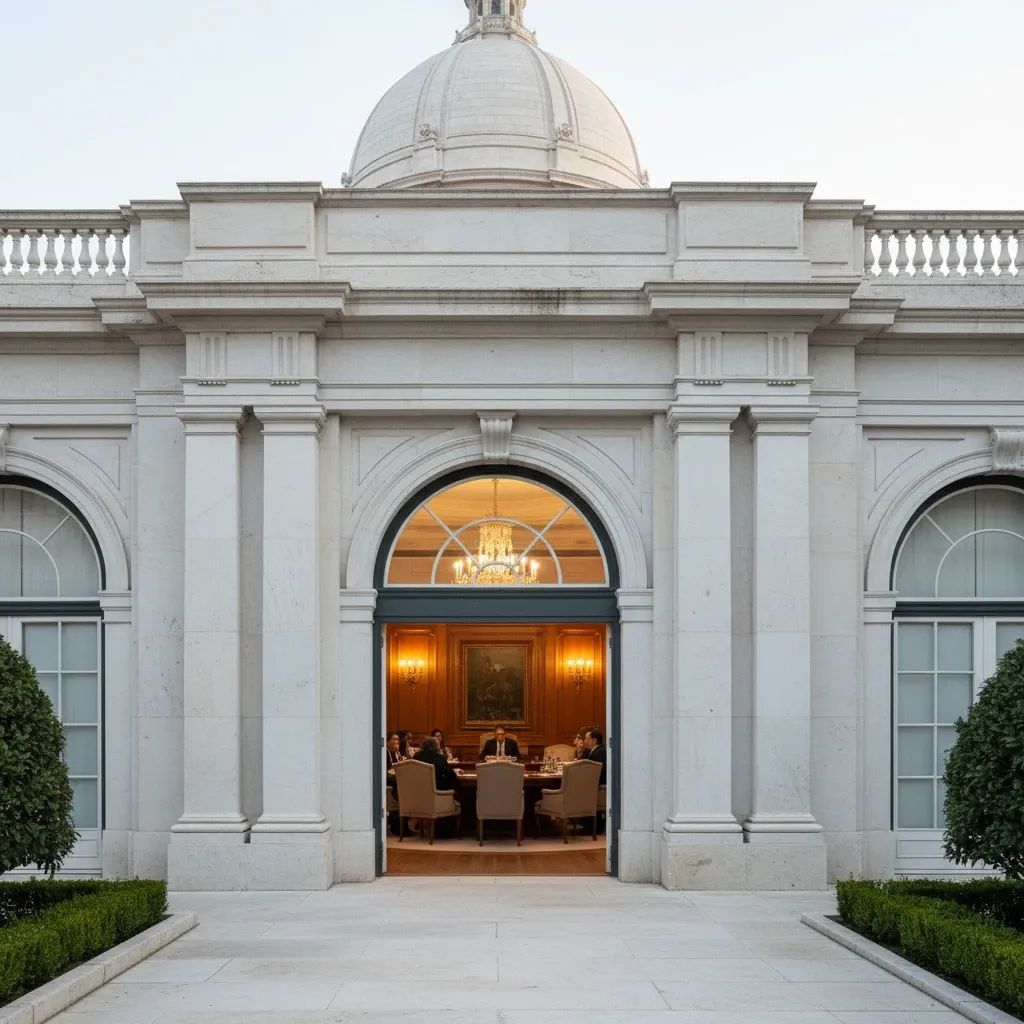
Seguro's style is more measured and discreet. The contrast was evident in the visual staging of Tuesday's meeting: both men seated at a round table, an arrangement reminiscent of the post-election meeting between Marcelo and former Prime Minister António Costa a decade earlier, which also lasted approximately two and a half hours at the same venue.
Political observers note that Montenegro reportedly told allies he prefers the predictability of a more restrained presidency over the unpredictable media omnipresence of his predecessor. Whether this shift will stabilize governance or create space for conflicts to escalate unchecked remains to be seen as the administration takes shape.
What Comes Next
The March 9 inauguration at the Assembly of the Republic will formally transfer full presidential powers to Seguro, ending his transitional status. Until then, he will continue working from his Queluz office, meeting ministers, party leaders, and civil society figures to establish relationships and understand the political landscape.
The coming weeks will test whether Tuesday's substantive meeting represents genuine cooperation or merely a courteous opening move. Seguro has signaled openness to compromise while establishing clear boundaries around labor rights, social stability, and immigrant integration. Montenegro needs presidential support to govern effectively in a minority government situation but cannot appear to compromise his center-right coalition's core positions.
For residents, the practical outcomes will matter most. If Seguro and Montenegro reach agreement on storm recovery funding, healthcare reform, and housing supply, the next four years could deliver tangible improvements to daily life. If disagreements over labor law, budget priorities, or parliamentary dissolution lead to deadlock, Portugal risks political paralysis at a time when the economy, climate resilience, and demographic challenges all demand decisive action.
The decision to conclude Tuesday's meeting without public commentary reflects both leaders' understanding of their respective roles in this new political phase. The real work of governance, they have signaled, happens behind closed doors.