

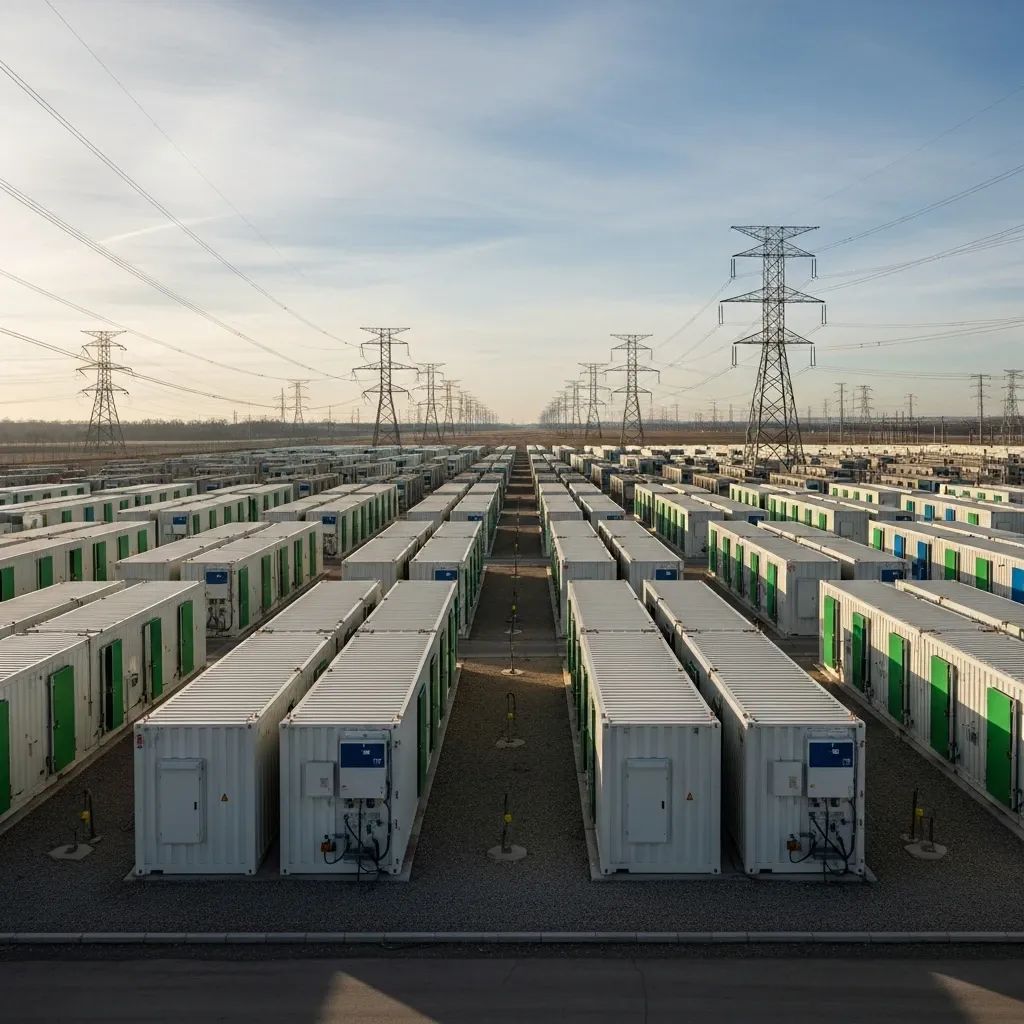
Portugal-based Greenvolt has secured nearly €60 million to build Central Europe’s largest battery storage facility, a move that strengthens EU grid resilience and propels Portugal into a leading role in clean energy exports.
Why This Matters
• Renewable integration: Batteries become indispensable as wind and solar contribute over 30% to EU power mixes.
• Economic stimulus: The investment rivals the budget for modernizing Lisboa’s tram network.
• Export credentials: Marks Portugal’s shift from energy technology importer to exporter of large-scale infrastructure.
• Local benefits: Success abroad can lower borrowing costs at home, potentially shrinking household electricity bills.
Europe’s Growing Need for Flexibility
As the European Union races toward its 2030 climate goals, intermittent generation from wind and solar creates wide electricity demand swings. Analysts warn of a roughly 187 GW storage gap by decade’s end. Portugal’s own peak load—about 9 GW on a winter evening—offers a snapshot of how quickly supply can falter without backup. Battery arrays, once an afterthought, are now the backbone of grid stability across the bloc.
Inside the Buj Battery Park
Nestled in northeastern Hungary, the Buj project will deploy 99 MW of power capacity and store 288 MWh of energy—enough to light up around 60,000 homes for four hours. Scheduled for operation in the first quarter of 2026, this standalone installation won project financing of almost €60 M from a syndicate of European banks. While cells arrive from Asia, core engineering by Portugal teams and control-software development remain anchored in Portugal, ensuring high-value expertise stays on the Iberian Peninsula.
Portugal’s Leap from Consumer to Exporter
Just a few years ago, Portuguese firms largely purchased foreign battery solutions. Today, a 14 GW global pipeline—including 4.7 GW of storage—signals a dramatic role reversal. Alongside Greenvolt, names like Efacec and Galp are bidding on projects from Europe to Asia. Data from the Portugal Ministry of Economy shows service exports tied to renewables have doubled to over €1 B annually, thanks to growth in renewables engineering, asset management, and software services.
What This Means for Residents
• High-skilled jobs: Openings for power-system engineers, data scientists and project-finance specialists in Lisboa and Porto, with salaries often above €40,000.
• Cheaper financing: Proven execution abroad can trim borrowing rates for Portuguese infrastructure, easing pressure on electricity tariffs.
• Investment opportunities: Retail investors can tap into growth by buying shares on Euronext Lisbon, as analysts eye upside if the storage pipeline expands.
• Local workshops: Expect more industry gatherings in Porto and Coimbra to hone skills in battery integration and grid optimization.
Looking Ahead: Shifting Power Balances
Brussels is poised to designate large-scale batteries as critical infrastructure, unlocking preferential loans from the European Investment Bank. Portugal’s early mover advantage could let national experts help shape new grid code revisions rather than just follow them. For households and businesses in Portugal, that may translate into stronger energy sovereignty, more domestic innovation hubs, and, ultimately, a gentler monthly power bill.


