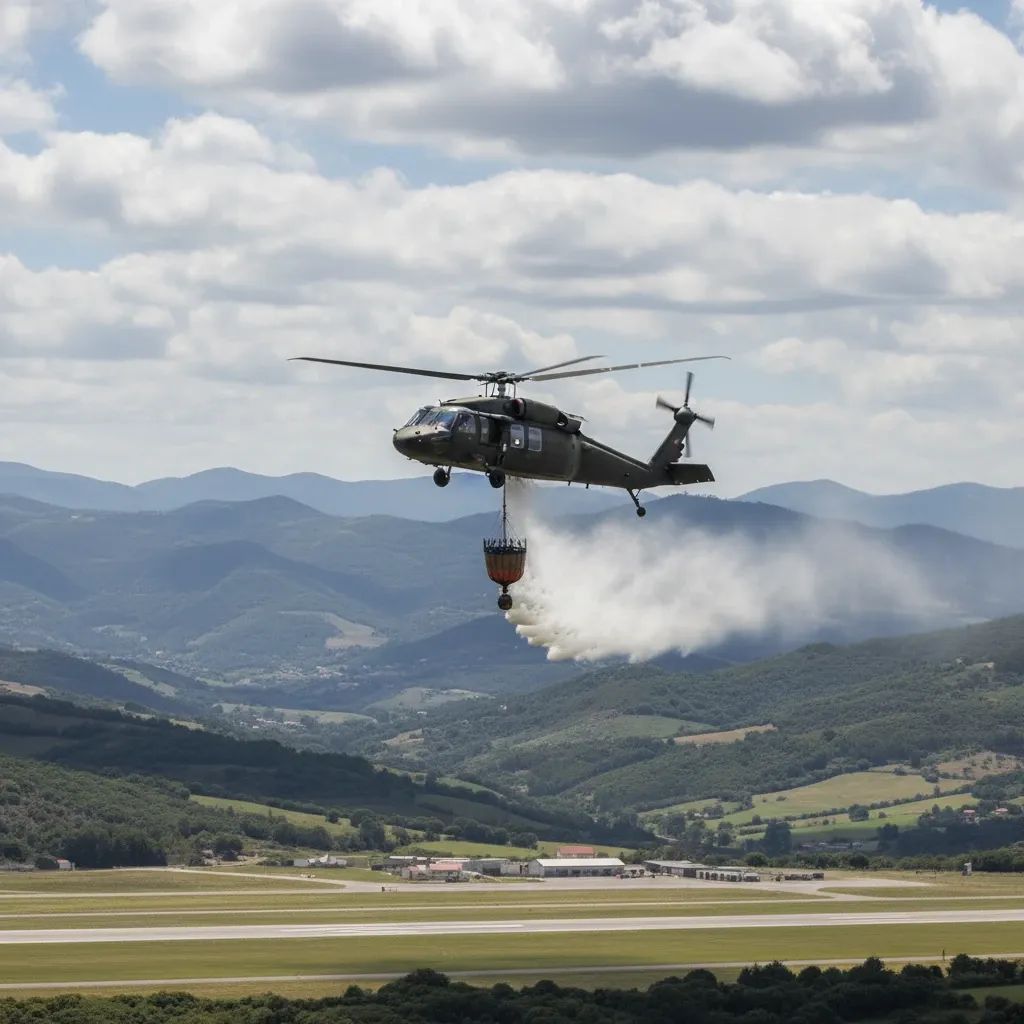
Portugal's Air Force has just completed the arrival of its sixth firefighting-ready UH-60 Black Hawk, positioning the country to field a state-owned wildfire response fleet—a transition years in the making that shifts reliance away from contracted aircraft toward permanent, military-grade aerial capacity.
Why This Matters
• Operational deployment begins this year (2025): The Air Force is scheduled to launch firefighting missions with the Black Hawks before summer 2025, ending decades of seasonal contractor dependence. Full nine-ship formation will be operational by the 2027 fire season.
• Three thousand liters per drop: Each aircraft can carry 2,950 liters of water or retardant plus a 12-member fire brigade, enabling simultaneous attack and ground deployment.
• 13-helicopter future: The current contract covers nine combat units; four additional Black Hawks for medical evacuation are due by August 2026, creating a dual-purpose fleet financed largely by EU Recovery and Resilience Plan grants.
Operational Timeline at a Glance
• November 2023: First two Black Hawks delivered
• December 2024: Third helicopter arrives
• Early 2025: Three more arrive (including this sixth one delivered this month)
• Before summer 2025: Firefighting missions begin with available aircraft
• End 2026: Final three firefighting helicopters + four medical helicopters complete the 13-aircraft fleet
• 2027: Full nine-ship firefighting formation fully operational
Six Down, Three to Go
The newest aircraft—the second in the UH-60L "Lima" variant—touched down this month at Air Base No. 8 in Ovar after a transatlantic flight via Lajes Field in the Azores. Over the next few weeks it will undergo acceptance trials before joining Squadron 551 "Panteras," the Air Force unit reactivated in November 2023 specifically for wildfire and rapid-response missions.
Portugal now operates six Black Hawks, with three more under contract and scheduled for delivery by the end of 2026. The program represents the most significant overhaul of Portugal's firefighting infrastructure since the government transferred wildfire aviation assets to the Air Force in 2018—a reform prompted by catastrophic fire seasons that exposed gaps in coordination, availability, and equipment performance.
Why the "Lima" Upgrade Changes Everything
The UH-60L introduces upgraded engines and a new transmission system, extending operational lifespan and boosting performance in the hot, high-altitude conditions typical of interior Portugal in July and August. Compared to the earlier "Alpha" models delivered in 2023, the Lima variant offers:
• Higher external load capacity: Up to 4,053 kg suspended, versus 3,600 kg on the Alpha.
• Weather radar: Enabling flight in low-visibility or stormy conditions—critical during the unpredictable wind shifts that characterize wildfire fronts.
• External hoist: Adding search-and-rescue capability, meaning the same airframe can pull hikers off ridges or evacuate elderly residents from cut-off villages.
These enhancements address two persistent complaints from fire commanders: insufficient payload for extended operations and weather-related groundings that left large fires unchecked for hours.
What This Means for Residents
For anyone living in Portugal's fire-prone interior—Castelo Branco, Viseu, Bragança, Guarda—the Air Force buildup translates into faster initial attack and longer on-scene persistence. A Black Hawk can reach any point in mainland Portugal within 30 minutes from Ovar, thanks to a cruising speed of 314 km/h and an operational radius of 555 km. Compare that to legacy medium helicopters, which often required repositioning flights or fuel stops, and the time saved becomes decisive.
The ability to carry a full firefighting team means the aircraft can establish a forward command post, lay hose, and begin ground suppression while water drops continue—a tactic proven in California and Australia but new to Portugal's operational doctrine.
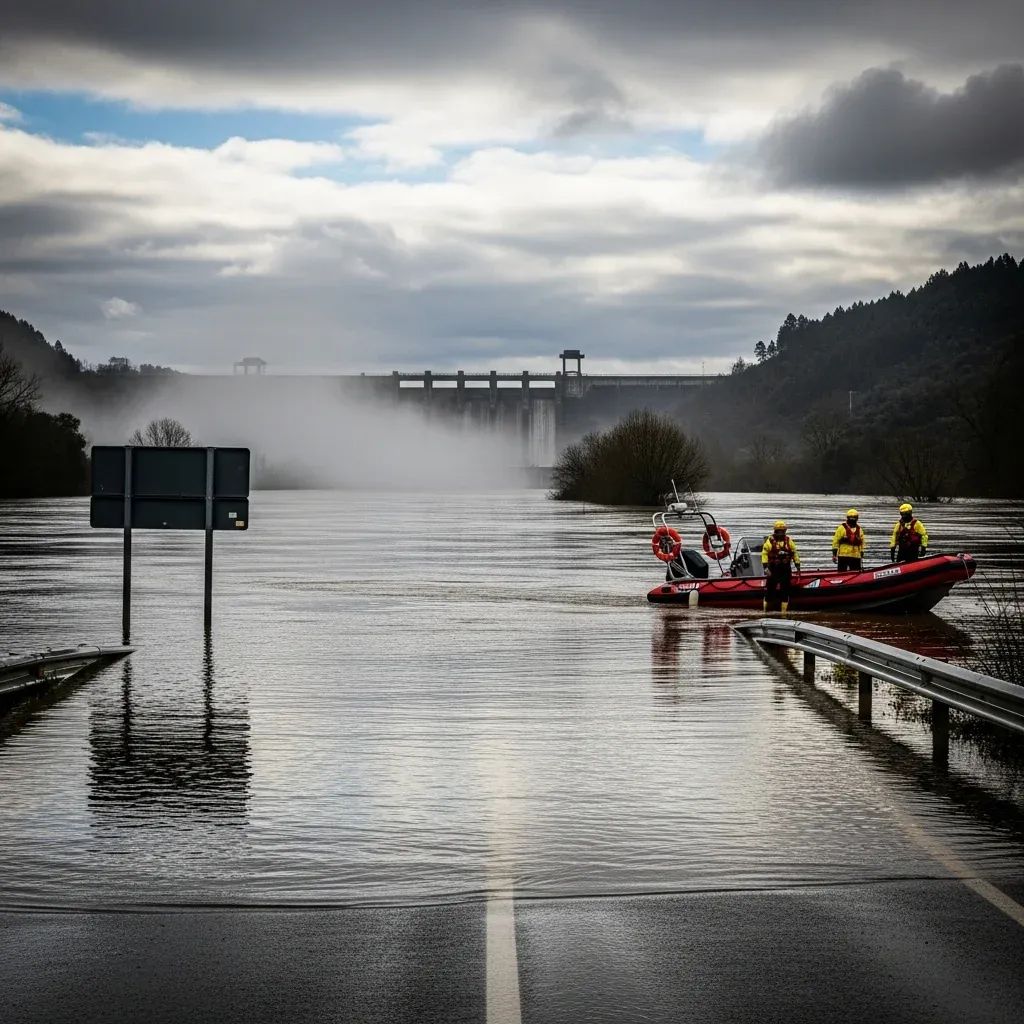
Beyond wildfire season, the dual-role design allows the same helicopters to support flood rescues, medical evacuations, and civil-protection emergencies. Residents in remote areas, where hospital transfers currently rely on road ambulances navigating narrow mountain highways, stand to benefit most from the expanded medevac fleet arriving in August 2026.
Follow the Money: EU Funds Drive Expansion
The Plano de Recuperação e Resiliência (PRR)—Portugal's slice of the EU's post-pandemic recovery budget—is covering the lion's share of procurement costs. While the Air Force has not disclosed per-unit pricing, comparable UH-60M models cost approximately €20 M each, suggesting the nine-helicopter program approaches €180 M before maintenance infrastructure, pilot training, and base upgrades.
That investment places Portugal in the upper tier of European firefighting modernization efforts, alongside the Czech Republic (acquiring two S-70 Firehawks, a dedicated firefighting Black Hawk variant) and Greece, which has expanded its Canadair fleet. Spain and France continue to rely more heavily on contracted aerial tankers, while Slovenia and Turkey have opted for smaller, cheaper platforms like the Air Tractor AT-802F.
The choice of a military utility helicopter over purpose-built firefighters reflects Portugal's strategic calculus: maximize versatility, minimize seasonal idle time, and retain dual-use capability for NATO and civil-defense commitments. The trade-off is higher operating cost—military-grade avionics, crew training, and maintenance standards exceed those of civilian fire contractors—but proponents argue the year-round readiness and sovereign control justify the premium.
Operational Timeline and Training Bottlenecks
Squadron 551 is currently in its certification phase, with flight crews undergoing qualification until late 2026. The Air Force describes the training regimen as "rigorous" and "requiring extreme experience," an acknowledgment that flying water-drop missions in smoke, turbulence, and mountainous terrain demands proficiency beyond standard transport operations.
The first two Black Hawks, delivered in November 2023, have been used primarily for pilot conversion and tactics development. The third helicopter arrived in December 2024. The remaining three of the first contract batch are scheduled for delivery early 2025, including the sixth that arrived this month. The final three helicopters from the September 2024 contract are slated for delivery by December 2026, allowing the squadron to field a full nine-ship formation by the 2027 fire season.
Until then, Portugal's wildfire response remains a hybrid model: Air Force Black Hawks for northern and central districts starting summer 2025, contracted helicopters (mostly Kamov Ka-32s and AS350 Squirrels) for southern regions, and two AW119 Koalas for aerial observation. The Air Force also operates two DHC-515 Firefighter amphibious bombers, leased from Longview Aviation, which can scoop water from reservoirs and deliver 6,000-liter drops—double the Black Hawk's capacity but with slower turnaround times.
Thirteen and Counting: The Medical Wildcard
The Air Force's separate tender for four medical-configured Black Hawks, due by August 2026, opens a parallel capability that could reshape emergency healthcare delivery in rural Portugal. These helicopters will be equipped with intensive-care interiors, defibrillators, and ventilators, enabling critical-care transport from accident scenes to Lisbon or Porto trauma centers.
If integrated with the Instituto Nacional de Emergência Médica (INEM) dispatch system, the fleet could cut response times in the Alentejo, Trás-os-Montes, and Beiras by up to 40%, according to Air Force planning documents. During wildfire season, the medical birds can support burn-victim evacuations, a mission that previously required diverting combat-configured helicopters or relying on civilian air ambulances with limited availability.
Whether the medical and firefighting fleets will cross-train crews or maintain separate squadrons remains undecided. Budget-watchers note that maximizing utilization across 13 airframes will be essential to justify the program's cost, especially as EU recovery funds taper after 2027.
European Benchmarking and Sovereign Capacity
Portugal's pivot toward state-owned firefighting aviation mirrors a broader European trend. The European Commission's rescEU program has pre-positioned firefighting helicopters and fire brigades in Portugal, France, Greece, and Spain, recognizing that transnational wildfire response requires more than bilateral aid agreements. The Czech Firehawks, for instance, will be based domestically but available for rapid deployment across the EU under mutual-assistance protocols.
Still, Portugal's approach is distinctive. Unlike Spain, which maintains a large fleet of Canadair CL-415 amphibious bombers but outsources most helicopter operations, or France, which relies heavily on Tracker turboprops and contracted helicopters, Portugal is building a vertically integrated Air Force capability spanning observation (AW119), medium attack (UH-60), and heavy bombardment (DHC-515).
The long-term viability of this model depends on two variables: sustained political funding beyond the PRR horizon, and operational results during the 2025, 2026, and 2027 fire seasons. If the Black Hawks prove their worth—measured in hectares saved, lives protected, and reduced dependence on foreign contractors—the program will likely expand. If maintenance costs spiral or crew training lags, pressure to revert to cheaper contracted solutions will mount.
The 2025-2026 Fire Seasons: Proving Ground
With the sixth Black Hawk now on Portuguese soil and operational deployment scheduled for summer 2025, the upcoming fire seasons become the program's proving ground. Air Base No. 8 in Ovar, transformed from a training airfield into a frontline firefighting hub, will host the majority of the fleet, with forward operating locations established in fire-prone districts as conditions dictate.
For residents in high-risk areas, the immediate advice remains unchanged: clear brush, maintain firebreaks, and heed municipal evacuation orders. The Black Hawks enhance response capacity but do not eliminate the underlying risk—climate projections show hotter, drier summers ahead, and Portugal's rural depopulation leaves many areas without the manpower for ground-based containment.
What the new fleet does offer is a buffer: faster attack, greater persistence, and the capacity to move firefighters into positions inaccessible by road. Whether that buffer proves sufficient will become clear in the months ahead, when the first major wildfire tests Squadron 551's readiness and the country discovers whether €180 M in EU-funded helicopters can bend the curve on a crisis that has defined Portuguese summers for two decades.