Holiday gatherings meant to reunite families have again exposed the price paid on Portuguese asphalt. Over the 18-day festive window spanning Christmas and New Year, 38 people never made it home, highlighting a stubborn challenge for a country that prides itself on safe highways yet still struggles with risky behaviour behind the wheel.
Quick glance at the heavy toll
• 6,083 crashes recorded between 18 December and 4 January
• 38 deaths – a 31 % jump versus last year’s holiday season
• 127 seriously injured, 1,643 slightly hurt
• 233,937 drivers checked, 25,928 violations detected by GNR and PSP
A darker December on national roads
While many in Portugal were tracking ferry schedules to the islands or plotting the fastest route to the família in Trás-os-Montes, traffic police were logging an average of 338 accidents per day. The spike in fatalities erased gains made in 2024/25, when 25 people died during the same period. Road-safety analysts note that 2025/26 ends a three-year run of gradual improvement and pushes the country further from the EU target of halving road deaths by 2030.
Where it happened – and who was watching
28 of the 38 deaths occurred on stretches supervised by the Guarda Nacional Republicana (GNR) – mostly high-speed corridors such as the A1 and A2. The remaining 10 deadly crashes unfolded inside urban areas, patrolled by the Polícia de Segurança Pública (PSP). This divide is hardly new, yet the contrast has sharpened: rural and inter-city routes, despite benefiting from recent resurfacing works financed by Brussels funds, continue to produce the deadliest outcomes when speed, fatigue and alcohol combine.
Why so many lives were lost
Investigators attribute more than half of the fatalities to single-vehicle roll-overs and run-offs – despistes that confirm drivers’ own errors remain the chief threat. Enforcement data reinforce the picture:
• 3,828 speeding tickets in 18 days
• 1,103 arrests for blood-alcohol levels at or above 1.2 g/l
• 506 motorists caught without a valid licence
Authorities also flag the 3,625 citations for skipped vehicle inspections, warning that bald tyres and faulty brakes often turn a manageable skid into a fatal slide on winter-slick tarmac.
Policing the party season
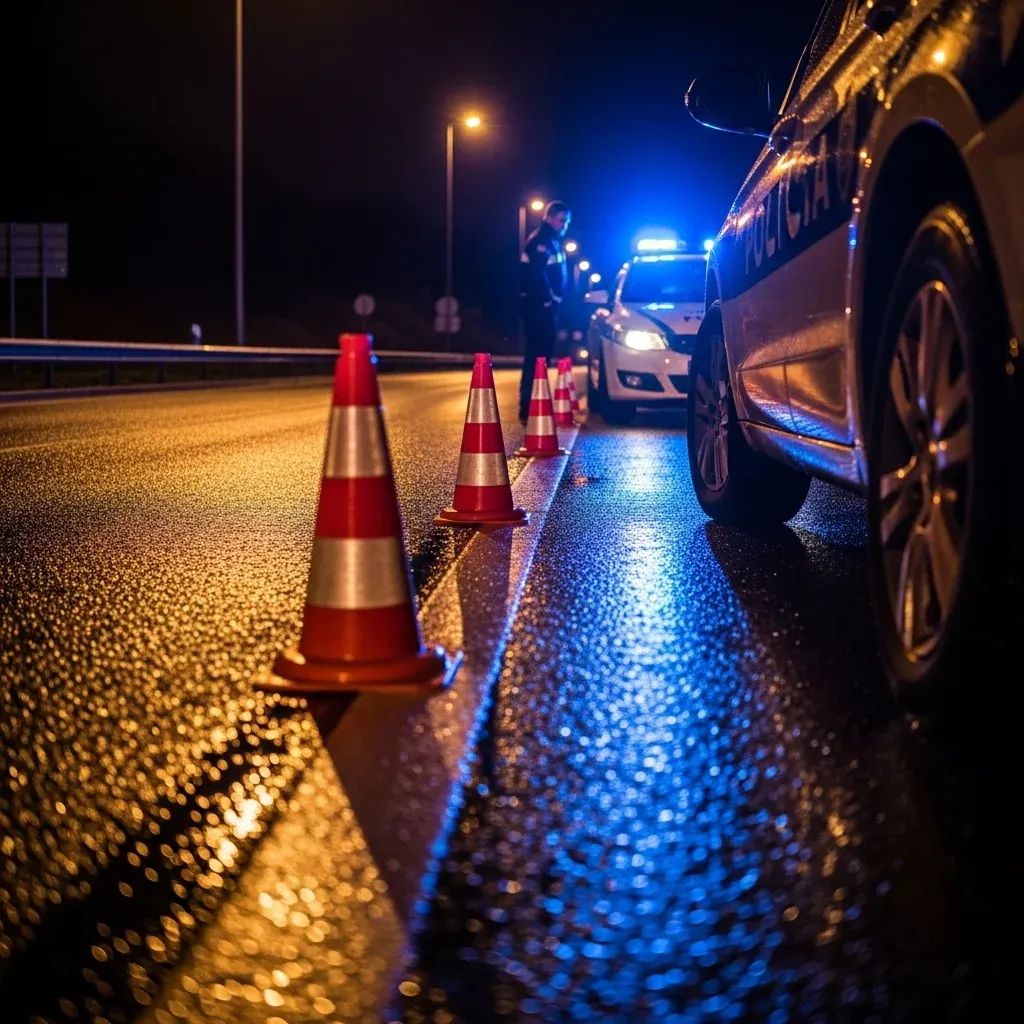
Under the banner Operação Natal e Ano Novo 2025/2026, GNR and PSP broadened checkpoints from Viana do Castelo to Faro. Extra patrols near shopping centres, nightlife zones and motorway service areas aimed to match the surge in traffic. Despite the visible presence – breathalyser vans, drones clocking speeders, unmarked cars on the EN-125 – the final balance sheet shows that behavioural change lags behind enforcement capacity.
The human face behind the numbers
Road-safety NGO EstradaViva estimates that every holiday fatality leaves at least 10 relatives dealing with long-term trauma. Rehabilitation centres in Coimbra and Porto report waiting lists for ICU discharges after the season, a reminder that 127 serious injuries translate into months of physiotherapy and lost wages. Psychologists working with ANSR’s support line say calls from grieving families doubled in the first week of January.
Portugal versus the rest of Europe
Provisional Eurostat charts place Portugal’s 2025 road-death rate at roughly 57 per million inhabitants, below the EU average of 62 but far from the Scandinavian benchmark of under 30. Holiday periods typically account for one tenth of annual fatalities, so the 38 deaths recorded this Christmas-New Year run suggest that Portugal may face an uptick in its overall 2026 statistics unless mid-year corrective action is taken.
What changes next
ANSR will extend its “O melhor presente é estar presente” campaign into Carnival, shifting adverts from sentimental messaging to graphic survivor testimony.
Parliament is scheduled to debate a draft law raising fines for repeat mobile-phone offenders and allowing judges to impose mandatory use of alcohol interlock devices.
Infra-Portugal plans to roll out additional average-speed cameras on the A8 and IP3 corridors by Easter, after a pilot near Leiria delivered a 37 % drop in collisions.
How drivers can keep 2026 from repeating the same headline
Safeguarding the next trip remains, above all, a personal decision. Road-safety experts recommend:
• Planning journeys outside peak-hour waves announced by ANSR bulletins.• Swapping long single-driver stints for two-hour rotations.• Checking tyre pressure on colder mornings – an under-inflated wheel at 120 km/h adds 6 m to braking distance.• Assigning a sober driver before the first toast.
Public campaigns, tougher penalties and smarter technology may close some of the gap, but the fatal holiday balance sheet shows that every kilometre still starts with the person turning the ignition key.