A Five-Year Window Closing: How Portugal Will Reshape Waste, Air, and Coastlines by 2030
Portugal's environmental future hinges on decisions residents must make today. The Portugal Environment Agency (APA) has outlined a stark reality at the launch of its "Visão Ambiente 2030" strategic roadmap: without immediate and substantial changes in household behavior, municipal waste systems will collapse under the weight of accumulated debris, cities will choke on pollutants that exceed EU safety thresholds, and Atlantic erosion will claim hundreds of additional hectares. The window for voluntary action closes in 2026; the window for any action at all, by 2030.
Why This Matters
• Landfill crisis: Portugal sends over 50% of municipal waste to landfills, which are reaching capacity with no viable alternative sites available; residents must dramatically increase home sorting within five years.
• Air quality deadline: A new EU directive halves permitted pollution levels by 2030, requiring Portugal to overhaul urban transport, heating systems, and industrial operations before 2026 transposition deadlines create regulatory penalties.
• Coastal retreat accelerates: 1,400 hectares already lost to the sea; recent storms pushed some coastlines 20–30 meters inland; €111 million emergency intervention launched but not all beaches will be protected.
• Bio-waste is the lever: Organic matter comprises 38% to 40% of all household waste; improving separation rates for this single category could reposition Portugal closer to EU recycling targets.
The Waste Crisis That Built Itself in Seven Years
Portugal marked a genuine milestone in 2000 when the government shuttered its last open-pit landfill and implemented modern waste collection infrastructure. Progress continued through the early 2010s. Then momentum stalled. Since 2019, selective collection rates have remained frozen, leaving Portugal isolated among Western European peers. Germany, Austria, Belgium, and the Netherlands recycle more than half their waste and send virtually nothing to landfill; Portugal still depends on dumps for more than half its refuse.
The reason isn't technical failure—infrastructure exists. The barrier is behavioral. Most households lack convenient access to bio-waste collection, and even those with bins report confusion about what qualifies as compostable material. The numbers reveal the depth of the gap: as of late 2025, only 19% of homes in mainland Portugal had municipal bio-waste collection service throughout their entire municipality. That figure masks significant regional variance; coastal urban areas perform marginally better, while inland and rural zones remain nearly uncovered.
The Strategic Plan for Urban Waste (PERSU 2030) and the National Waste Management Plan (PNGR 2030)—both approved in March 2023—establish a pathway forward. By 2030, Portugal commits to:
• Achieving 60% recycling rates across all municipal waste
• Capping packaging waste at 70% recycled (with plastics at 55%, paper at 85%, glass at 75%)
• Reducing landfill disposal below 10% by 2035
Failure triggers EU infringement proceedings and financial penalties; more pressingly, it guarantees service breakdowns. Landfill operators already warn that current-trajectory sites will reach capacity within the decade. New dumps cannot be constructed—environmental regulations prohibit it, and communities consistently reject proposals. This explains the urgency in APA director Nuno Pimenta Machado's message: Portugal has essentially "five years to change its life."
The solution requires dual action. Households must separate bio-waste at source—not just toss it into general waste. Simultaneously, municipalities and waste management operators must deploy collection infrastructure rapidly, particularly in underserved regions. The government has allocated reinvested waste management fees toward network expansion and incentivized home composting schemes. But without household participation, these investments become expensive gestures. The alternative—watched by neighboring states—involves implementing "pay-as-you-throw" tariff systems that charge households by the kilogram of waste sent for disposal, a model that Denmark, Austria, and Switzerland use to drive behavioral change.
Air Quality: A Tightening Squeeze on Urban Mobility and Home Heating
If waste management is a crisis of slow accumulation, air quality poses an immediate public health emergency. Particulate pollution kills approximately 4,200 people annually in Portugal, yet most residents remain unaware of the severity or the regulatory changes rushing toward them.
The Air Quality Directive (EU) 2024/2881, which Portugal must incorporate into national law by end-2026, slashes the permissible concentration of nitrogen dioxide (NO₂) by roughly 50%. The current annual ceiling sits at 40 micrograms per cubic meter (µg/m³); the 2030 target drops to approximately 20.3 µg/m³. Equivalent reductions apply to particulate matter categories PM10 and PM2.5, as well as sulfur dioxide. This isn't a modest incremental adjustment; it's a regulatory overhaul that will force structural changes across transport, heating, and industrial sectors.
Lisbon's Avenida da Liberdade and Braga's city center already exceed the current 40 µg/m³ threshold regularly. The culprit is familiar: automotive traffic dominates pollution levels in urban zones. Residential wood and coal heating, particularly common in the interior regions, compounds the problem. Agricultural emissions in rural areas add pressure. Collectively, these sources create a compliance gap that will require rapid, costly intervention.
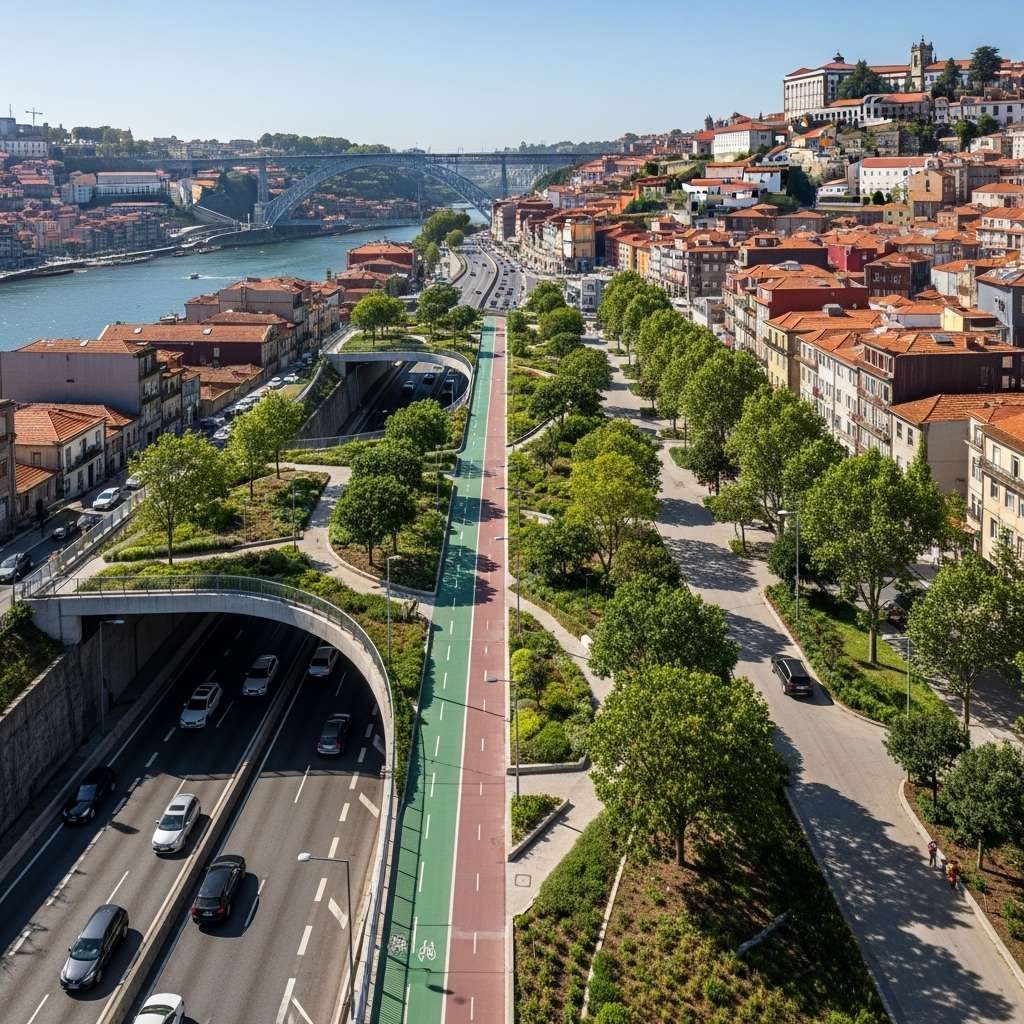
The government response is becoming visible. Low-emission zones in major cities face legislative advancement; older diesel vehicles will face restrictions or prohibitions. Public transport expansion is accelerating, particularly in the Porto and Lisbon metropolitan areas, though capital deployment lags ambition. Electric vehicle charging infrastructure is proliferating, but coverage remains concentrated in urban centers. Incentives to replace solid-fuel home heating systems are being drafted.
Political resistance poses the real obstacle. Traffic restrictions provoke backlash from commuters and delivery operators. Heating transition programs cost billions when subsidies are factored in. Yet the regulatory deadline is immovable. The FUTURAR project—a research initiative examining air quality trajectories toward 2030—warns that Portugal faces an "unstable and short-term window" for policy alignment and capital investment. Miss the 2026 transposition deadline, and enforcement actions from the European Commission become routine. Cities that continue exceeding standards face fines; residents cope with health consequences that will compound over years.
Coastal Erosion: When Geography Becomes Destiny
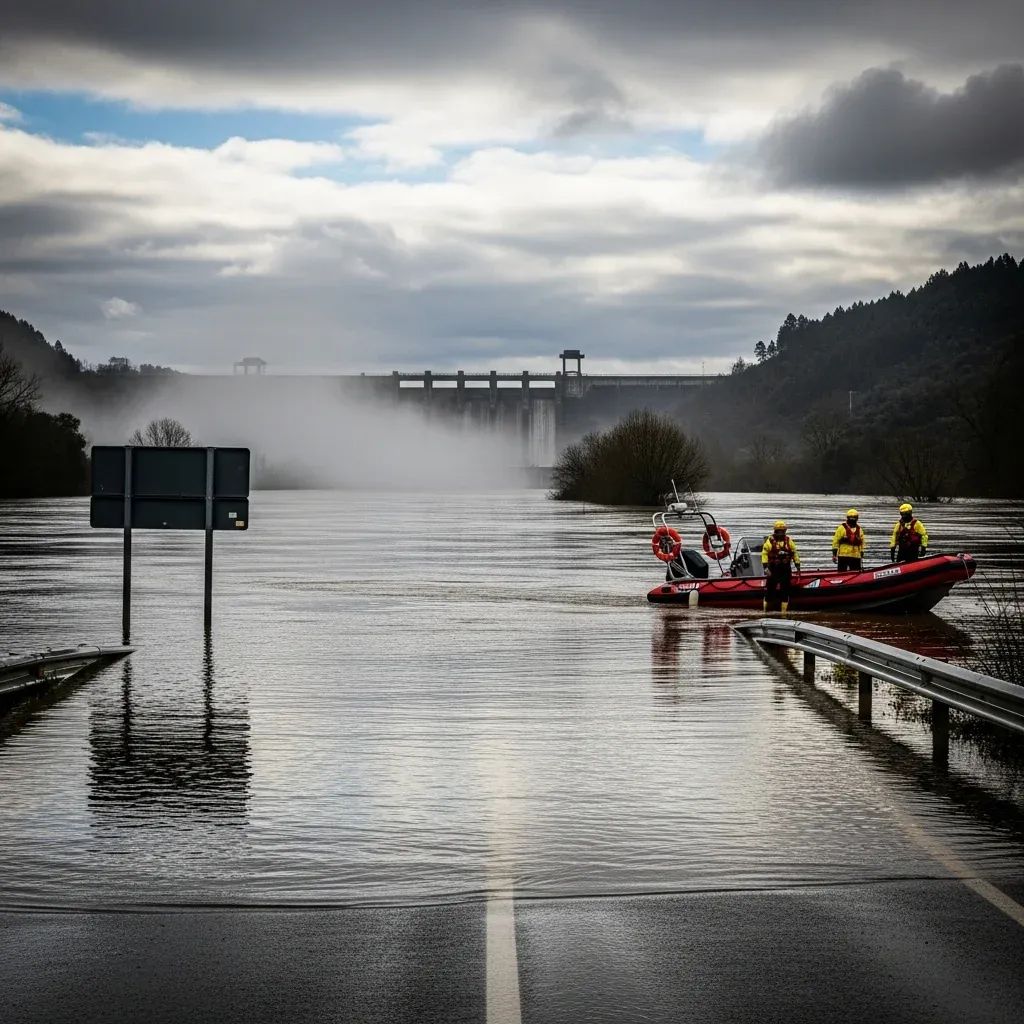
More than one-fifth of Portugal's 1,000-kilometer shoreline is actively eroding. In six weeks during early 2026, storms and high tides obliterated what took decades to accumulate. The damage survey conducted by the APA identified 571 critical incidents across 45 municipalities during the January-February storm sequence alone. Coastal erosion accounted for 36.7% of these events; cliff instability added another 30.6%. The municipality of Ovar bore the brunt, with 204 separate documented damage locations.
The scale of permanent loss is staggering. 1,400 hectares have already disappeared beneath rising seas—territory that will never be reclaimed. In multiple locations along the Espinho-to-Figueira da Foz stretch, the shoreline retreated 20 to 30 meters in a single weather event. This region suffers from a sediment deficit linked to the cascade of dams on the Douro River, which has interrupted the natural sand flow that historically replenished beaches. Infrastructure designed for 20th-century coastal geometry—beach houses, promenades, access roads—now sits perilously close to active erosion zones.
The government mobilized €111 million in emergency and long-term coastal defense spending. The allocation breaks down across temporal phases: €27 million for immediate emergency interventions, with €15 million committed for completion before the May 2026 bathing season and another €12 million by year-end. These funds target specific interventions: reconstruction of the seawall at Moledo (Caminha), beach profiling and sand replenishment at Vila Praia de Âncora, and large-scale sand feeding operations in the Algarve (between Quarteira and Garrão) and Costa da Caparica. In total, 86 urgent works are scheduled for completion by end-2026, with an additional 40 medium-term interventions spread across 2026-2027.
Yet this spending, however substantial, will not protect every stretch of beach. The Litoral XXI Action Plan (PAL XXI)—updated in 2019—frames coastal adaptation as a permanent, hybrid approach combining natural defenses (dune preservation, sediment restoration) with engineered solutions and zoning restrictions. Critically, the plan emphasizes that future construction must avoid high-risk erosion zones, a principle that will create real estate complications in areas designated as vulnerable. Insurance companies are already pricing risk more aggressively; permits for waterfront development will become harder to obtain; property values in some coastal communities face downward pressure.
What This Means for Day-to-Day Life in Portugal
For households: The immediate action is non-negotiable: participate in bio-waste collection. When municipal brown bins arrive, use them. Attend neighborhood composting training sessions. Understand that your separation habits directly determine whether your waste-collection fees rise, service disruption occurs, or system collapse accelerates. Recycling compliance isn't virtuous—it's survival infrastructure.
For urban residents, especially in Lisbon and Braga: Prepare for traffic friction. Low-emission zones will expand, likely with higher fees or time-based restrictions for diesel vehicles and older models. Public transit will improve, but unevenly. Parking will become scarcer or more expensive as cities prioritize electric vehicle infrastructure. Commuting patterns will shift; flexible work arrangements will become more valuable.
For coastal property owners and tenants: Monitor local erosion assessments published by the APA. Zoning maps indicating high-risk areas will influence property availability, pricing, and insurance costs. Some beaches will be temporarily inaccessible during sand-feeding operations. Others may be permanently redesignated away from development. Avoid long-term commitments in zones flagged as vulnerable; the cost of adaptation will ultimately be absorbed by residents through higher municipal taxes or insurance premiums.
For heating system owners: If your home uses wood, coal, or aging oil boilers, expect incentive programs—and eventually mandates—to transition to heat pumps or solar systems. This is not optional; regulations will follow. Retrofitting costs are substantial, but early adoption may qualify for better subsidy terms.
A Juncture That Will Define the Next Decade
The "Visão Ambiente 2030" document, which incorporates 24 expert contributions across climate, marine environments, energy, and transport topics, arrives at a strategic inflection point. Portugal achieved genuine success in renewable energy—ranking third in Europe for renewable electricity grid integration in late 2025. The government is positioning marine protection (targeting 30% of marine area under conservation status via the Madeira-Tore/Gorringe Marine Protected Area), and the National Nature Restoration Plan submission to the European Commission is due September 2026.
A deposit-return system for plastic and metal beverage containers launches in 2026, introducing immediate behavioral incentives for packaging reduction. These initiatives represent structural progress.
But progress will collapse if foundational challenges—overflowing landfills, toxic urban air, and accelerating coastal loss—remain unresolved. The years 2026-2030 form a test of whether Portugal executes ambitious environmental commitments or joins the roster of EU member states facing regulatory sanctions and ecological degradation. Voluntary action today by households and municipalities determines whether the next phase is managed adaptation or crisis response. The threshold is measurable and fast-approaching.