
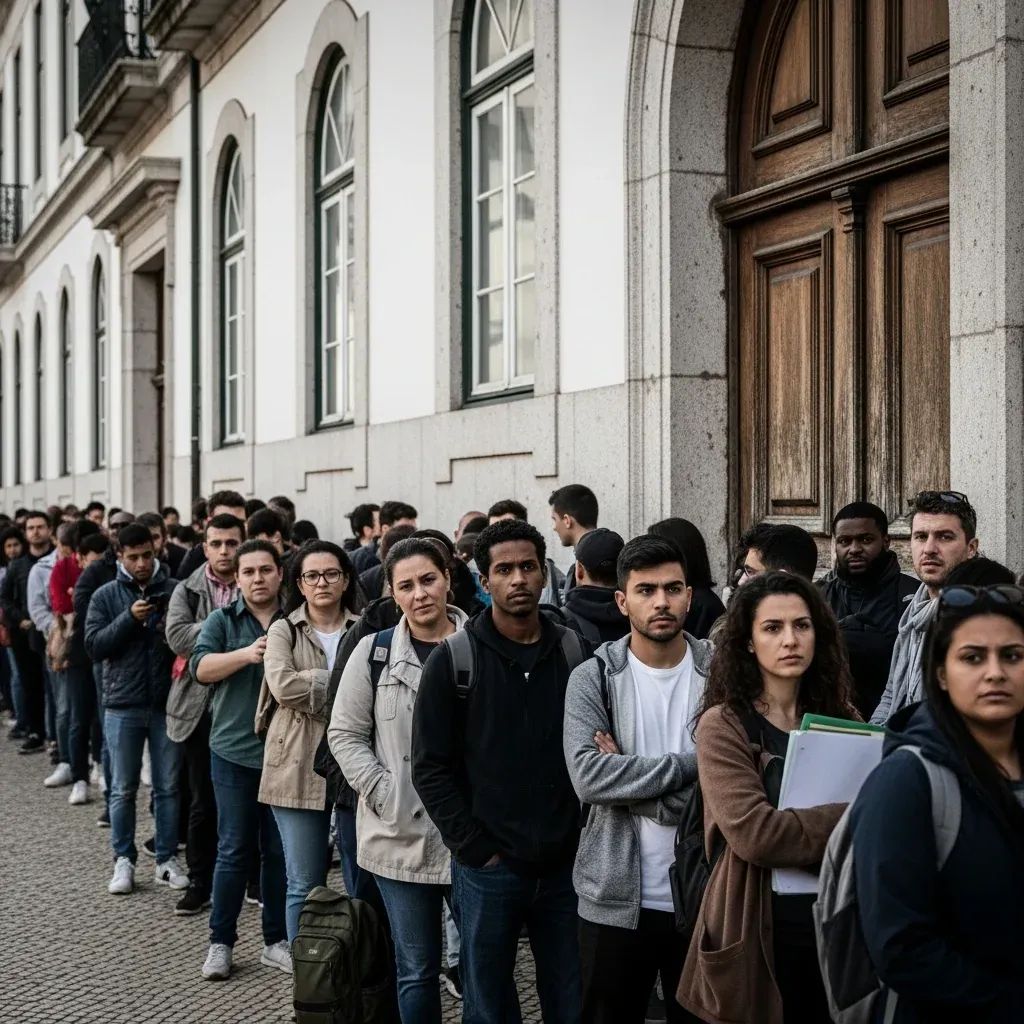
Anyone who has spent months tracking a nationality application in Portugal woke up this week to a fresh dose of uncertainty. The Constitutional Court struck down several controversial rules approved by Parliament, the ruling Socialists insisted they were merely protecting fundamental rights, and the Liberal Initiative blasted the move as an attempt to "gum up the works" of long-promised immigration reforms. The clash leaves both current applicants and would-be investors guessing about what the next passport-eligibility rulebook will look like.
Snapshot of a fast-moving story
• Four provisions of the new Nationality Act were rejected by the Constitutional Court on 15 December.
• Loss of nationality as a criminal penalty was also deemed unconstitutional.
• The President is now obliged to veto the diplomas, yet Parliament can reconfirm them with a two-thirds majority.
• Liberal Initiative (IL) accuses the Socialist Party (PS) of deliberately slowing the process.
• Roughly 515,000 nationality requests remain pending, with average waits of up to 48 months for some categories.
Why the nationality debate has real-world stakes
Portugal’s passport is ranked among the world’s strongest, granting visa-free travel to 188 destinations. For thousands of Brazilian workers, French retirees on the Algarve, and tech founders relocating to Lisbon, citizenship unlocks EU mobility, voting rights and easier access to credit. That growing demand—46,840 new passports were issued in 2024 alone—has collided with political efforts to tighten eligibility rules amid record migration pressure and heated rhetoric about border control.
What the Constitutional Court actually said
Judges took less than a month to review the Socialists’ preventive challenge and unanimously found four clauses unconstitutional for breaching the principles of equality, proportionality and legal certainty. Among the casualties:
The automatic ban on citizenship for anyone sentenced to two or more years in prison.
The possibility of stripping nationality as an additional penalty for serious crimes.
Retroactive application of tougher requirements to cases already in progress.
Vaguely worded language allowing revocation for “manifest fraud” or rejection of national values.
The Court’s 213-page opinion stressed that no criminal sentence may, by itself, erase fundamental civic rights, echoing jurisprudence dating back to the 1976 Constitution.
PS: guarding constitutional guarantees—or running down the clock?
The Socialist parliamentary leader, Marta Temido, framed the legal challenge as a “defence of the rule of law and of immigrants’ trust in Portuguese institutions.” She argued that the initial bill, approved on 28 October by a right-leaning majority, “would have punished good-faith applicants for administrative delays outside their control.”
Conservatives accuse the PS of opportunism. Yet inside the party, there is genuine concern about the spike in pending cases and the reputational blow if Portugal is perceived as erecting new barriers after years of touting itself as Europe’s most welcoming country.
IL: impatience with “legislative sabotage”
IL president Mariana Leitão did not mince words: “While the Constitutional Court deliberates, illegal networks exploit the loopholes and legal residents wait in limbo.” The liberals backed the tougher bill alongside PSD, Chega and CDS, arguing it merely aligns Portugal with Germany’s and Spain’s residency timelines. Deputy Jorge Miguel Teixeira expressed disbelief that the judges blocked a clause preventing convicted traffickers from turning Portuguese overnight: “It is the State’s sovereign right to set ethical boundaries for citizenship.”
What remains on the table after the Court’s scalpel
Despite the headline-grabbing vetoes, several significant revisions survived:
• Longer residency thresholds: 7 years for CPLP or EU nationals, 10 years for others.
• Parental residency requirement: at least 5 years before a child born in Portugal can claim citizenship.
• Abolition of the fast-track for Sephardic descendants, pending a separate review of heritage-verification rules.
Legal scholars note that these surviving articles could still pass if MPs reconfirm them with a two-thirds vote following the presidential veto—an arithmetic the current coalition comfortably controls.
Applicants caught in the middle
The Institute of Registries and Notary Affairs is already wrestling with half a million pending files. Processing times range from 12 months for children of Portuguese citizens to 48 months for residence-based naturalisation. Lawyers fear any fresh round of amendments will force the agency to redesign its software yet again, freezing the queue. Meanwhile, those relying on the Sephardic route may see their window close entirely once new residence requirements kick in.
Political calculus heading into 2026
Immigration ranks among voters’ top three concerns, polling just behind housing prices and healthcare. The PSD-led government wants to showcase firmer control of borders ahead of municipal elections, while the PS eyes urban constituencies with large immigrant populations in Lisbon and Setúbal. IL, betting on its small-state credentials, is courting entrepreneurs frustrated by bureaucratic bottlenecks. No party can afford to alienate either the tech talent fuelling the economy or the swing voters worried about overcrowded schools.
Quick takeaways for residents and investors
• Expect at least six more months of legal limbo until Parliament decides whether to override or redraft.
• Applicants with clean criminal records remain unaffected—for now—but should watch for any attempt to re-introduce stricter clauses.
• The Sephardic pathway is on borrowed time; filing before new residency demands become law is critical.
• Longer physical-presence requirements are likely to stay, so plan relocation timelines accordingly.
• Real-estate investors eyeing the passport as a back-up plan should budget for 7–10 years before naturalisation.
Portugal’s nationality saga is far from over, but one lesson is clear: constitutional checks matter, and so does political patience. For the hundreds of thousands in the pipeline, the wait continues—and so does the debate over what it means to be, and to become, Portuguese.


