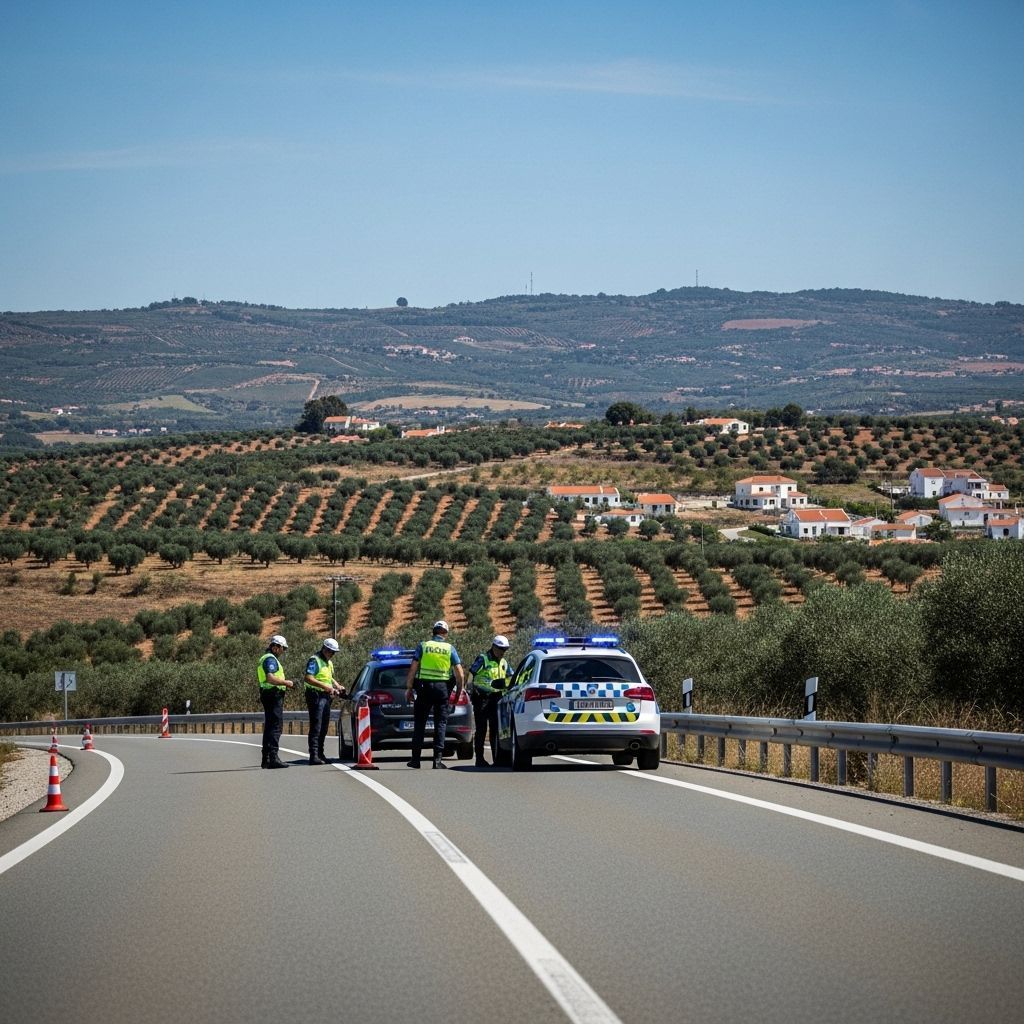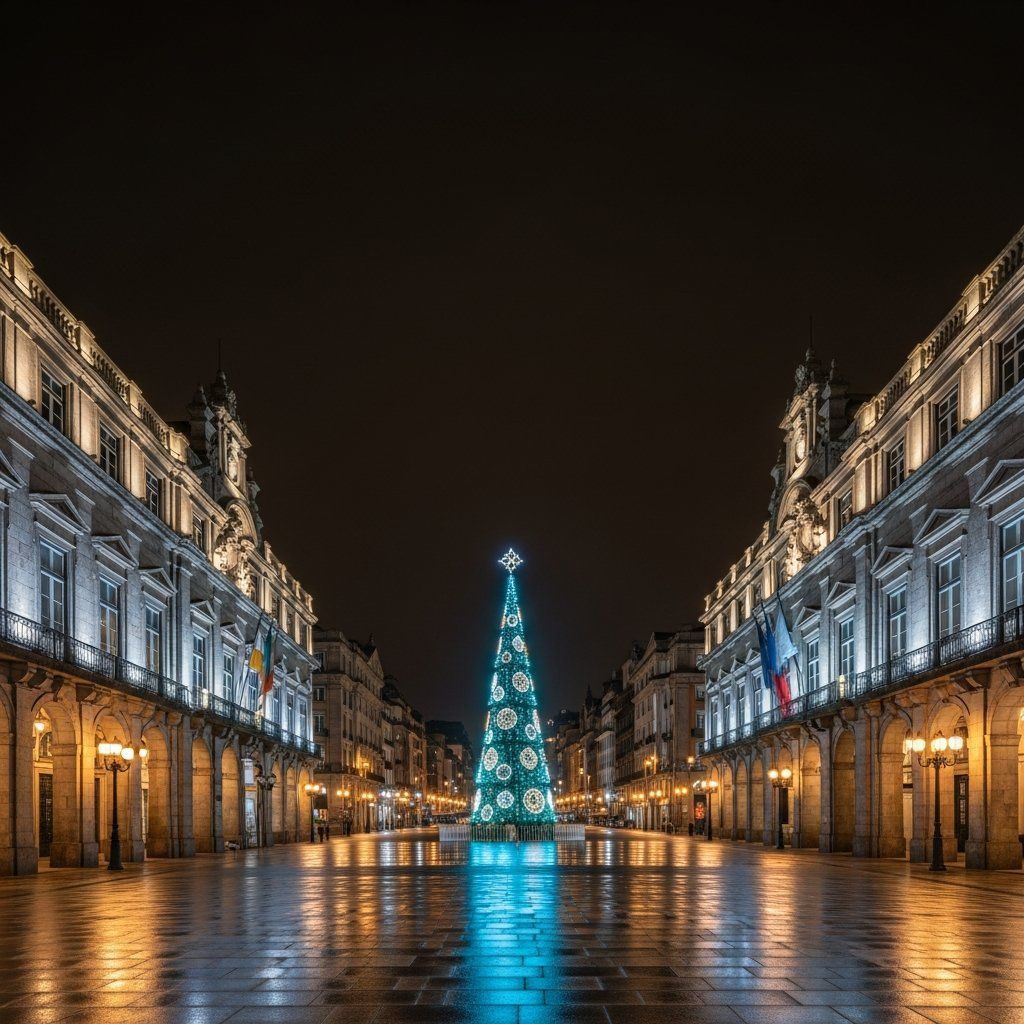
The Portugal Judiciary Police has uncovered an alleged €8M public procurement corruption scheme centered on Christmas lighting contracts, resulting in four arrests and searches across 10 municipal governments from Lisbon to the Algarve. The operation, dubbed "Operação Lúmen," involved 120 criminal investigators and targeted what authorities describe as a systematic network of bid-rigging that spanned multiple holiday seasons.
Why This Matters:
• 10 municipal councils had procurement procedures examined—including Lisbon, Maia, Tavira, Viseu, and Figueira da Foz
• €8M in contracts allegedly secured through leaked insider information and financial kickbacks
• Public trust in local government procurement now under scrutiny as authorities examine holiday decoration deals dating back several years
• One detainee is a senior civil servant from the Lisbon City Council
The Mechanics of the Alleged Scheme
According to the Portugal Judiciary Police Northern Directorate, the investigation began with a complaint alleging manipulation of public tenders for festive lighting installations—primarily Christmas decorations used in town squares, commercial districts, and public celebrations. What investigators found was far more elaborate: a coordinated operation to subvert transparency, equality, and market competition rules embedded in Portuguese public procurement law.
The scheme allegedly worked through a simple but effective channel. Officials within municipal contracting authorities provided privileged information—details about competing bids, budget ceilings, or evaluation criteria—to representatives of the targeted company. In exchange, these insiders received financial kickbacks, often referred to in Portuguese legal circles as "luvas" (gloves). Armed with this intelligence, the favored supplier could tailor proposals to guarantee contract awards, systematically freezing out legitimate competitors.
The Judiciary Police statement emphasized the organized and systemic nature of the conspiracy, suggesting this was not isolated opportunism but a repeating pattern across multiple jurisdictions and contracting cycles. Prosecutors from the Regional Department of Investigation and Penal Action (DIAP) in Porto are leading the inquiry, which remains under judicial secrecy.
Who Was Arrested and What Happens Next
Four individuals were detained as part of the operation and will appear before the Criminal Instruction Court of Porto for initial questioning and determination of coercive measures. The detainees include:
• An administrator of a private company
• An employee of the same private company
• The president of a private association
• A public official identified by Portuguese media as a senior civil servant from the Lisbon City Council
While the Judiciary Police did not officially name the company at the center of the investigation, judicial sources and multiple municipal councils confirmed that Castros Iluminações Festivas, a Vila Nova de Gaia-based firm, was among the entities searched. The company has declined to comment publicly. Castros has been a prominent player in the festive lighting market, securing contracts from Almada to Funchal over recent years, including deals worth over €1.3M for the Madeira capital's Christmas displays.
The 26 searches—both residential and non-residential—took place simultaneously across the country. Councils in Ovar, Santa Maria da Feira, Póvoa de Varzim, Trofa, Lamego, and Figueira da Foz all confirmed cooperation with investigators and emphasized their willingness to provide documentation. A Trofa municipal source told media that Judiciary Police officers "were here briefly, but took the documentation they deemed necessary." Similar statements came from Maia and Viseu, where local officials stressed they were unaware of the specific investigation targets but were facilitating full access.
The operation mobilized significant resources: two magistrates (one judicial, one from DIAP Porto), 120 criminal investigators, and specialized teams including IT forensics, financial analysts, and security personnel from multiple Judiciary Police units. The scale has led Portuguese media to describe "Operação Lúmen" as one of the largest financial crime operations in recent Judiciary Police history.
What This Means for Residents and Municipal Governance
For Portuguese taxpayers, the immediate question is whether their local councils have been overpaying for holiday decorations—and whether those inflated costs came at the expense of other public services. The €8M figure represents not just wasted money but a distortion of competitive markets that may have driven honest suppliers out of the festive lighting sector entirely.
Municipal councils are legally required to follow strict procurement rules designed to ensure transparency and value for money. When those rules are bypassed through insider dealing, the entire system loses credibility. Residents in the 10 affected municipalities may now wonder how many other contracts—beyond Christmas lights—have been subject to similar manipulation.
The involvement of a Lisbon City Council official is particularly significant. As the nation's capital and largest municipality, Lisbon's procurement decisions set benchmarks for smaller councils. If senior civil servants in the capital were compromised, it raises uncomfortable questions about oversight mechanisms and internal controls across Portuguese local government.
The Festive Lighting Market and Its Vulnerabilities
Portugal's municipal festive lighting sector is a seasonal but lucrative niche. Councils typically contract for design, supply, installation, maintenance, and removal of decorative lighting for Christmas, New Year, Carnival, and local patron saint festivals. Contracts often run into six figures for mid-sized municipalities and can exceed €200,000 for larger cities or multi-year deals.
The Tavira council, for example, invested €113,900 plus VAT in Christmas lighting for 2025, awarding the contract to Castros Iluminações Festivas. Figueira da Foz paid €211,700 for similar services in the 2024–2025 season. These are not insignificant sums for municipal budgets, especially in regions where councils face tight fiscal constraints.
The seasonal and specialized nature of the market creates vulnerabilities. There are relatively few suppliers with the capacity, equipment, and technical know-how to deliver large-scale festive installations. This concentration makes collusion easier and detection harder. Moreover, aesthetic and creative elements in lighting design introduce subjective evaluation criteria, giving corrupt officials more room to justify questionable decisions.
Anecdotal reports had already raised eyebrows in some municipalities. In Trofa in 2023, the company was allegedly observed installing Christmas lights before the public tender had officially concluded—a red flag for procurement irregularities that appears prescient in light of the current investigation.
Broader Implications for Public Procurement Integrity
"Operação Lúmen" arrives at a time when Portuguese authorities are increasingly focused on corruption in public contracting. The country has faced criticism from European anti-corruption monitors for gaps in transparency and enforcement, particularly at the municipal level where oversight can be uneven.
The investigation underscores the need for stronger conflict-of-interest safeguards, whistleblower protections, and digital procurement platforms that reduce opportunities for backroom dealing. Several Portuguese municipalities have begun experimenting with automated bid evaluation systems and blockchain-based contract registries, but adoption remains patchy.
For now, the judicial process will determine whether the alleged conspiracy can be proven in court. The detainees face charges of active and passive corruption, economic participation in business transactions, abuse of power, and participation in a criminal association—charges that carry significant prison sentences under Portuguese law if convictions are secured.
Municipal councils affected by the searches have issued carefully worded statements emphasizing cooperation and confidence in the judicial process, while avoiding any suggestion of institutional guilt. The Maia council said it was "calm and collaborating" with investigators. Santa Maria da Feira pledged to provide "all clarifications deemed necessary." These responses reflect the delicate position of local governments caught between the need to demonstrate transparency and the risk of reputational damage from association with corruption allegations.
What Residents Should Watch For
As the investigation unfolds, several developments will be critical. First, whether prosecutors can demonstrate a clear link between the alleged financial kickbacks and specific contract awards. Second, whether the conspiracy extends beyond the four detained individuals to include other public officials or companies. Third, whether affected municipalities will seek to recover funds or challenge contract awards made under tainted processes.
Residents in the 10 municipalities under scrutiny should monitor local council meetings and budget reports for any acknowledgment of the investigation's impact on procurement practices. Transparency advocates may push for independent audits of recent contracting decisions, particularly in high-value or subjectively evaluated categories like creative services, urban design, and event management.
The "Operação" name itself—Lúmen, Latin for light—carries a pointed irony. An investigation into contracts meant to brighten public spaces during festive seasons has instead cast a harsh light on the darker mechanics of municipal governance. Whether that scrutiny leads to meaningful reform or merely a temporary embarrassment for those involved will depend on the judicial outcomes and the political will to address systemic vulnerabilities in Portuguese public procurement.