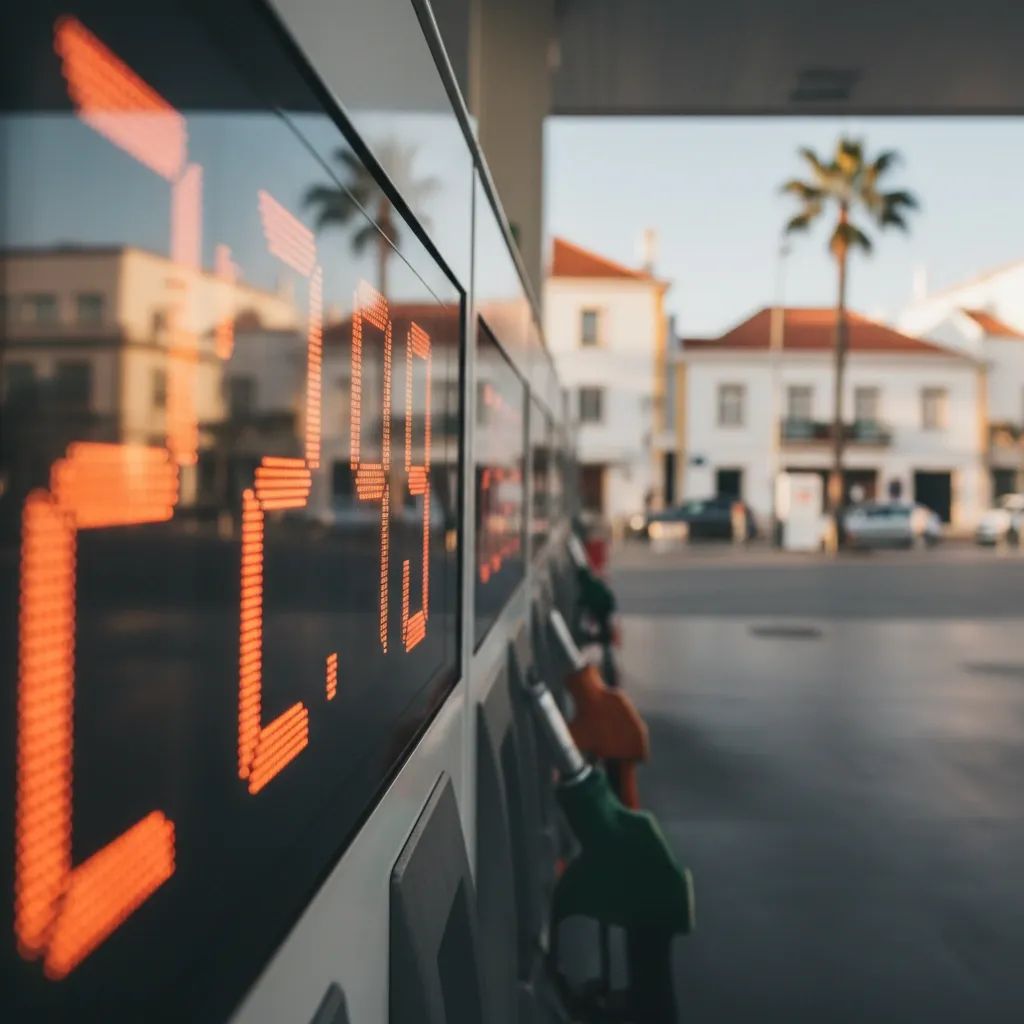
The Portugal Cabinet has approved a €600M credit facility to shield companies from spiraling energy costs, a direct intervention to prevent job losses and factory closures as international volatility hammers industrial margins. Prime Minister Luís Montenegro unveiled the scheme—dubbed "Portugal Resiliência Energética"—on April 2, marking his two-year anniversary in office with a package that targets firms spending over a fifth of their revenue just to keep the lights on.
Why This Matters:
• Eligibility threshold: Only companies where energy accounts for more than 20% of production costs can access the line—primarily manufacturers, logistics operators, and heavy industry.
• State guarantees: The Portugal Development Bank (Banco Português de Fomento) will back 80% of loans for small and medium enterprises, 70% for large corporations.
• Timeline: Final operational details expected within weeks; companies should prepare cash-flow documentation and energy audits now.
Energy Costs as a Competitive Threat
For Portugal's industrial base, energy pricing is no longer a line item—it's an existential question. Sectors like ceramics, glass, textiles, and metal processing have seen electricity bills eclipse labor as their largest variable cost. In some cases, energy now represents 30–35% of total operating expenses, a structural disadvantage compared to competitors in other European nations where different regulatory approaches have supported lower tariffs.
The Portugal Ministry of Economy has acknowledged that unchecked energy inflation could force production offshore. The new credit line is designed to bridge liquidity gaps while firms negotiate long-term power purchase agreements or invest in on-site solar and efficiency upgrades. Montenegro framed the measure as "a lifeline to avoid a wave of layoffs in the most exposed sectors."
The financing will cover treasury needs and working capital, essentially allowing companies to smooth out the volatility spike without slashing payrolls or halting orders. State-backed guarantees mean commercial banks can lend at lower risk premiums, though final interest rates will depend on each institution's credit assessment.
What This Means for Business Owners
If your company's energy bill consistently exceeds 20% of total production costs, you should begin preparing an application now. The Banco Português de Fomento will serve as the gateway, meaning you'll need:
• Audited financial statements showing energy as a percentage of operating costs.
• A detailed cash-flow projection demonstrating how the loan will sustain working capital.
• Evidence of operational viability—banks will not extend credit to firms already in pre-insolvency.
For SMEs, the 80% state guarantee reduces collateral requirements, potentially opening access to firms that would otherwise fail traditional creditworthiness tests. Large enterprises receive a slightly lower 70% coverage, reflecting their theoretically deeper capital reserves and diversified revenue streams.
Interest rates and repayment terms remain to be clarified, but the structure mirrors previous state-backed facilities: expect 5–7 year tenors with possible grace periods on principal repayments during the first 12–18 months.
Montenegro's Broader Reform Agenda
The credit line arrives alongside a cluster of administrative overhauls Montenegro has branded as essential to long-term competitiveness. Speaking at the April 2 ceremony, the prime minister defended his government's response to successive natural disasters—particularly the late January and February storms—pointing to over 700 submissions received during the public consultation phase for the Portugal Transformation Recovery and Resilience (PTRR) reconstruction program.
Final PTRR guidelines will be published "very shortly," Montenegro said, adding that his cabinet is advancing reforms to public procurement, the Court of Auditors, labor law, and higher education social action. The procurement reform is intended to shorten the infamous approval cycles that have left EU-funded projects stalled for years; the Court of Auditors overhaul targets faster fiscal oversight without sacrificing rigor.
Labor law negotiations continue with unions and employer federations, focusing on remote work regulations, temporary contracts, and wage indexation formulas. Higher education reforms aim to streamline student aid and housing support, addressing the chronic shortage of affordable accommodation near major university campuses.
What Happens Next
Formal application procedures for Portugal Resiliência Energética are expected to open by late April or early May. The Banco Português de Fomento will publish eligibility criteria, documentation checklists, and approved lender lists on its website. Companies should engage their commercial banks immediately; those without existing credit facilities may face longer approval timelines.
In parallel, Portugal continues to support companies pursuing efficiency upgrades and sustainability investments. For industries where energy costs are structural rather than cyclical, the credit line represents a crucial bridge to stability. Long-term competitiveness will depend on accelerating renewable capacity, modernizing grid infrastructure, and negotiating power purchase agreements that lock in predictable pricing. The measure buys breathing room while Portugal's energy transition matures.