

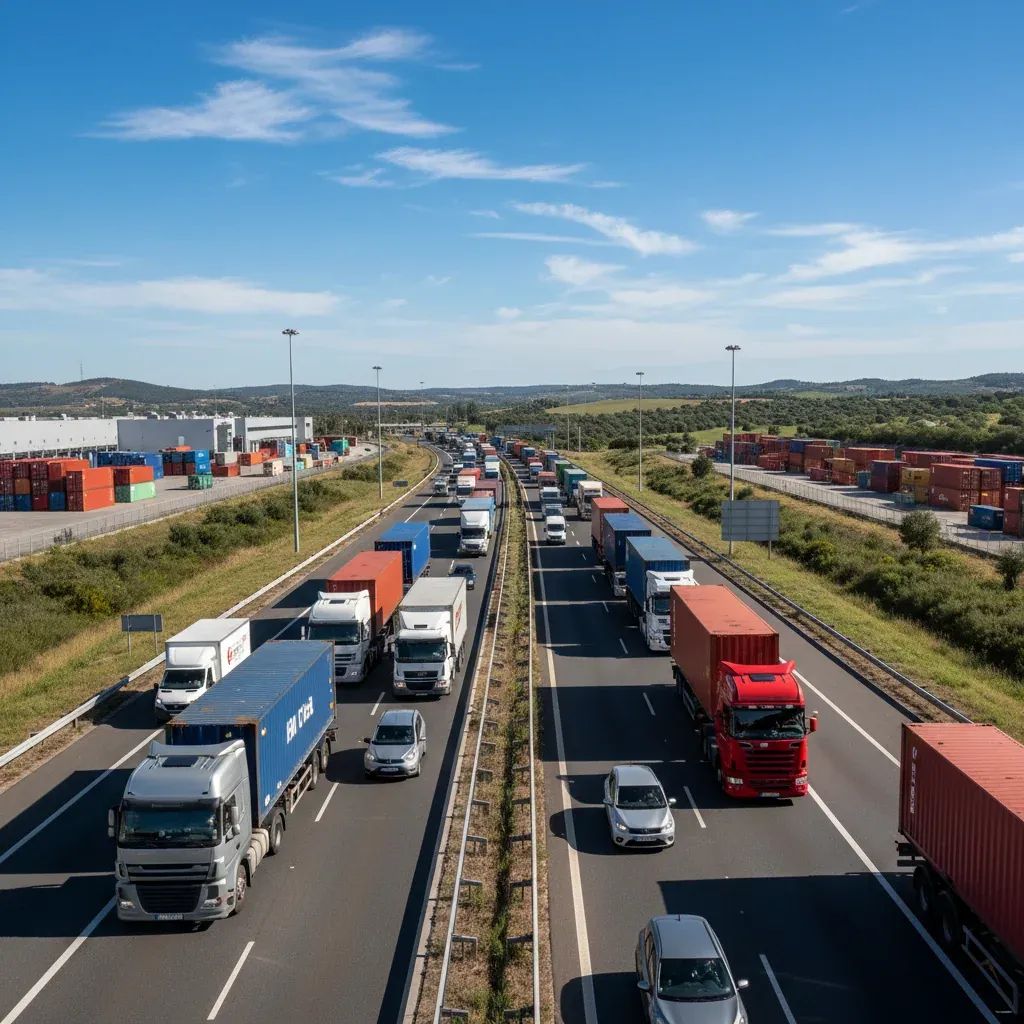
Portugal's cabinet has approved a three-month suspension of social security contributions for freight transport companies, coupled with a €40M direct payout scheme, as surging fuel costs driven by Middle East conflict threaten to choke the logistics sector and push up consumer prices nationwide.
Why This Matters:
• Social security deferrals granted for May, June, and July 2026 to all road freight operators.
• €30M one-off subsidy for goods vehicles (€114–€420 per vehicle) and €10M for public passenger transport, paid immediately.
• Fuel price relief pending: Lisbon will ask Brussels to waive the €300,000 state-aid cap to permit deeper fuel tax cuts.
Prime Minister Luís Montenegro unveiled the emergency package during his biweekly parliamentary debate, responding to mounting pressure from opposition lawmakers over Portugal's stubbornly high fuel costs—which remain among the steepest in Europe.
Anatomy of a Freight Crisis
Portugal's haulage sector finds itself caught between an oil price shock and razor-thin profit margins. Crude benchmarks jumped 21.4% in 2026 to average $82 per barrel, the International Monetary Fund confirms, as tensions around the Strait of Hormuz—a chokepoint for a fifth of global oil flows—keep markets jittery. At the pump, Portuguese drivers have watched diesel climb 44 cents since early March, peaking above €2.14 per liter before a modest retreat this week.
Road freight operators, who burn vast quantities of diesel and AdBlue additive, face an existential math problem: customers won't pay more for deliveries, yet running costs are spiraling. That squeeze explains why the Portugal Ministry of Labour agreed to postpone employer social security contributions—typically due monthly—for the second quarter of 2026. Companies still owe the money eventually, but the breathing room helps preserve cash flow during the worst of the price spike.
The direct subsidy scheme, ratified by cabinet yesterday, will distribute €114 to €420 per truck depending on gross vehicle weight, plus a separate support allocation for AdBlue replenishment. Operators of breakdown recovery vehicles and agricultural cooperative producers qualify, provided they haul goods commercially. Payments land in a single transfer, bypassing the usual drip-feed of monthly rebates.
What This Means for Residents
Even if you never drive a truck, freight costs find their way into your supermarket bill. Higher diesel prices inflate logistics margins, which suppliers pass along the chain. Portugal's central bank has already revised its 2026 growth forecast down to 1.8% and expects inflation to accelerate to 2.8%, citing energy shocks as the primary culprit. The €40M injection aims to cap that pass-through by stabilizing hauliers' operating expenses.
For anyone living near the Spanish border, the price gap remains glaring. As of mid-April, diesel in Badajoz traded at €1.89 per liter versus €2.14 in Elvas—a 25-cent premium that prompted Chega party leader André Ventura to brandish comparison charts in parliament and demand Portugal match Madrid's more aggressive tax cuts. Spain slashed its VAT on fuel from 21% to 10% in late March, the minimum EU threshold, and suspended excise surcharges through June. That double intervention can shave 30 cents off the pump price, but Brussels has warned Madrid that applying reduced VAT rates to fossil fuels breaches union directives.
The State-Aid Ceiling Problem
Under current EU rules, member states may grant up to €300,000 in de minimis aid per company over three years without triggering full state-aid scrutiny. Portugal's existing fuel-price mitigation mechanism—a variable cut to the petroleum products tax (ISP)—already eats into that allowance. The government now wants Brussels to waive the cap entirely, unlocking space for deeper discounts.
Montenegro's office has drafted a formal derogation request to the European Commission, arguing that the Middle East crisis constitutes an extraordinary external shock warranting exceptional support. If approved, Lisbon could amplify ISP reductions beyond the handful of cents currently in play—April's discounts stand at 8.34 cents per liter on diesel and 4.58 cents on petrol—and layer additional rebates without breaching competition law.
Success is far from guaranteed. The Commission has already rebuked Spain for its VAT maneuver, and EU energy-tax policy remains politically fraught. Any Portuguese derogation would likely come with sunset clauses and transparency obligations, forcing the government to publish recipient lists and demonstrate that aid targets genuine hardship rather than windfall profits.
Opposition Demands Zero-VAT Food Basket
During Thursday's parliamentary session, Ventura pressed Montenegro to impose zero-rate VAT on a basic food basket, arguing that Portuguese households now spend a larger share of income on groceries than any other EU population. The prime minister flatly refused, insisting that blanket VAT exemptions "do not achieve the intended effect" because retailers rarely pass savings through in full. Instead, the cabinet is designing targeted consumer supports for low-income families, details to be announced if price pressures persist into May.
This exchange reflects a deeper debate about economic policy credibility: how governments navigate between immediate relief measures and long-term fiscal responsibility. The tension escalated when Montenegro invoked the legacy of former Socialist premier José Sócrates—who governed during Portugal's 2011 bailout crisis—warning Ventura against policies that might replicate fiscal imprudence. For residents already stretched by rising fuel and food costs, these political disagreements matter because they shape which support reaches households and how sustainable those measures prove to be. Ventura retorted that Sócrates faced corruption charges and that parliament should never compensate the ex-leader for legal costs, labeling any such payment "a disgrace to this house."
Maritime Bottlenecks Compound the Pain
Fuel is only part of the story. Portugal's Association of Freight Forwarders reports that major shipping lines—including Maersk—have rerouted Asia-Europe services around the Cape of Good Hope to avoid Red Sea risks, adding 15 to 20 days to transit times and inflating container rates. Portuguese importers and exporters face a snowball effect: fewer vessels, scarcer containers, higher freight charges, and delayed deliveries. Hundreds of thousands of euros in orders sit suspended or stranded at congested transshipment hubs.
Manufacturing sectors with thin margins feel the pinch hardest. Higher electricity and diesel costs lift production expenses, while late-arriving inputs stall assembly lines. The Bank of Portugal warns that if energy prices remain elevated through summer, corporate investment could stall and unemployment tick upward—a scenario that would erase much of the post-pandemic recovery momentum.
Immediate Next Steps
The cabinet meets again next week to finalize subsidy disbursement timelines and publish the official regulation governing eligibility. Transport companies should watch for guidance from the Portugal Social Security Institute on how to claim the deferred contributions window; early indications suggest an online portal will open by early May. Meanwhile, freight operators eligible for the direct payment will receive notifications once the decree is gazetted, likely within ten days.
Beyond the emergency relief, Lisbon is eyeing medium-term structural shifts. Officials have floated the idea of accelerating electric-truck adoption incentives and expanding liquefied natural gas fueling infrastructure to reduce dependency on diesel. Neither initiative will ease this quarter's crisis, but both reflect recognition that volatile oil markets demand diversification.
For now, the message from government is tactical patience: defer what can be deferred, subsidize what must run, and lobby Brussels for room to maneuver. Whether that formula suffices depends on variables Portugal cannot control—how long Middle East tensions simmer, whether OPEC loosens taps, and whether the Commission grants the requested waiver. Until those answers arrive, freight companies will keep one eye on the fuel gauge and the other on their bank balance.


