The Portuguese government has lifted multi-year restrictions on licensing new groundwater extraction wells, a decision that will reshape access to subterranean water resources for agricultural, industrial, and municipal users across the Algarve and Alentejo regions.
Why This Matters
• Immediate licensing resumption: Applications for new water wells in previously frozen aquifer systems—including Moura-Ficalho in Alentejo and Querença-Silves and Almádena-Odiáxere in the Algarve—can now proceed for the first time since the drought restrictions were imposed.
• Two-to-three-year water reserves: Portugal's southern dams are at capacity, according to the Agência Portuguesa do Ambiente (APA), giving the country a multi-year buffer.
• Environmental caution required: Despite the relaxation, experts warn that structural vulnerability and pollution in Alentejo aquifers—where 50% of systems in the Baixo Alentejo tested positive for nitrate contamination in 2021—remain unresolved.
What Triggered the Policy Reversal
Prime Minister Luís Montenegro announced the measure on April 30 following a Cabinet session held at the Ovibeja agricultural fair in Beja. The decision reverses a licensing freeze that had been in place since severe drought conditions began affecting southern Portugal years ago. Montenegro cited "favorable hydrological conditions" driven by persistent winter rainfall that filled reservoirs from Bragança to Faro as the primary justification.
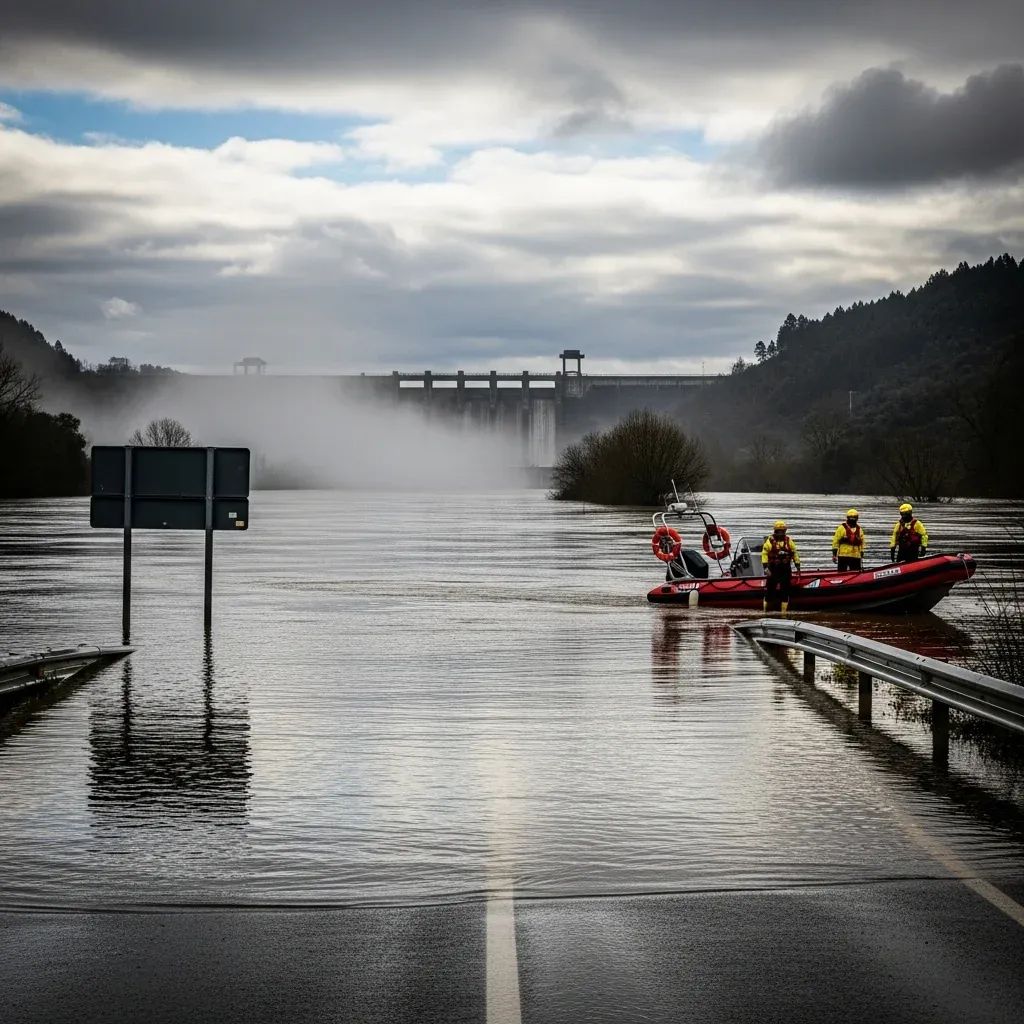
In February, APA president José Pimenta Machado confirmed that southern Portugal's stored water would last "two to three years" under normal consumption patterns, with all major dams at or near full capacity. Exceptional storm systems that swept the country in early 2026 replenished aquifers and surface reservoirs alike, ending what Machado described as a "truly exceptional" drought period.
The policy shift affects three key aquifer systems. In the Alentejo, the Moura-Ficalho aquifer—a vital source for agriculture and small municipalities—had been off-limits to new extraction licenses. In the Algarve, the Querença-Silves and Almádena-Odiáxere systems, which underpin tourism infrastructure and irrigation networks in the region's most developed zones, will also reopen to licensing applications.
What This Means for Residents and Businesses
For farmers, developers, and municipal water managers, the change removes a major bureaucratic roadblock. Anyone seeking to drill a new well for irrigation, industrial use, or supplementary municipal supply can now apply through the APA's licensing framework.
Important clarifications for residents:
• Who can apply: The reopened licenses apply primarily to commercial agricultural operations, industrial facilities, and municipal water systems. Private residential wells used for household consumption are not affected by this measure.
• Existing wells: Property owners with existing wells are not impacted. This reopening affects only new licensing applications going forward.
• Protected perimeters: The APA maintains exclusion zones around public water sources to prevent contamination and over-extraction. Residents can verify whether their property falls within a protected perimeter by contacting their local APA office or consulting the protection zone maps published by the regional environmental authorities.
The licensing reopening is particularly significant in the Alentejo, where rain-fed agriculture dominates and water scarcity has historically constrained expansion.
The government's water infrastructure program—featuring investments in surface water development and desalination—indicates that these alternatives are considered the long-term solution. Projects include a desalination plant in Sines, a new river intake at Pomarão, and infrastructure improvements across the southern regions.
The licensing reopening does not eliminate regulatory oversight. Applicants must still demonstrate need, provide environmental impact assessments, and comply with protection perimeters established by ministerial regulations. For those considering applications: The APA's licensing process typically requires 60-90 days for initial review, with additional time needed if environmental assessments or public consultation periods are required. Prospective applicants should contact their regional APA office for specific documentation requirements and current processing timelines.
Environmental Risks That Haven't Gone Away
Environmental groups and water management specialists have criticized the decision as "hasty" and "unjustified," particularly ahead of the peak summer tourism season when the Algarve's water demand surges. They argue that a single wet winter does not reverse structural scarcity driven by climate change, agricultural over-extraction, and inadequate monitoring.
Alentejo's Contamination Challenge
The Alentejo presents a textbook case of these concerns. In 2021, half of the aquifers in Baixo Alentejo tested positive for nitrate pollution, with the Gabros de Beja aquifer classified as "Very Polluted by Nitratos." Intensive livestock farming and industrial agriculture are the primary culprits. Across the region, 79% of aquifers have at least one sampling point exceeding legal limits for nitrates or ammoniacal nitrogen.
Risks of New Extraction
New wells, even in areas with currently favorable water levels, risk accelerating pollution spread or creating new contamination pathways. Salinization—the intrusion of seawater into coastal aquifers—presents another concern, especially in the Algarve, where over-extraction during summer months can draw saltwater inland, rendering wells unusable.
Systemic Challenges
Critics highlight the critical need for improved water management practices. System leaks, inefficient agricultural use, and uneven data collection complicate long-term planning. Environmentalists argue that addressing water sustainability requires simultaneous investment in infrastructure efficiency, demand management, and rigorous monitoring frameworks.
The Policy Balancing Act
Montenegro acknowledged these concerns in his announcement, warning that the improved situation "should not divert us from rigorous, balanced, and efficient management of water resources," referencing the government's "Água que Une" (Water that Unites) strategy, which emphasizes shared responsibility and conservation.
The strategy aligns with regional initiatives focused on efficiency and alternative sources. These include behavior change campaigns, demand reduction programs, and increased use of treated wastewater for irrigation. The MARCLAIMED project, for instance, is testing managed aquifer recharge using treated wastewater in the Tejo-Sado aquifer system, which extends into parts of the Alentejo. Regional development programs continue to focus on climate adaptation, risk management, and environmental sustainability.
What Happens Next
The reopening of licensing does not guarantee approval. The APA retains discretion to deny applications based on aquifer health, proximity to protected zones, or cumulative extraction thresholds.
For residents seeking more information:
• Contact your regional APA office (Agência Portuguesa do Ambiente) to inquire about application procedures and timelines
• Visit the APA's public portal to access protection zone maps and aquifer health reports
• Applications are typically submitted through regional environmental authorities, with decisions issued within 60-90 days for straightforward cases
Monitoring remains a critical consideration. Portugal's groundwater surveillance network, while expanding, still has capacity gaps that make real-time assessment of aquifer stress challenging. Enhanced monitoring protocols are being developed, but residents should be aware that data transparency and responsiveness may improve gradually.
For residents, the practical takeaway is mixed. On one hand, municipalities and businesses gain flexibility to secure additional water sources, potentially easing supply constraints during dry spells. On the other, the risk of over-exploitation and pollution persists, especially if enforcement and monitoring lag behind the pace of new licensing.
The government's bet is that the combination of full reservoirs, new infrastructure, and enhanced efficiency measures will provide enough buffer to absorb increased extraction. Critics counter that the decision prioritizes short-term economic relief over long-term ecological stability, particularly in a region where climate models predict hotter, drier summers in the years ahead.
The next test will come this summer, when tourism demand peaks and agricultural irrigation ramps up. If reservoir levels drop sharply or aquifer monitoring reveals stress, pressure will mount for renewed restrictions. For now, the tap is open—but how long it stays that way depends on rain, restraint, and the effectiveness of Portugal's still-evolving water governance framework.