
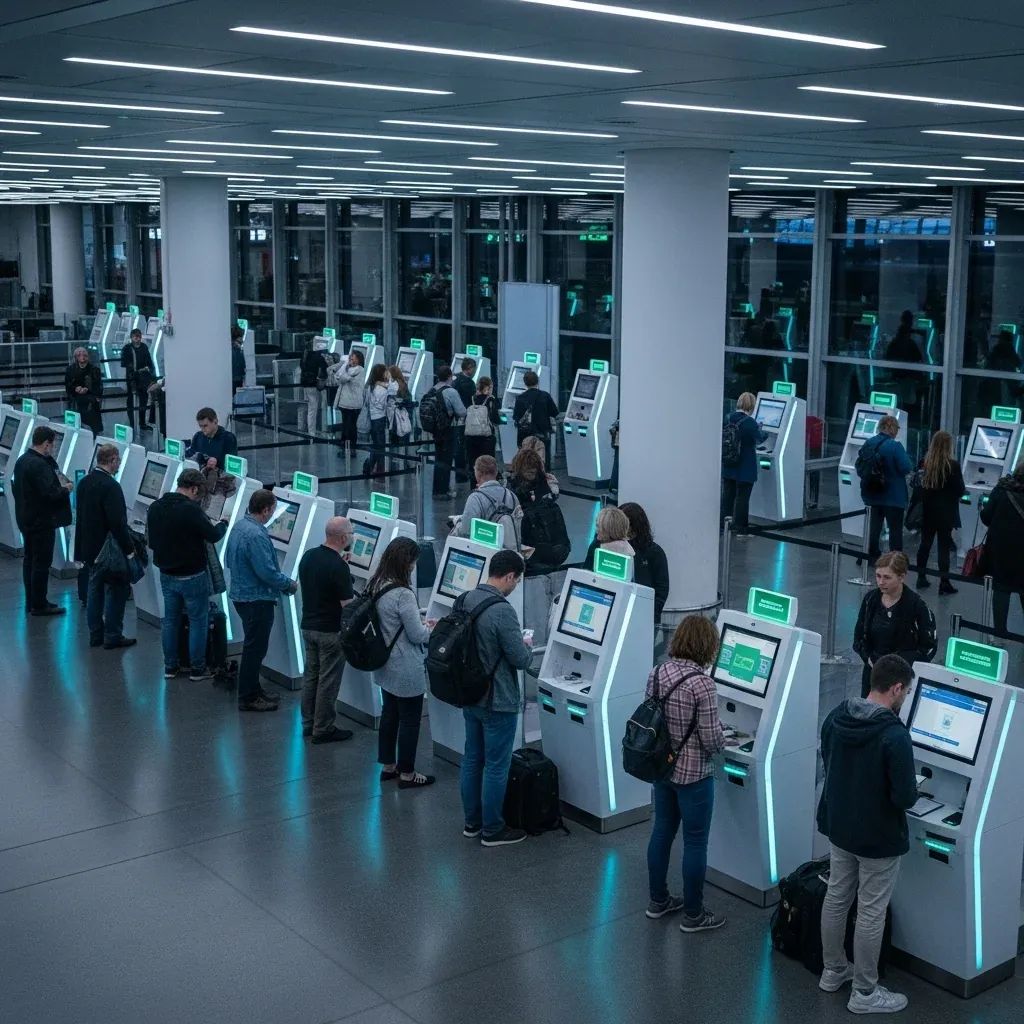
Holiday makers flying into Portugal this year might find passport queues easier—or harder—than advertised. Authorities are weighing a temporary pause of the Union’s new Entry/Exit System (EES) just as the Christmas rush peaks, a move designed to keep the festive spirit from turning into a four-hour wait at border control.
Snapshot for travellers in Portugal
• EES could be suspended at individual airports if lines grow unmanageable
• Lisbon already saw waits of up to 4 hours after the system’s debut in October
• Between 10 Dec 2025 and 10 Jan 2026, officers must collect biometrics from 10 % of non-EU passengers
• A full European rollout remains on track for April 2026
Why a holiday freeze is on the table
In late November, the European Commission gave member states permission to switch off EES temporarily after reports of bottlenecks from Prague to Paris. Portugal’s Internal Security System (SSI) now says it will decide airport by airport, leaning on real-time data from ANA Aeroportos and the border police. Officials insist any suspension will be “surgical”, lasting only as long as it takes to keep passenger flows within acceptable limits while maintaining border security.
EES in plain English
EES replaces the familiar passport stamp with an electronic entry and exit record for every non-Schengen visitor. On a first crossing, travellers spend an extra 90 seconds on average as cameras capture a facial image and scanners take fingerprints. The goal is to spot document forgeries, flag overstays and automate compliance checks the old ink stamp never could.
Lisbon’s test case: numbers that matter
Portugal has processed nearly 1 M registrations since the system went live on 12 October—more than any other EU country. Lisbon, the nation’s busiest hub, also has the region’s oldest e-gates and a tight footprint that leaves little space for pop-up processing booths. These factors combined to produce queues that snaked past duty-free during the All Saints long weekend, prompting the government to assemble an emergency task force of extra border agents and IT specialists.
What a pause would look like
If the screens at Humberto Delgado flash “EES Suspended”, officers will revert to the pre-October playbook: manual passport checks and ink stamps. The SSI says data already gathered will be preserved, and the moment traffic thins below the pre-set threshold the electronic kiosks will be switched back on. In practice, seasoned border staff caution, holiday travellers may still face crowding because the bottleneck often shifts to luggage belts and taxi queues once the passport hurdle eases.
Biometric phase rolls on—even during any shutdown
Regardless of a pause, a second-layer rule kicks in on 10 December: border guards must enrol fingerprints and a high-resolution photo from one in ten non-EU travellers. Authorities argue this pilot proportion is small enough to avoid chaos yet large enough to stress-test equipment before a 100 % capture mandate arrives next spring.
What security and migration analysts say
Professor Marta Ferreira of NOVA University calls the possible holiday suspension a “pragmatic safety valve”, noting that Spain and Germany are considering identical measures. Former border-police chief Inspector João Ramos disagrees, warning that toggling the system on and off risks data incoherence and may encourage organised networks to plan crossings during blackout windows. Both agree EES is ultimately here to stay.
How to keep your trip smooth
Travellers who hold passports from outside the Schengen Area can trim stress by:
Completing the Travel to Europe app questionnaire as soon as the download link activates (36 h before departure)
Allowing 3–4 hours at Lisbon and 2 hours at Porto or Faro for arrivals on peak dates (22–24 Dec & 2 Jan)
Using the EU-national lanes only if also holding an EU residence card—mis-queuing slows everyone
Packing patience: the SSI promises “progressively shorter lines” once officers and passengers grow familiar with the new routines
Portugal’s airports remain a major gateway for the Lusophone world and Atlantic routes. Whether or not the scanners go dark for a few crucial days, officials insist the country will deliver a safer and ultimately faster border experience once the learning curve levels out.


