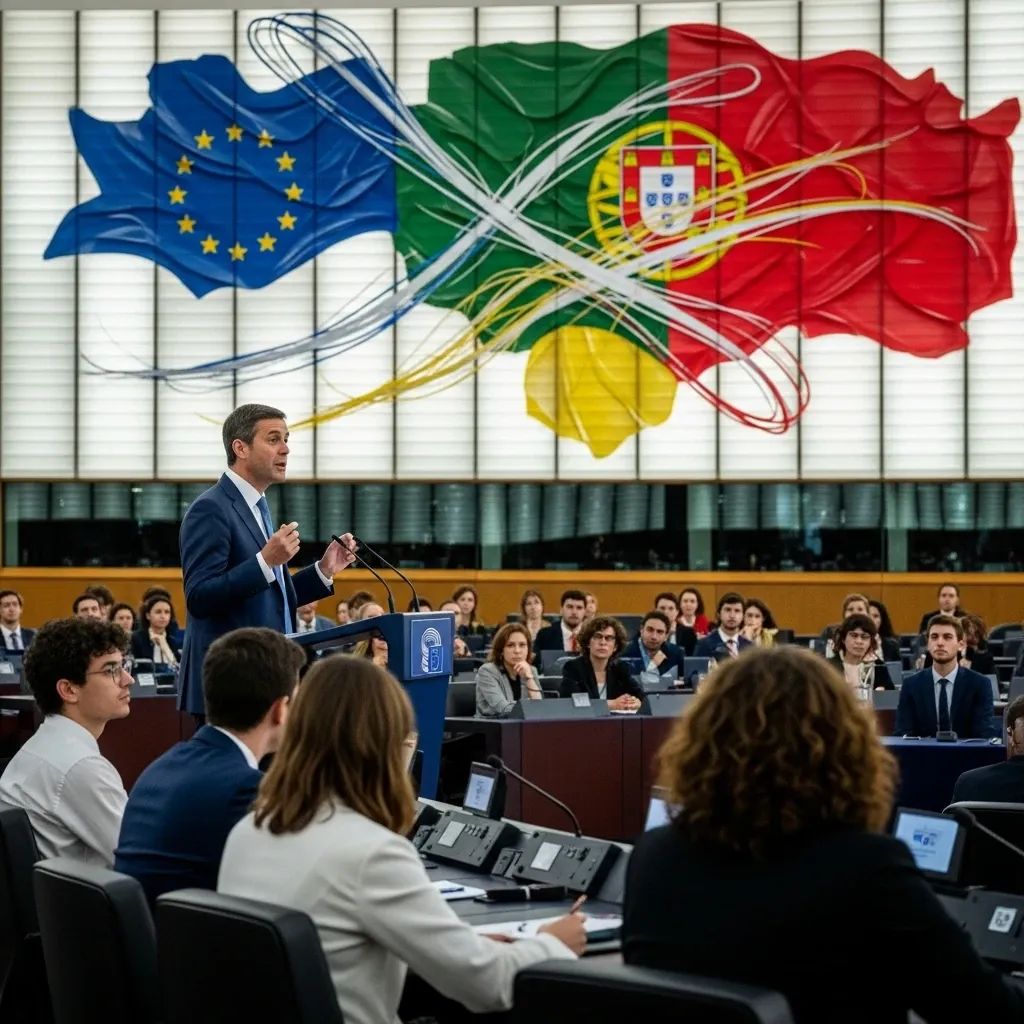
A full house in Strasbourg listened this week as Portugal’s head of state reminded Europe’s Netflix generation that the union they grew up in can still unravel if its citizens stop caring. The admonition landed on the eve of the Iberian enlargement’s 40th anniversary, turning what might have been a nostalgic farewell into a challenge about the continent’s next four decades.
Snapshot
• President Marcelo Rebelo de Sousa marked the 40 years of Portugal and Spain inside the EU with a parting speech.
• He told young Europeans that the European Union is "no given fact" but a construction that demands daily effort.
• New polling shows 93 % of Portuguese youth optimistic about the bloc yet worried about cost-of-living pressures.
• Experts note Europe’s need for more knowledge, cutting-edge science and shared security to remain relevant.
• Marcelo Rebelo de Sousa vowed that Portugal will “never, ever” abandon Europe, calling it “an irreplaceable piece of us.”
40 Years, One Long Climb
Portugal’s accession in 1986 was anything but inevitable. A country emerging from dictatorship had to prove fiscal discipline, open markets and converge with richer neighbours. Today that decision still shapes everyday life—from Structural Funds that built roads to the euro coins in every wallet. Yet the president warned that those achievements rest on "unceasing political labour," a phrase that drew lengthy applause from lawmakers who remember a time when Iberia was outside looking in.
A Direct Appeal to Generation Z
Switching to English for several minutes, Rebelo de Sousa addressed the gallery of visiting Erasmus students. He contrasted his own youth—defined by border controls and limited careers—with theirs, characterised by open skies, roaming data and instant payments. “Treat those freedoms as automatic,” he cautioned, “and you risk waking up without them.” The line underscored his broader argument: populist shortcuts, geopolitical fragmentation, cyber-threats and climate shocks could erode the union from within if younger voters disengage.
Do Portuguese Youth Feel the Alarm?
Surveys suggest they mostly don’t—yet. According to the latest Eurobarometer (Mar 2025), Portuguese aged 16-30 are the bloc’s most euro-enthusiastic, with 93 % holding a positive image of the EU. Still, their top worries—soaring rents, job security, mental health, and the planet’s heating curve—echo peers across Europe. Only 18 % believe social-media activism really changes policy, hinting at scepticism about digital echo chambers versus traditional ballots. The same poll finds television, not TikTok, remains the primary news source for a 53 % majority, a quirk that Brussels communicators see as both a blessing and a challenge.
Analysts Hear a Broader Message
Foreign-policy scholars in Lisbon note the speech’s subtext: with Washington pre-occupied and Beijing assertive, Europe needs “strategic depth,” blending research investment, defence coordination, tech sovereignty, and democratic resilience. Rebelo de Sousa has repeatedly criticised attempts to split the world into rival spheres, arguing that multilateral cooperation—from NATO’s flank to the World Trade Organization—offers Portugal its best safeguard. His farewell thus doubled as a plea against “bilateral shortcuts” that might sideline medium-sized countries.
Why It Matters Back Home
For Portuguese voters heading into municipal and European elections next year, the president’s remarks crystallise a key issue: can a small Atlantic nation shape decisions made 2 000 km away? Rebelo de Sousa’s answer was unequivocal. More unity, more youth energy, more science, more technology, more growth, more social cohesion, more shared security, and more future—those eight "mores," as he listed them, form his parting homework assignment. Whether the next generation picks up the pen will determine if the European project remains, as he put it, "an essential and irreplaceable part of Portugal."