
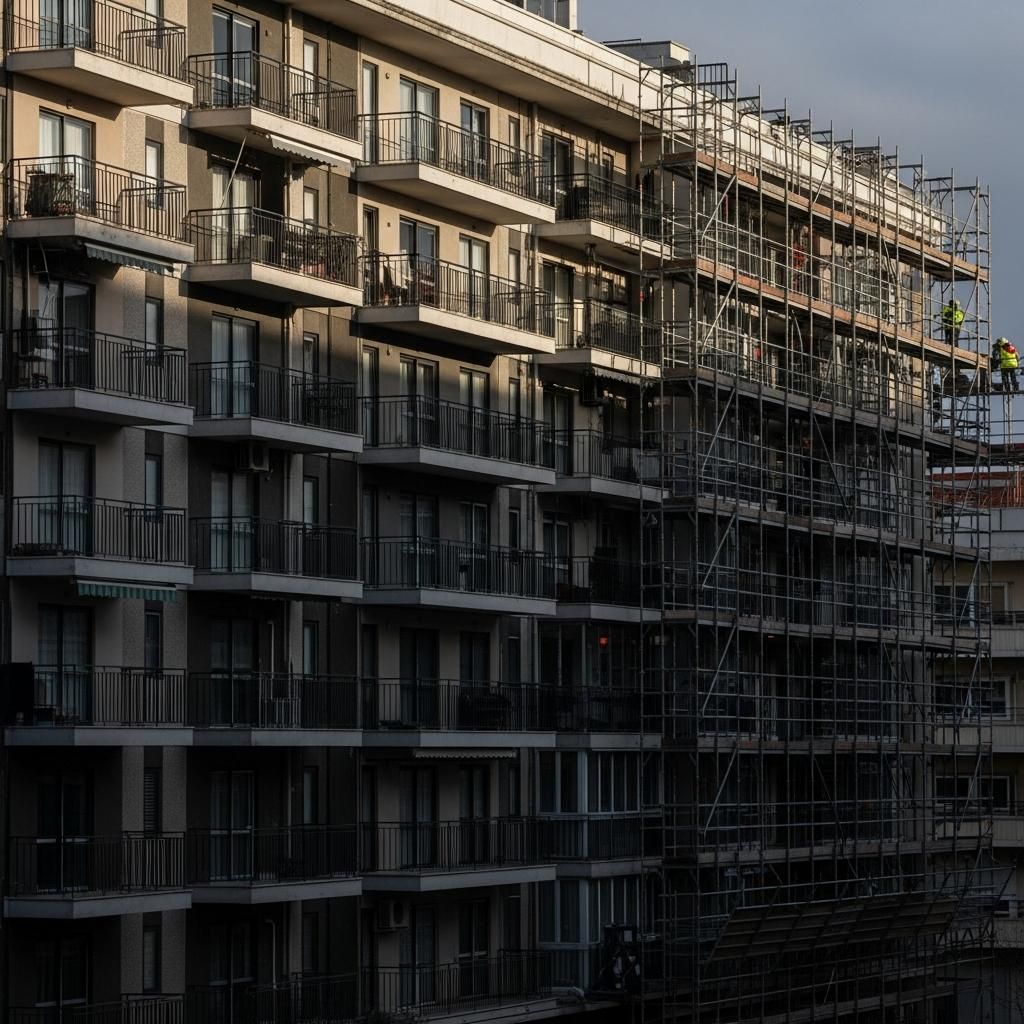
Families searching for an affordable place to live in Portugal’s big cities have begun to notice something odd: entire blocks of public flats sitting dark while neighbours report strangers prying off locks. Behind those anecdotes lies a hard number—301 unlawfully held state properties—and an institutional scramble to reclaim them before another winter of soaring rents tightens the social screws.
Why the surge in illegal occupations matters now
For residents of Lisbon, Porto or Setúbal, the phrase "ocupação ilegal" has long carried a whiff of urban legend. Yet the Housing and Urban Rehabilitation Institute (IHRU) confirms that the problem is not only real but accelerating. Many of the seized dwellings were, paradoxically, waiting for refurbishment, an administrative limbo that created the perfect vacuum for opportunistic entry. With the national vacancy rate hovering above 720 000 units, officials worry that each additional squat chips away at public faith in the state’s ability to manage its own assets. Benjamim Pereira, the civil servant now steering the IHRU, calls the latest wave an attack on the agency’s "credibility as landlord of last resort".
Mapping the hotspots from Lisbon to the interior
Although illegal takeovers have been logged in 139 municipalities, the densest cluster sits in the Lisbon Metropolitan Area, where high tourist demand, short rental supply and pandemic-era salary stagnation converge. Data reviewed by Expresso and confirmed by the Institute show that Gebalis, the city-owned housing company, recorded more than 700 municipal cases, dwarfing figures in Aveiro or Beja. Still, interior towns are not immune: scattered incidents from Viana do Castelo to the Alentejo coast reveal how a dispersed portfolio—about 16 000 public properties—stretches surveillance budgets and slows response times.
The legal landscape: what changes under Law 67/2025
Until November, removing an occupant often meant a tedious civil action that lingered well past six months. Law 67/2025, adopted on 24 November, rewires that timeline. It introduces criminal sanctions of up to 2 years in prison, rising to 3 years if violence or intimidation is proven, and empowers judges to order immediate restitution once ownership is evident. Attempted occupation is now punishable, and professional squatting rings face sentences of 1–4 years. Housing advocates note that the statute still obliges courts to check the socio-economic profile of families settled in public flats, a clause meant to prevent abrupt evictions of the genuinely vulnerable.
Municipal muscle: how town halls are stepping in
The 2025 state budget channels €337 M from IHRU coffers to local governments, recognising that mayors often reach trouble spots first. In the Moita district, for instance, negotiations are under way for seven idle state buildings to switch to municipal control, an approach that combines local knowledge with faster renovation pipelines. Programmes such as 1.º Direito have already funnelled €85 M into projects from Leiria to Melgaço, while the Recovery and Resilience Plan (PRR) bankrolls new units in Benfica and Vila Nova da Barquinha. The common thread is proximity: when councils assume ownership, neighbours see scaffolding go up before locks are prised off.
A path to prevention: from faster rehab to better data
Evicting trespassers is only half the battle; the other half is keeping reclaimed flats from being re-invaded. The IHRU now relies on a framework agreement with pre-qualified contractors so it can dispatch a builder within days instead of months. Officials are also cross-checking the Census 2021 vacancy registry to identify assets in "good condition yet inexplicably empty"—a pool of nearly 250 000 dwellings that could swell the affordable rental stock if bureaucratic knots are untied. Pereira argues that technological upgrades, including real-time inventory dashboards, will let inspectors spot new break-ins before occupants settle.
Looking abroad: what France and Spain teach Portugal
Portugal is not the sole European nation wrestling with the moral geometry of property, poverty and policing. France’s 72-hour eviction rule, passed in 2023, shows how speedy procedures can deter organised squats, albeit amid criticism from social groups. Spain, meanwhile, still faces litigation lasting years, suggesting that tough statutes alone do not guarantee rapid relief. Lisbon lawmakers borrowed selectively, blending swift criminal pathways with mandatory social screening. Researchers say the hybrid model could become a template for other countries that, like Portugal, balance a constitutional right to housing against a hard-coded right to property.
What happens next
By September, the IHRU had already executed 76 evictions, almost double last year’s tally, and plans to double again by New Year’s Eve. Success will be measured not just in court orders but in renovated flats occupied by families who joined the waiting list legally. With rents edging ever higher and winter bills on the horizon, the clock is ticking for the state to prove it can defend its homes from both decay and unauthorised hands. Residents of Portugal need only glance at those darkened balconies to know the outcome matters to everyone who pays tax, rent or mortgage—and especially to those still searching for a key of their own.


