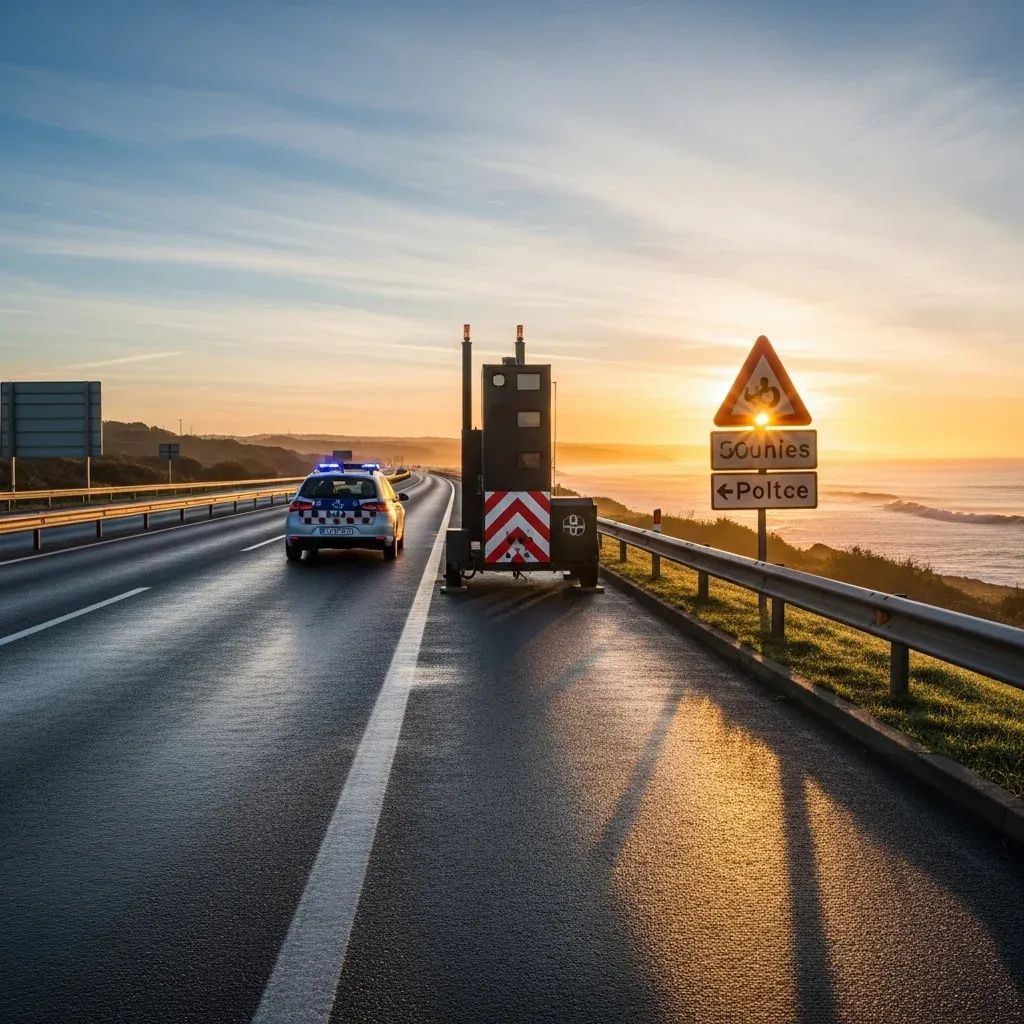
Fasten your seat belt—Portugal’s annual road-safety offensive has begun. Law-enforcement teams switched on their radars at dawn on Tuesday, opening the first of 11 nationwide inspection waves that will run until late autumn. The debut operation, baptised Viaje sem pressa (Travel Without Rush), zeroes in on the chronic problem of speeding, responsible for roughly one-third of road deaths and 64 % of all fines issued last year.
What’s changing for everyday drivers? The short answer is: more cameras, tougher messaging and a broader focus on vulnerable road users.
Key points for the week ahead
• Operation window: 20–26 January, across three coastal districts.
• Forces involved: ANSR, GNR and PSP working in tandem for the first time this year.
• Prime target: speeding violations; alcohol, phone use and seat-belt checks are secondary.
• Next steps: Ten further inspection campaigns scheduled through November, each with a different theme.
Why the first campaign sets the tone
Portuguese road policy-makers like to say that the year’s opening blitz “frames the conversation”. By launching Viaje sem pressa during the quiet post-holiday lull, authorities hope to imprint safe-driving habits before the Easter and summer traffic peaks. Speed enforcement, they argue, is the quickest route to reducing fatalities because every additional 10 km/h over the limit doubles the risk of a fatal crash. The 2026 National Inspection Plan (PNF) therefore places excess velocity at the top of its agenda, followed later by drink-driving, mobile-phone distraction, child-restraint compliance and, for the first time, protection of cyclists and pedestrians.
Where speed cameras will appear this week
Motorists commuting between Porto and Viana do Castelo or crossing the Tejo south of Lisbon will encounter a rotating set of patrols and mobile radars. Authorities have published a partial list to encourage voluntary compliance:
• 20 Jan – EN 12, Matosinhos–Porto corridor
• 21 Jan – km 33.9 of EN 13, Estela (Póvoa de Varzim)
• 22 Jan – Av. 23 de Julho de 1833, Seixal
• 23 Jan – km 17.5 of EN 10, Coina (Barreiro)
• 26 Jan – Av. Paulo VI, EN 13, Viana do Castelo
Radars will operate both day and night, and officers are authorised to check insurance documents, road-worthiness certificates and pending fines on the spot.
Eleven months, eleven themes
After this week’s speed clampdown, the PNF moves on to a fresh problem area roughly every four weeks:
Alcohol & drugs at the wheel
Seat-belts and child seats
Mobile-phone distraction
Professional driver fatigue
Two-wheelers and micromobility safety
Heavy-goods vehicle compliance
Pedestrian crossings
Rural-road accidents in harvest season
Urban night-time enforcement
Winter tyre and lighting checks
Each theme will mix roadside controls, social-media campaigns and school outreach, mirroring EU best practices that have cut fatalities by 23 % across Southern Europe in the past decade.
The numbers behind the crackdown
Last year’s provisional tally—423 deaths and 2 681 serious injuries—was lower than 2024 but still far from the government’s goal of under 300 deaths by 2030. Analysts point out two worrying trends: a rise in accidents involving vulnerable users and an 86 % jump in New-Year holiday fatalities. Meanwhile, 140 118 recorded crashes inflicted an estimated €3 B economic loss, equal to 1.2 % of GDP. Officials insist that enforcement alone cannot solve the issue, yet studies show that highly visible policing can cut speed averages by 5–7 km/h, enough to save hundreds of lives annually.
What motorists should do now
• Check speedometer calibration and know the limits on your daily routes.• Keep your driver’s licence, ID and vehicle papers within easy reach; on-the-spot fines rise if documents are missing.• Remember the tolerance margin: cameras flag anything above the limit plus 10 km/h on roads under 100 km/h, or 10 % on faster stretches.• If you rely on navigation apps, activate real-time radar alerts—they are legal in Portugal.• For cross-border trips to Spain this month, note that the Galician police have scheduled a parallel alcohol crackdown.
In case you skimmed, here’s the bottom line
Portugal’s first road-safety sweep of 2026 is live, targeting speeders in Porto, Setúbal and Viana do Castelo until Sunday. Expect extra patrol cars, mobile cameras and zero tolerance for reckless driving as authorities press toward their ambitious 2030 fatality goal. The remaining ten inspection campaigns will roll out every few weeks, broadening the focus from speed to alcohol, smartphones and vulnerable users—so safe habits adopted today will pay dividends all year long.