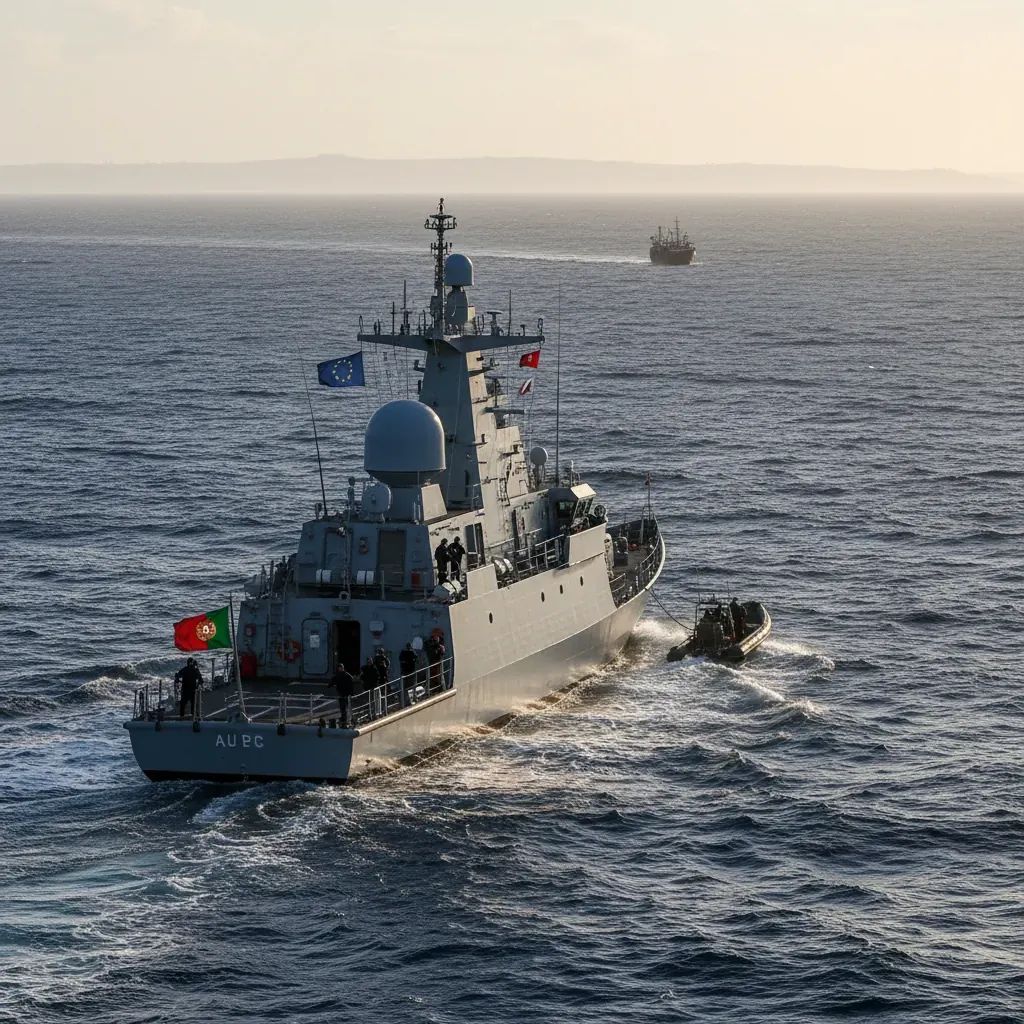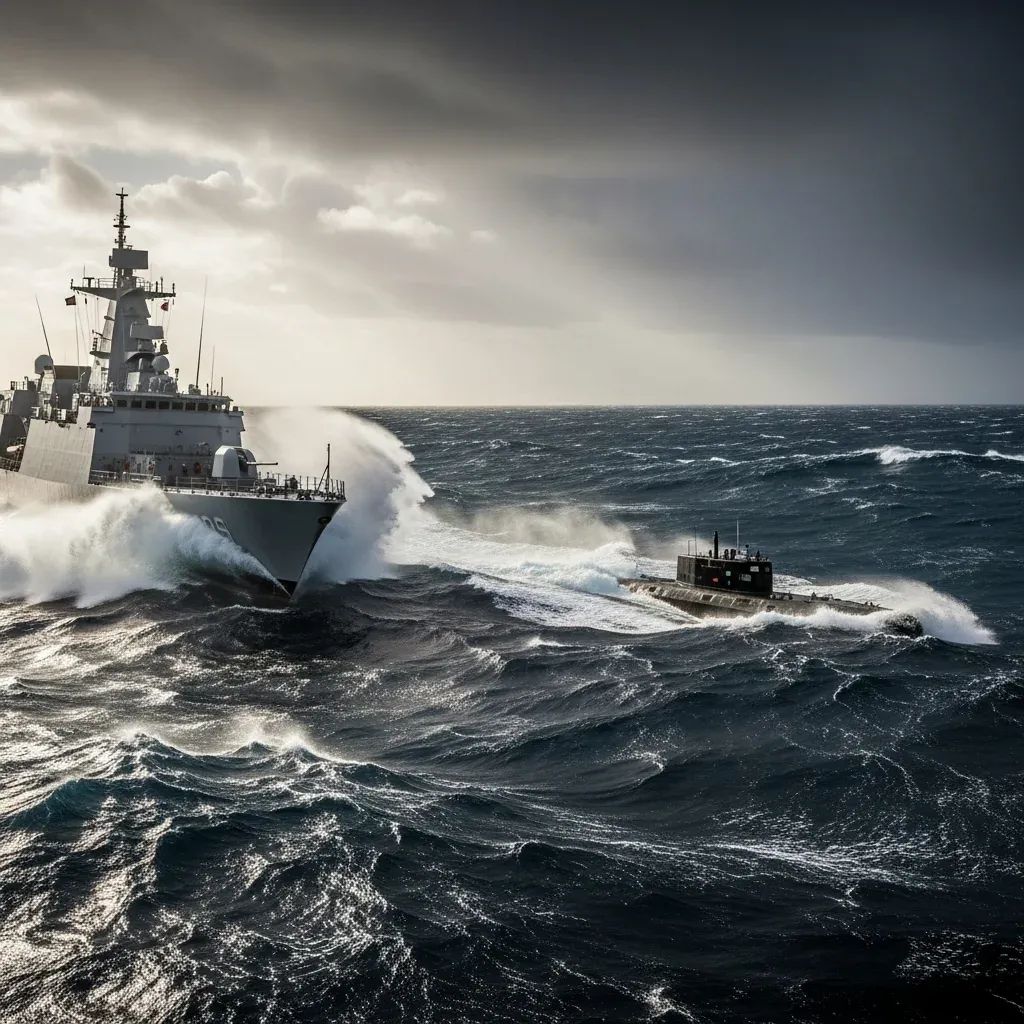
A howling Atlantic storm, a barely visible craft hugging the waves and an overnight drag-net that ended with 9 tonnes of cocaine piled on the deck of a Portuguese naval ship—Portugal’s security services have just scored their most spectacular victory yet against trans-Atlantic traffickers.
The essentials at a glance
• Semi-submersible intercepted 430 km southwest of the Azores
• Operation “Adamastor” led by Polícia Judiciária with Navy & Air Force support
• 265 bales recovered; about 35 sank with the vessel in rough seas
• 4 Latin-American crewmen detained; faces up to 25 years in prison
• Street value in Europe estimated at €350 M
A risky chase in winter seas
Radar operators aboard a P-3C Orion patrol aircraft first picked up the craft’s faint signature late on 23 January. What followed, according to naval commander Luís Nunes, was a 20-hour pursuit through gale-force winds, during which the homemade vessel tried to zig-zag below radar coverage. A corvette, two oceanic patrol ships and a helicopter formed a moving cordon while the Air Force relayed coordinates in real time. Only at dawn, with waves topping 4 m, did a Marines boarding team clamber aboard. “It was the kind of night most sailors remember for life,” one officer said. By then, water had already begun seeping in, forcing crew to abandon ship minutes after the arrest.
Inside the covert craft
Built somewhere on the Colombian Pacific coast, the 18-m hull was made of fibreglass layered over plywood, powered by two truck engines and painted bluish-grey to blend with open water. Investigators found GPS plotters, satellite phones, spare diesel drums and enough tinned food for the three-week crossing. Despite the rudimentary look, experts call such boats “ghost freighters”: they cruise just beneath the surface, leaving only an exhaust pipe and a low conning tower visible. The hold accommodated 300 shrink-wrapped bales—each roughly 30 kg—stacked two layers high.
Intelligence web that closed the gap
The first tip did not come from Portuguese waters but from a DEA listening post in Florida that had tracked suspicious satellite calls. That intel was pushed to Lisbon’s MAOC-N, the Maritime Analysis and Operations Centre – Narcotics, where analysts fused it with imagery from the Joint Interagency Task Force South and cargo-route data supplied by the UK’s National Crime Agency. Within 48 hours, a “probable plot” pinpointed the Azores as the rendez-vous zone. From there, Portugal’s Polícia Judiciária triggered Operation Adamastor, named after the mythic sea giant feared by 16th-century navigators.
Azores: crossroads of a shifting Atlantic route
Why so many narco-subs surface near the Portuguese archipelago? Maritime criminologist Ana Isabel Coutinho notes that currents between the Caribbean gyre and Gulf Stream deliver vessels toward the mid-Atlantic ridge. The Azores offer traffickers a convenient “handoff” point to European crews operating fishing trawlers or yachts. In 2019 a 3.5-tonne load was seized off São Miguel; two years later, 5.2 t were intercepted near Santa Maria. The 2026 haul confirms a northward drift of the cocaine highway, partly because enforcement has tightened around Spain’s northwestern rías and Belgium’s port of Antwerp.
What 9 tonnes mean on the street
Portuguese consumers represent only a sliver of Europe’s cocaine market, yet the bust will resonate locally. According to the Observatório Europeu da Droga, wholesale scarcity pushes gram prices in Lisbon up 14 % last year, to €37.80. Had the shipment reached land, officials estimate it would feed 15 M single doses, fuelling organised-crime revenue streams that bleed into real-estate laundering, crypto speculation and synthetic-drug labs on the continent. “Taking that cash out of circulation is a direct blow to groups already eyeing Portugal’s booming tourism sector for money-washing,” says economist Teresa Almeida.
Semi-submersibles: Europe’s new headache
The craft seized last week is the fifth narco-sub Portuguese forces have intercepted since 2019—yet each generation grows more sophisticated. Europol counts 821 high-risk criminal networks in Europe, most of which tap maritime supply chains. Because semi-submersibles use low-profile hulls and muffled engines, traditional radar sweeps often miss them. Authorities now deploy synthetic-aperture radar satellites, acoustic buoys, AI-enabled pattern analysis and even crowdsourced shipping data to close the gaps. Rear-Admiral Helena Cruz argues that Lisbon should treat anti-trafficking budgets “the way we treat wildfire funds—front-loading resources before the next season hits.”
What happens next
The four detainees—three Colombian nationals aged 27-44 and a 31-year-old Venezuelan—were flown to Ponta Delgada under heavy guard and will appear before the Azorean district court this week. Charging documents cite aggravated drug trafficking and participation in a criminal organisation. Meanwhile, forensic teams in Lisbon are chemically profiling the cocaine to map its laboratory origin and potentially tie it to crop-monitoring records in Colombia’s Nariño region. Investigators also want to know who was meant to collect the cargo—European cells working off Madeira? Galicia? The answers could trigger follow-up raids on shore.
Law-enforcement leaders emphasize that the record seizure is a milestone, not a finish line. As one senior PJ officer put it: “Every tonne we catch reminds us there’s another tonne already sailing.” The challenge now is to turn the momentum of Operation Adamastor into longer-term disruption of the Atlantic pipeline.