
Portugal's law enforcement agencies have ramped up operations against narcotics networks across the country in recent weeks, arresting multiple suspects and seizing significant drug quantities in coordinated actions that reveal the persistent challenge of international trafficking routes passing through the mainland and Atlantic islands.
Why This Matters
• 13 arrests across four major operations in April alone, spanning from the Baixo Minho to the Azores archipelago.
• Foreign nationals are increasingly detected distributing drugs within their own communities, raising questions about integration and vulnerability to transnational crime.
• Over 2.6 kg of heroin seized in a single arrest on Terceira Island—enough for nearly 27,000 individual consumption days.
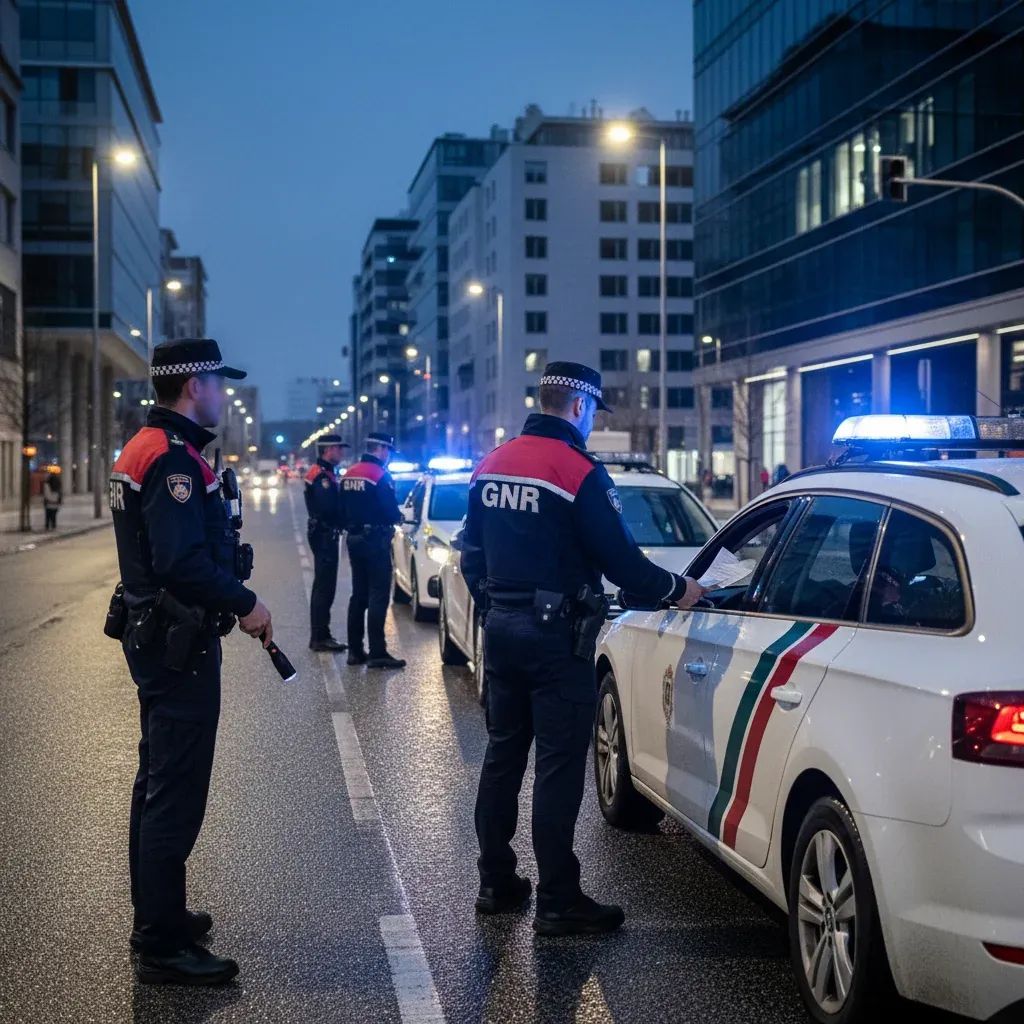
• Residents should expect heightened police presence and checkpoints as Portugal reinforces its position as a key battleground in Europe's cocaine and heroin trade.
Azores Emerges as Drug Gateway
The Azores archipelago has become a focal point for interdiction efforts. On Terceira Island, the Polícia Judiciária detained a 23-year-old foreign woman in possession of 2,658 grams of heroin—a staggering amount that authorities calculated could supply an individual user for over 73 years. The woman, who has no prior criminal record, was caught in flagrante delicto in Praia da Vitória and now awaits judicial proceedings to determine coercive measures.
Meanwhile, in Ribeira Grande on São Miguel Island, the Polícia de Segurança Pública dismantled a coordinated heroin and synthetic drug operation, arresting two men who worked in tandem to distribute narcotics. Officers seized 40 individual doses of heroin, 130 doses of synthetic substances, illegal firearms, ammunition, and distribution paraphernalia. Both suspects were remanded to preventive detention following their first judicial interrogation at the Ponta Delgada court.
The PSP Criminal Investigation Brigade in Ribeira Grande has maintained an aggressive tempo: over the past two years, the unit has executed 84 arrests in operations predominantly targeting drug trafficking. Of those detained, 50 received preventive detention orders, reflecting the judiciary's assessment of flight risk and continued danger posed by organized distribution networks.
Mainland Operations Target Organized Networks
In the Baixo Minho region, the Polícia Judiciária arrested two men (aged 38 and 39) and a 47-year-old woman across multiple municipalities following an investigation into aggravated drug trafficking, criminal association, money laundering, and arms trafficking. This operation is the latest phase of an inquiry that began in 2025 and has already resulted in 10 prior arrests—three last year and seven in 2026. Seven of those earlier suspects are currently in preventive detention. The three newest detainees appeared before the Criminal Instruction Court in Guimarães for first judicial interrogation, where prosecutors requested coercive measures. Authorities seized additional narcotics and evidentiary materials during the Thursday operation.
The Guarda district saw the Polícia Judiciária's Department of Criminal Investigation arrest two foreign nationals after surveillance operations. The suspects were intercepted carrying 500 individual doses of hashish resin and 120 doses of cocaine. Investigators determined that the pair had been distributing the drugs within their own community, a pattern that has prompted scrutiny of vulnerabilities among immigrant populations. Both individuals will face proceedings at the Judicial Court of Idanha-a-Nova, with the local Public Prosecutor's Office overseeing the inquiry.
High-Speed Chase in Greater Lisbon
A chaotic pursuit unfolded in Agualva-Cacém, Sintra district, when a driver ignored a PSP checkpoint on April 12 and led officers on a high-speed chase down Estrada de Paço de Arcos. The suspect drove recklessly, disregarding traffic rules and striking two parked vehicles before officers managed to intercept him. The man was driving without a valid license, and police detected a strong odor emanating from the vehicle, prompting a search.
Officers discovered cocaine, hashish, marijuana, and ecstasy in amounts exceeding legal thresholds for personal consumption. A subsequent home search uncovered additional narcotics and packaging equipment. Authorities also seized two mobile phones, cash, and other investigative materials, along with the vehicle itself. Despite the severity of the offenses, the suspect was released under termo de identidade e residência (identity and residence reporting requirements) following his first judicial interrogation.
What This Means for Residents
Portugal's geographic position makes it a primary entry point for cocaine and hashish entering Europe via maritime routes. In 2025, cocaine seizures nationwide climbed 20.6% compared to 2024, with 25.63 tonnes confiscated, 95% of which arrived by sea. Arrests for cocaine trafficking reached 1,773 individuals, a 14.2% increase year-over-year. Conversely, heroin seizures declined in 2025, though 2024 saw the highest confiscation volume since 2020, at 94.25 kg.
The Azores and Madeira regions accounted for the largest shares of cocaine interceptions in 2025, underscoring their role as Atlantic waypoints. Brazilian criminal organizations, including the Primeiro Comando da Capital (PCC) and Comando Vermelho, have established footholds in Portugal, exploiting linguistic ties and lax oversight.
The Portuguese government's "Plano de Ação para as Migrações" (Action Plan for Migration), launched in June 2024, addresses the exploitation of immigrant communities by trafficking networks. A multiforce inspection team targets human trafficking, illegal immigration, and labor exploitation. The National Unit for Foreigners and Borders (PSP) has been tasked with reinforcing border controls throughout 2026.
For everyday citizens, these operations mean increased police visibility, more frequent road checkpoints, and ongoing disruption of supply chains that fuel neighborhood-level dealing. Residents in the Baixo Minho, Guarda, and the Azores should anticipate continued enforcement actions as authorities dismantle networks layer by layer.
International Cooperation and Future Outlook
Portugal actively collaborates with the Maritime Analysis and Operations Centre – Narcotics (MAOC-N), Spain's Guardia Civil, and European Union agencies to track transnational syndicates. In April 2026 alone, a coordinated maritime operation off the Vicentine and Algarve coasts resulted in the seizure of over 3.4 tonnes of hashish. Another high-profile case in Braga saw the arrest of a 45-year-old daycare director, her partner, and a former mixed martial arts fighter accused of using the facility to conceal large quantities of cocaine. All three are in preventive detention.
A trial in Leiria involving two men accused of trafficking approximately 6 tonnes of cocaine, valued at over €200 M, was postponed in April. Such cases illustrate the scale and sophistication of networks operating within and through Portugal.
The Ministry of Internal Administration has prioritized the fight against drug trafficking in its 2026 operational framework, emphasizing intelligence-sharing, asset forfeiture, and preventive detention for high-risk suspects. With Portugal serving as a critical node in global narcotics flows, residents can expect law enforcement pressure to intensify, particularly in coastal zones and urban hubs with established distribution cells.
While Portugal's 2001 decriminalization of personal drug use remains in effect—focusing on public health rather than criminalization of users—trafficking remains a serious felony with penalties including lengthy prison terms and asset confiscation. The recent wave of arrests demonstrates that authorities are committed to disrupting supply chains, even as they grapple with resource constraints and the adaptability of criminal organizations.


