

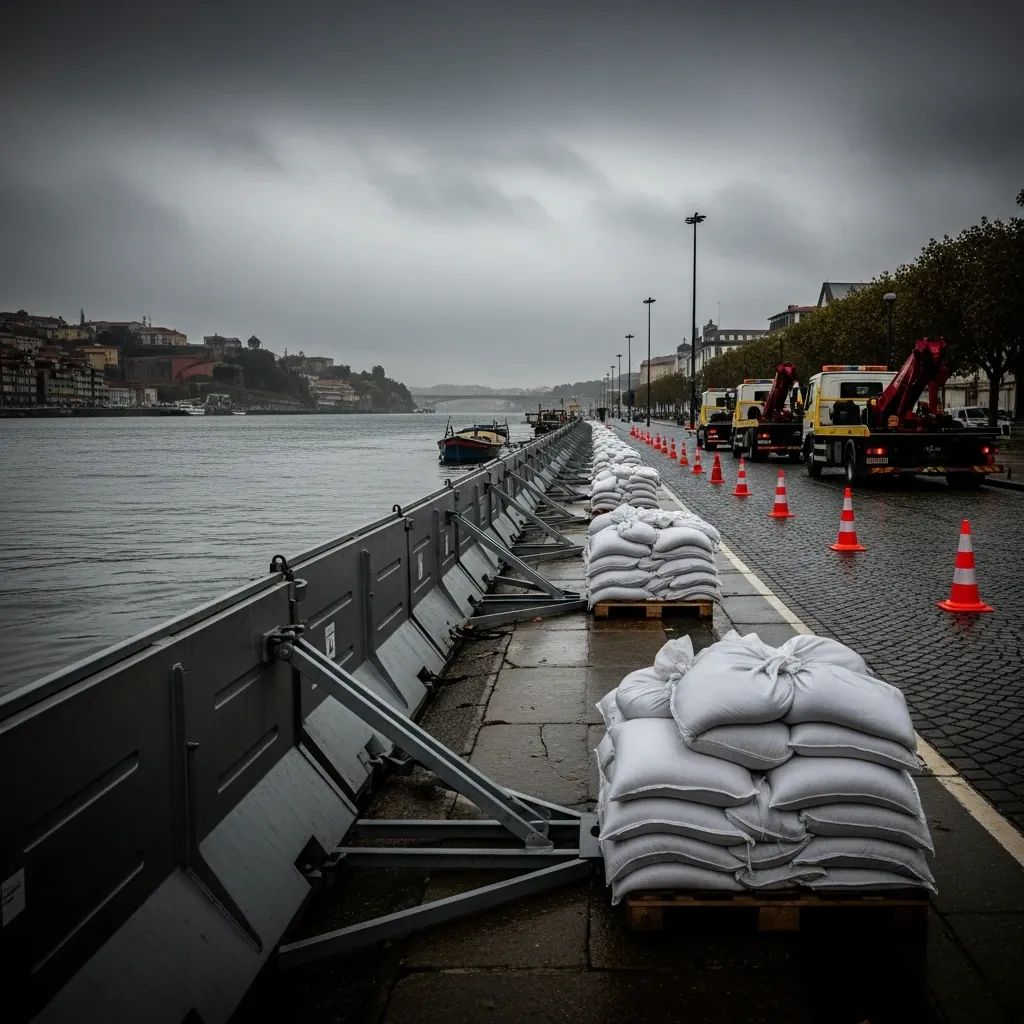
The Portugal Porto City Hall has moved flood-response crews and equipment to the Douro riverfront, a step designed to keep homes and businesses dry—and traffic flowing—should the river overtop its quays this week.
Why This Matters
• Free parking in Alfândega: Residents of Miragaia can relocate cars at no cost, sparing them potential water damage or towing fees.
• Pre-positioned road blocks: Expect swift closures on Rua das Sobreiras and Ribeira if water rises above 7.5 m.
• Orange flood alert active: The designation unlocks faster insurance claims and priority rescue resources for properties inside the historic centre.
• Heavy rain forecast until mid-February: Plan for delayed deliveries and higher commute times along the river corridor.
Douro on Alert: What Is Happening?
The Portugal Environment Agency (APA) upgraded the Douro basin to orange alert—one step below the maximum—after soil saturation, back-to-back Atlantic fronts and surging releases from Spanish dams pushed the Régua reservoir to 7.2 m late in January. That level is only 60 cm below the point at which quayside cafes typically flood. Hydrologists now eye the first spring-tide window on 2-3 February, when high seas combine with river discharge and could lift water an extra 30-50 cm in the estuary.
The Toolkit Already on the Ground
Porto’s Municipal Civil Protection Service and the Sapadores Bombeiros do Porto began a 24-hour watch in Ribeira and Miragaia during every high tide. Key assets include:
• Mobile barriers and sandbags, held at Rua do Infante, ready to seal shopfronts within 30 minutes.
• Traffic-control trailers capable of shutting the lower deck of Ponte Dom Luís in less than 10 minutes if necessary.
• Municipal tow trucks idling near Largo da Alfândega to remove vehicles left in risk zones.
• Rapid-deployment crews trained to evacuate cellars and move stock to upper floors for roughly 150 businesses.
New Layer of Responsibility over Waterfronts
Under a February deadline set by Portugal’s Infrastructure Ministry, Porto, Matosinhos and Gaia will inherit day-to-day management of quays, marinas and river concessions previously controlled by Lisbon. City engineers argue that local control should speed up works like elevating quaysides or adding nature-based retention basins. Funding remains unclear; current estimates put the price tag of long-term flood defences at €40 M, roughly the annual budget of Porto’s entire public-space department.
View from Flood-Risk Engineers
Urban-water specialists at the University of Porto praise the city’s “eyes-on-the-ground” approach but warn that undersized storm drains and sealed cobblestones still leave downtown prone to surface runoff. They urge routine gutter cleaning before every orange alert—cheaper than pumping water out of basements later. Porto’s label as a UN “Resilient City” obliges it to publish a full adaptation plan by 2027; insiders say drafts call for opening buried creeks and converting two car parks into absorptive parks.
What This Means for Residents
• Move cars early: Free access to the Alfândega garage runs until the alert drops; after that normal €1.20/hour rates resume.
• Store documents above street level: Insurance adjusters require photographic proof taken before flooding to validate claims.
• Sign up for SMS 1150 from Portugal Civil Protection for real-time closure notices; English-language messages are available for expats.
• Expect ferry suspensions: Douro Azul has already cancelled night cruises for vessels under 12 m until waters stabilise.
Looking Ahead: February’s Rain-Soaked Outlook
Forecasts from Portugal’s Meteorology Institute (IPMA) show rainfall staying 20-40 % above normal through mid-March, with temperatures hovering at a mild 8-15 °C. Spain has agreed to limit Douro dam discharges, but river managers caution that releases over 2,500 m³/s are unavoidable during peak storage days. In plain terms: prepare for repeated orange alerts, intermittent road closures and occasional basement seepage until at least Carnival.
Bottom Line for Property Owners & Investors
If you own ground-floor real estate within the Postigo do Carvão–Passeio Alegre strip, now is the moment to review drainage, test sump pumps and check that your flood coverage matches replacement value. The city’s early deployment means emergency aid should arrive faster, yet preventive action remains the cheapest insurance in Porto’s UNESCO-listed waterfront.


