

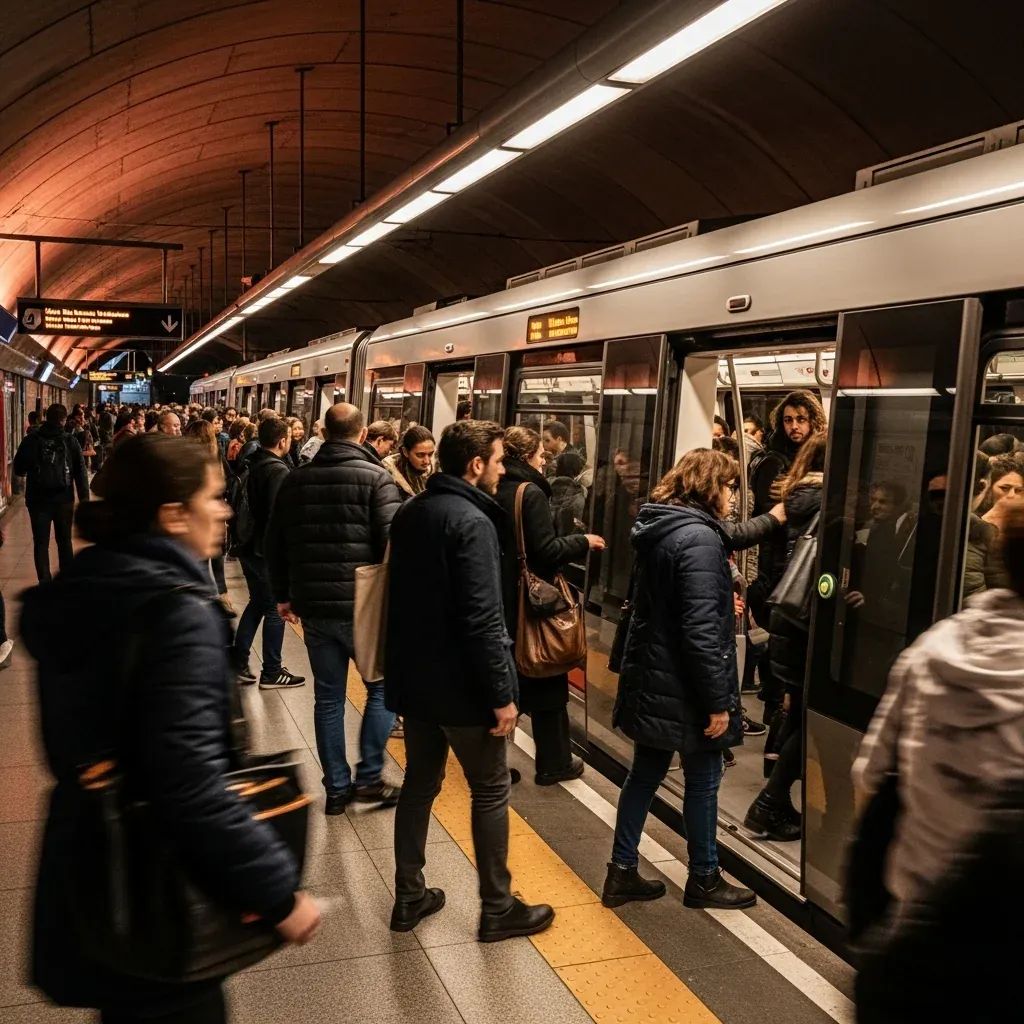
Metro do Porto has smashed its own passenger record, logging 94.54 million ticket validations in 2025—a jump that puts extra pressure on ongoing extensions and cements the network as the backbone of daily mobility across northern Portugal.
Why This Matters
• Fares stay frozen – Monthly Andante passes cost the same as in 2024, easing household budgets.
• Extra crowding ahead – October alone saw 9.27 million trips; expect busier platforms until new lines open.
• Bigger network coming – The Rubi (H) and Rosa (G) lines plus a new metroBus corridor promise shorter door-to-door times from 2027.
• Digital validators – 25 stations now have faster card readers; fewer queues at Trindade, Campanhã and the Airport.
How the Numbers Break Down
The state-owned operator Metro do Porto, S.A. reports a 5.4 % rise over 2024. Roughly 70 million validations came from assinaturas mensais—a sign of commuters locking in to predictable costs. The common trunk between Senhora da Hora and Estádio do Dragão absorbed 47 million taps, while the ever-busy Line D (Yellow) leapt 8.37 % to 30.9 million trips. Top three stations—Trindade, Campanhã, Casa da Música—handled a combined 26.3 million entries, underscoring their role as multimodal hubs.
Why Ridership Keeps Climbing
Several forces converged:
Extension of Line D to Vila d’Este in mid-2024 added 60,000 residents within walking distance of rail.
Zero increase in pass prices after the government pumped extra cash into the public-transport subsidy programme.
Reworked timetables from September 2025 shaved peak-hour headways to 4 min on core stretches.
A wider policy pivot toward car-lite cities, nudging commuters to abandon private vehicles as fuel crept toward €2/litre.
Ongoing Upgrades You Will Notice
Porto’s network is in the middle of its largest build-out since the early 2000s:
• Rubi Line (H) – Tunnels are now visible under the VL8 at Candal; a new Douro bridge will follow.
• Rosa Line (G) – Crews finished the final tunnel dig to Casa da Música II; opening moved from July 2025 to March 2027.
• metroBus Boavista-Império – Hydrogen buses start test runs this summer, giving Foz a direct, low-emission link.
• €5 million validator swap-out – Bigger screens and LED strips cut mis-reads; watch for them at Santo Ovídio and the Airport.
What This Means for Residents
• Expect fuller carriages in the short run; aim for off-peak windows when possible.• If you live along the future Rubi corridor, property-value analysts already see a 3-5 % premium creeping in—buy or rent sooner rather than later.• Hold on to your municipal and metropolitan passes; price stability is guaranteed at least through 2026 under the current state budget.• Businesses near Trindade and Casa da Música should plan for higher footfall—worth reviewing opening hours and staffing.
How Porto Compares With Other Cities
While Porto celebrated a 5.4 % bump, comparable figures for Lisbon are unavailable. In Spain, Barcelona’s TMB expects to top 700 million rides in 2025, but its growth rate is undisclosed. Madrid kept headline fares discounted yet posted no validation data. Porto’s transparent stats make it one of the few Iberian metros publishing full annual counts, a point noted by EU transport analysts tracking modal-shift success.
The Road—and Rail—Ahead
The national budget earmarks €200 million for Porto’s rail expansion up to 2027, with €35 million funneled into the Yellow and Rosa projects and €165 million for the Rubi axis. Studies are also under way for links to Trofa, Gondomar II and Maia II. If deadlines hold, by the decade’s end residents could see a 40 % larger network, slashing cross-city travel times and nudging even more commuters off the A1 and VCI.
For now, the record-shattering numbers serve as both a victory lap and a warning: Porto’s metro is popular—perhaps popular enough to outgrow itself before the next tunnel even opens.


