
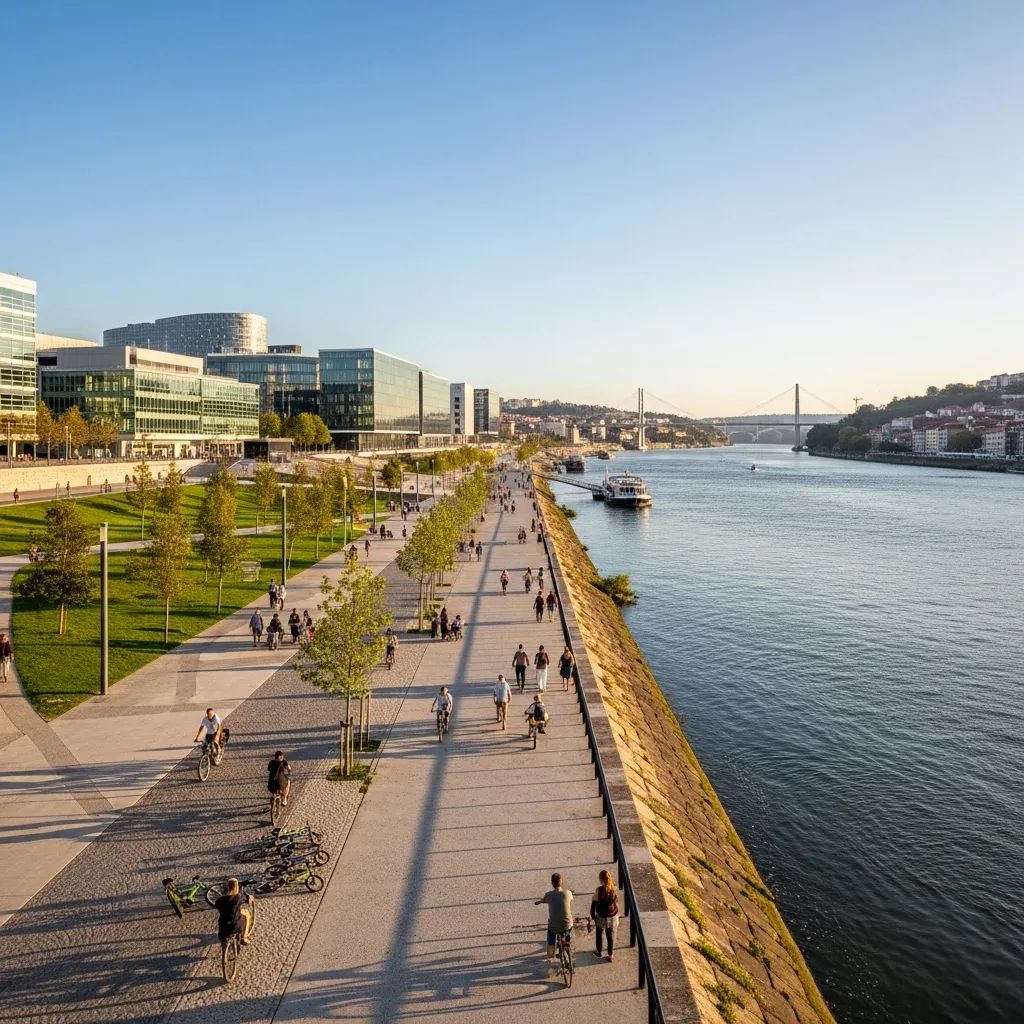
Over the next two months, the Douro shoreline will switch hands: for the first time, the cities of Porto, Matosinhos and Vila Nova de Gaia will run their own riverfronts, marinas and tourist concessions, ending decades of port-authority control. The pledge, announced in Lisbon by the Minister for Infrastructure Miguel Pinto Luz, promises new cultural venues, tighter environmental rules and a multi-million-euro investment race that could reshape daily life on both banks of the river.
At a glance
• Full handover by February 2026 covering promenades, historic quays and leisure docks not needed for cargo.
• €1 B+ strategic plan for Porto de Leixões will still go ahead, but municipalities gain veto power on design details.
• Porto bets on culture with a 500 m² riverside library inside the former customs house.
• Matosinhos fights pollution to save its surf-friendly beach and pushes back against a new north container terminal.
• Gaia expands green cycle paths while courting €100 M in private housing at “Gaia Hills”.
• Central government guarantees staff and budget transfers, although exact figures remain under wraps.
Why the handover matters
For decades, the Administração dos Portos do Douro, Leixões e Viana do Castelo (APDL) set the rules from dredging schedules to café terraces. Critics said the arrangement put cargo logistics ahead of public space, leaving councils powerless to plant trees, light promenades or police illegal parking. With tourism booming—Porto Airport welcomed 15 M passengers in 2025, triple a decade earlier—local leaders argued they needed direct control to manage crowds, climate risks and rising rents. The ministry finally agreed, calling the deal a “paradigm shift” and promising to keep harbour operations insulated from municipal politics.
Porto: culture takes the helm
Ribeira’s postcard wharves will soon be overseen by City Hall, from the Dom Luís I bridge down to the Atlantic breakers at Foz. Mayor Rui Moreira plans to anchor the reborn front in the Alfândega do Porto complex, converting 500 m² into a multi-theme public library, exhibition rooms and start-up studios. Design competitions—financed partly by BPI bank—target forgotten staircases such as the Escarpa das Fontaínhas. At the same time, the Municipal Civil Protection service is mapping flood-prone cellars after last winter’s record rainfall left the lower Ribeira under 30 cm of water.
Matosinhos: industry meets the surf
Just north of the river mouth, Matosinhos inherits piers, fishing slips and the much-loved urban beach where locals learn to surf. The council’s first headache is water quality: if bacteria counts stay high, Praia de Matosinhos could lose its bathing classification in 2026. A €3.2 M clean-up programme—upgrading storm-water outlets, deploying real-time sensors and restoring dunes—is under way. Simultaneously, Mayor Luísa Salgueiro filed an unfavourable opinion on the planned North Container Terminal, arguing the port should grow seawards, not swallow more shoreline and force the Leça da Palmeira marina to relocate.
Gaia: green corridors and real-estate fever
South of the Douro, Vila Nova de Gaia wants to stitch together its hillsides under the Encostas do Douro banner: a lattice of cycle-pedestrian tracks, restored farmsteads and carefully lit viewpoints stretching from Afurada to Cais de Quebrantões. Old engineering labs—like the Edgar Cardoso facility—will host start-ups focused on river science. Yet modern apartments are part of the mix: developer Fortera’s “Gaia Hills” project promises 250 units and panoramic pools, backed by roughly €100 M. Planners insist heritage façades and public access to the river walk are non-negotiable.
Show me the money
Neither Lisbon nor the three councils have released a final budget, but five well-known taps will finance the overhaul:
MAR 2030 fund: €540 M nationally for sustainable blue-economy infrastructure.
Portugal 2030 cohesion envelopes, including urban climate-adaptation lines.
Recovery & Resilience Facility (PRR) add-ons for digital ticketing and flood sensors.
Tourism Portugal’s €300 M credit line for greener hospitality projects.
Private concessions—from waterside cafés to event boats—expected to generate annual rents north of €12 M across the three cities.Officials promise strict environmental criteria: solar roofs, low-waste food courts and full wheelchair access must feature in every tender.
Potential hurdles
Handing three distinct waterfronts to three mayors is not plug-and-play. Union leaders warn of contract confusion for 200 APDL workers who clean quays or collect mooring fees. Rowing clubs fear higher tariffs once municipalities chase revenue. And if winter storms hit during the transition, liability for damage could trigger legal wrangles between state and city insurers. The ministry has set up a joint steering committee, but no arbitration mechanism is in place yet.
What residents can expect next summer
If deadlines hold, spring 2026 should bring the first visible tweaks: brighter LED lighting in Ribeira, new public showers on Matosinhos beach and a continuous 7 km cycling ribbon from Cais de Gaia to the sea. Longer term, city planners speak of a “Greater Douro Boardwalk” linking both banks via pedestrian ferries—an idea that would require fresh EU funds but already excites hoteliers. For the 2 M people living in Greater Porto, the true test will be simple: does the river feel cleaner, safer and easier to enjoy on a Sunday afternoon? The next 24 months will provide the answer.


