

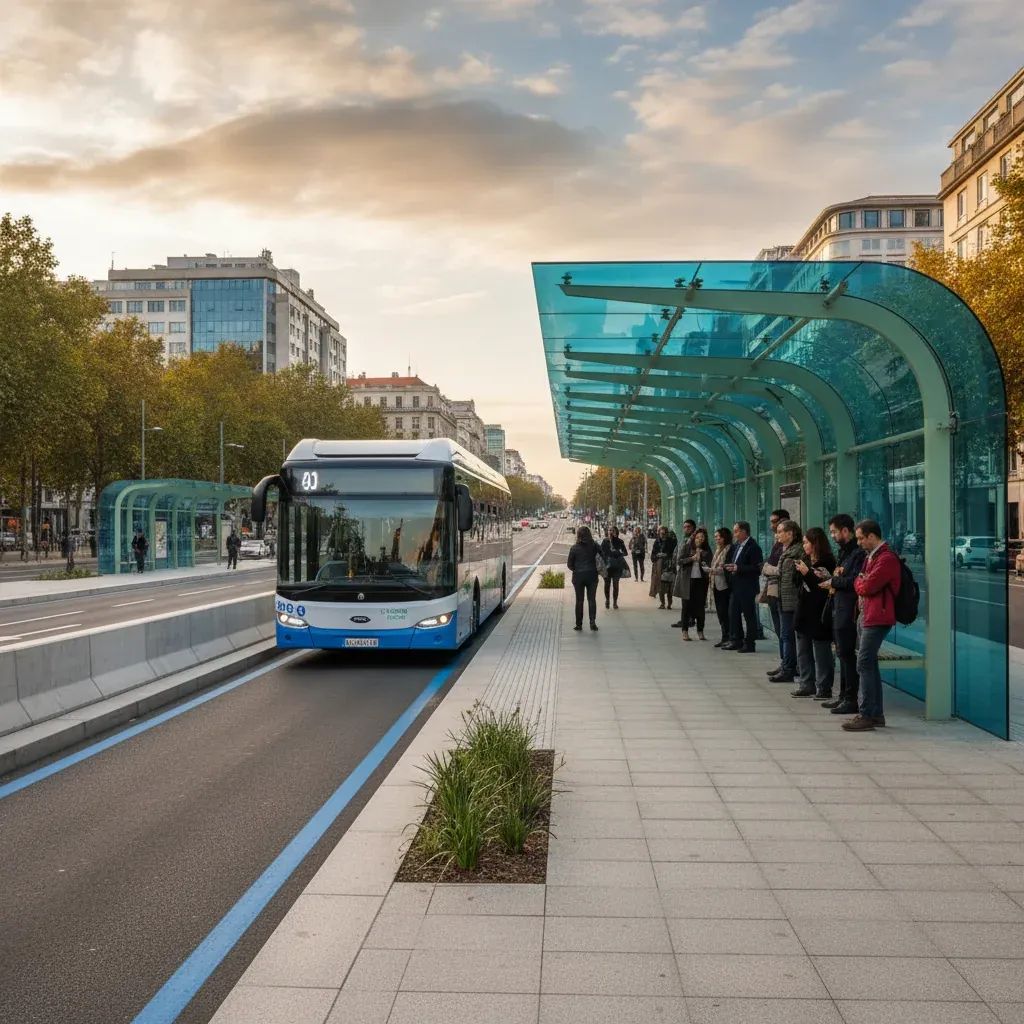
Porto's Bus Network Restructures to Connect With Hydrogen Metrobus
The STCP Porto is restructuring six bus routes starting March 9, 2026, to integrate with the new hydrogen-powered Metrobus rapid-transit system. The agency is eliminating overlapping routes, increasing frequency on key corridors, and creating direct connections that will change how residents navigate the city.
Quick Facts for Residents
• Effective Date: March 9, 2026
• Lines Affected: 200, 201, 203, 403, 502, 504
• Key Changes: Faster service on Line 200 (every 7 minutes to Foz), direct stadium access on Line 203, restored reliability on Lines 201 and 502
• Check Updates: stcp.pt for new schedules and real-time tracking
• Important: Free Metrobus fares end April 1, 2026—paid fares begin after
What Changes for Your Commute
Line 200 (Bolhão – Castelo do Queijo): Twice as Frequent
Line 200 gets a 50% frequency increase across its entire route. Buses will arrive every 15 minutes all day instead of every 30 minutes. In the afternoon, between Bolhão and Mercado da Foz, service jumps to every 7 minutes—similar to metro frequency. This means average wait times drop from 15 minutes to roughly 7.5 minutes per trip. For residents making five weekly trips, you'll save approximately 18–19 minutes of waiting per week.
What You Need to Do: If you regularly use Line 200, check the new schedule at stcp.pt. Buses will arrive more predictably, so you may be able to leave home closer to departure time rather than padding arrival buffers.
Line 203 (Marquês – Castelo do Queijo): Direct Stadium Access
Line 203 now routes directly through Estádio do Dragão instead of circling around it. For residents in central neighborhoods like Constituição, Miragaia, or Bonfim wanting stadium access, this eliminates a 20-minute walk or the need to transfer buses twice. Match-day trips become straightforward.
Trade-off: Residents immediately near the former Rotunda corridor lose direct service and will need to walk 400–500 meters to alternative stops.
What You Need to Do: If you live near Rotunda da Boavista and use STCP regularly, visit stcp.pt to identify your nearest alternative stops.
Lines 201 & 502: On-Time Performance Restored
During 18 months of Metrobus construction, Lines 201 (Aliados – Viso) and 502 (Bolhão – Mercado de Matosinhos) suffered constant delays as traffic signals were reprogrammed and lanes closed. Both routes currently operate at less than 70% on-time performance during peak hours. The restructuring restores these to 85% on-time targets.
What You'll Notice: Buses arrive closer to posted times. This may sound simple, but reliable service is the foundation of commuting confidence.
Line 403: Hospital and University Connections
Line 403 now passes through Campo Alegre and Massarelos on its Casa da Música-bound leg, creating direct connections to Lines 200, 204, 207, 209, and regional services 902 and 903. For patients heading to Hospital Center or students traveling to University of Porto facilities, this eliminates one transfer.
Line 504: Faster Connection to Metrobus
Line 504 (Pasteleira – Cristo Rei) takes a faster route that passes João de Barros station—the primary connection point to the Metrobus network. Travel time drops approximately 4 minutes end-to-end, making it an efficient feeder line to the new hydrogen system.
Why STCP Is Making These Changes
When the Metrobus hydrogen fleet began trial operations on February 28, STCP identified a fundamental problem: the existing bus network was still configured for the old system. Routes overlapped the new Metrobus corridor. Schedules didn't coordinate. Passengers could theoretically board the hydrogen bus but faced confusing wait times or awkward connections.
Luís Osório, STCP's leadership, treats this restructuring as foundational rather than optional. The Metrobus operates at speeds near 38 km/h—roughly 150% faster than conventional buses in mixed traffic. STCP redesigned the other bus routes to function as feeder lines—routes that channel passengers toward the rapid-transit corridor rather than competing with it. This is integration strategy.
The approach mirrors successful European systems like Nantes' Busway (operational since 2006), which achieves 92% customer satisfaction through obsessive operational discipline: buses arrive within 2 minutes of posted times, schedules coordinate across routes, and stations function as deliberate transfer points. Strasbourg's hydrogen-bus system similarly redesigned the entire network to support new rapid transit rather than simply adding vehicles to existing routes.
The Metrobus Context
The Metrobus operates exclusively on dedicated lanes between Casa da Música and Praça do Império—a 2.5-kilometer stretch currently serving approximately 120,000 boardings weekly during its trial free-fare period. During morning and evening peaks, articulated hydrogen buses depart every 10 minutes; otherwise, every 15 minutes.
During its first week, the Metrobus exceeded STCP's internal projection of 85,000 boardings, reaching 120,000. However, this enthusiasm may reflect the novelty of new transit and zero-cost fares rather than genuine confidence in the system. When free fares end April 1 and paid fares begin, ridership will reset to a baseline reflecting authentic commuter preference.
The system's Phase Two extension to Anémona (scheduled for August 2026) will stretch operational distance to approximately 6 kilometers. Hydrogen is sourced temporarily from São Roque da Lameira, approximately 25 kilometers outside Porto. The permanent Areosa production station, expected operational by mid-2026, will generate hydrogen via solar-powered electrolysis on STCP depot rooftops.
The Critical Success Factor
This restructuring succeeds or fails based on one metric: schedule reliability. If Lines 201 and 502 achieve 85% on-time performance, commuters notice and gain confidence. If Line 200 frequency genuinely cuts wait times measurably, coastal residents may abandon private vehicles. If Line 203 eliminates geographic obstacles to stadium access, match-day car traffic potentially decreases.
Conversely, if timetables remain inconsistent, transfers require long waits despite proximity, or the Metrobus operates at capacity with crowding, the restructuring becomes a source of frustration rather than improvement.
What Residents Should Do Now
Before March 9: Visit stcp.pt and update your route knowledge. If you use any of the six affected lines, review the new schedule and check whether your regular stops change.
Check Real-Time Information: STCP offers real-time tracking capabilities. Use them to plan more accurately with the new frequencies.
Try the Metrobus: During the free-fare trial (through March 31), test whether the new connections work for your commute. This gives you time to adjust travel patterns before paid fares begin April 1.
Provide Feedback: STCP has committed to transparent operational monitoring through June 2026, publishing data on boarding patterns, transfer efficiency, and schedule adherence. Resident feedback helps identify problems early.
The Bigger Picture
This restructuring embodies institutional commitment—the belief that public transit competes with private vehicles through coordination, frequency, and reliability rather than regulation alone. Whether operational reality validates that ambition will define Porto's transit trajectory and the city's broader decarbonization strategy for the next five years.


