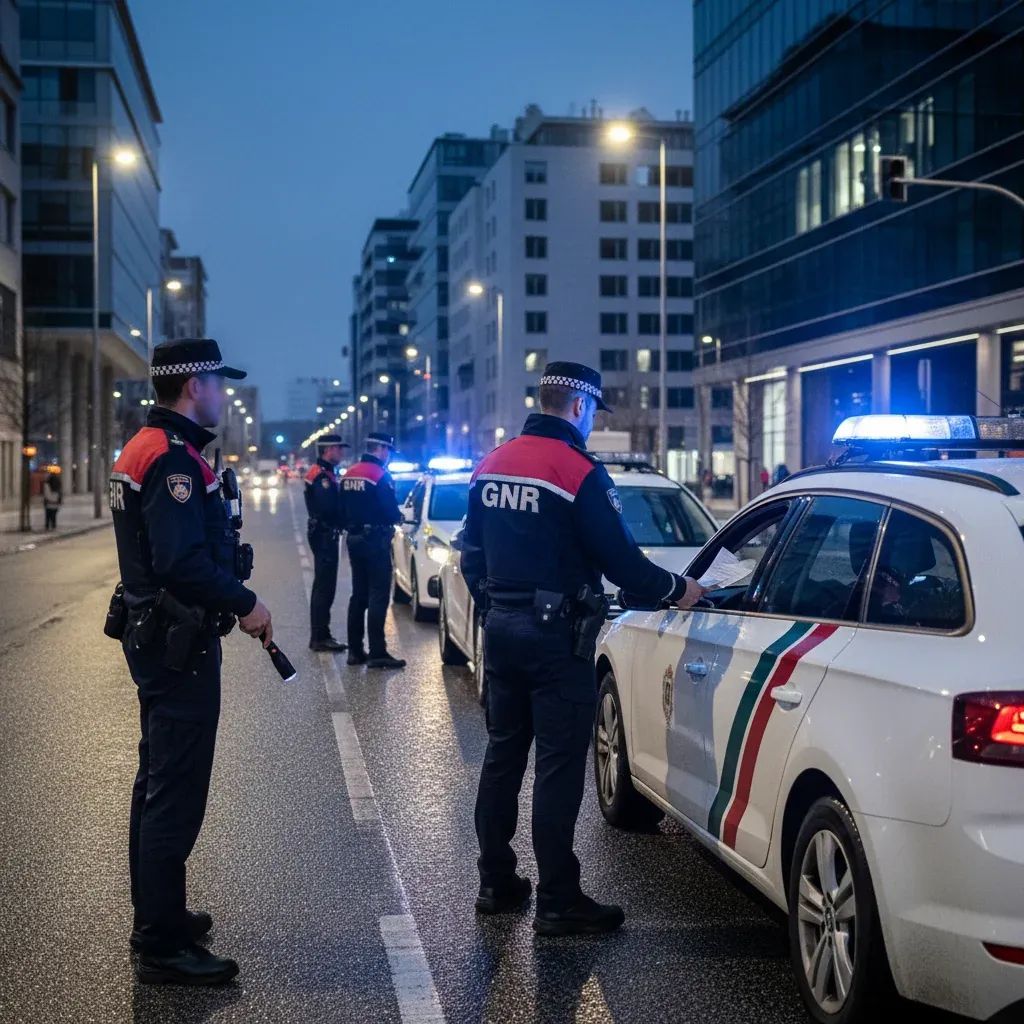
The National Republican Guard (GNR) in Penafiel has dismantled a local drug trafficking operation, placing one suspect in pre-trial detention and seizing 521 doses of narcotics alongside a cache of weapons. The operation, carried out by the Criminal Investigation Unit on April 13, highlights the ongoing struggle against organized drug networks in the Porto metropolitan area—a concern that directly impacts community safety and property values for residents across northern Portugal.
Why This Matters
• One trafficker is now behind bars: Pre-trial detention signals prosecutors believe there is flight risk or danger of continued criminal activity.
• 521 total doses seized: Including haxixe, cocaine, and heroin—enough to supply hundreds of users and fuel street-level crime.
• Weapons confiscated: Two air pistols, an air rifle, a homemade blade, and pepper spray indicate the network was prepared for violent enforcement.
• Legal overhaul in force: New 2025 legislation has increased penalties for resisting law enforcement from 5 to 8 years, a shift that shaped sentencing in this case.
The Arrests and Searches
Four individuals—two men aged 33 and 62, and two women aged 26 and 37—were detained following an investigation by the GNR's Penafiel Criminal Investigation Nucleus. Two were arrested on outstanding warrants; the other two were caught in the act during coordinated raids.
Investigators executed five searches: four residential premises and one vehicle. The haul provides a snapshot of a mid-tier trafficking cell operating across municipal boundaries. Authorities recovered 333 doses of haxixe, 99 doses of cocaine, 87 doses of heroin, and two doses of liamba (cannabis), alongside €850 in cash, five mobile phones, two laptops, and a gaming console—tools commonly used to coordinate sales and launder proceeds.
The weapons inventory underscores the group's willingness to intimidate rivals and resist arrest. While air-powered firearms and Tasers fall outside Portugal's strict gun-control regime for lethal weapons, their presence in a trafficking context elevates the threat profile and can trigger aggravated sentencing under Article 21 of the Drug Trafficking Act.
Judicial Outcomes: One in Custody, Others on Tight Leash
On April 14, all four suspects appeared before the Penafiel Judicial Court for first interrogation. The presiding judge imposed prisão preventiva—Portugal's most severe pre-trial measure—on one defendant, typically reserved for cases involving flight risk, repeat offenders, or evidence tampering concerns.
The remaining three received a mix of restrictive coercive measures:
• No-contact orders barring communication between co-defendants
• Bans from locations associated with drug trafficking, a provision that can include specific streets, cafés, or neighborhoods flagged by police intelligence
• Weekly sign-ins at their local police stations—a monitoring tool that allows authorities to verify compliance and track movement
The 26-year-old woman faces separate charges of resistance and coercion of a public official, a crime that has seen its maximum penalty jump from 5 to 8 years in prison under Law 26/2025, which came into force in March. Her case file has been forwarded to the Penafiel court for trial proceedings.
What This Means for Residents
For those living in Penafiel and surrounding municipalities, this operation is part of ongoing enforcement efforts by the GNR and Portugal Security Police (PSP) across the Porto district. Drug trafficking activity correlates with property crime, public disorder, and violence. Neighborhoods identified as trafficking hotspots often see depressed real-estate values and heightened insurance premiums. For expats and investors, understanding enforcement patterns is critical when evaluating residential or commercial opportunities in the region.
Legal Landscape: Tougher Penalties, Smarter Enforcement
Portugal's drug laws distinguish sharply between personal consumption and trafficking. Possession beyond statutory personal-use thresholds—updated by Law 23/2025 in March to include new psychoactive substances—triggers trafficking charges. Penalties range from 1 to 5 years for minor street-level distribution to 4 to 12 years for organized networks. Aggravating factors, such as selling to minors, involving large sums, or employing violence, can push sentences even higher.
The recent legislative overhaul also targets resistance to arrest. Under revised Article 347 of the Penal Code, anyone who uses violence or threatens officers during enforcement now faces 1 to 8 years, up from the previous 5-year cap. This change reflects growing concern over assaults on law enforcement, particularly during drug raids where suspects frequently attempt to flee or destroy evidence.
Judicial data show that 60% of trafficking convictions result in suspended sentences, with 35% leading to effective imprisonment. However, courts are increasingly willing to impose custody when weapons, repeat offenses, or cross-border networks are involved—precisely the circumstances present in the Penafiel case.
The Broader Picture: Porto's Drug Corridor
Penafiel sits within a drug-distribution corridor linking Porto's urban core to rural municipalities in the Douro and Tâmega valleys. Investigators report that traffickers exploit this geography, using adapted garages, rental properties, and vehicles to shuttle narcotics between wholesale hubs and retail markets.
Haxixe remains the dominant commodity, often sourced from North African networks via Spain. Cocaine and heroin, meanwhile, are typically routed through Lisbon before dispersing northward. The presence of MDMA, ketamine, and nitrous oxide in recent operations signals diversification, particularly among networks targeting nightlife and university towns.
For local authorities, the challenge is resource allocation. While Penafiel's NIC team has notched this operation as part of their enforcement work, the sheer volume of small-scale distribution—often conducted via encrypted messaging apps and "flash" sales—stretches investigative capacity. Community policing initiatives, intelligence-sharing with Spain and Interpol, and cross-agency task forces are all part of the response toolkit.
What Comes Next
The suspects in custody will face trial in the coming months. If convicted under the standard trafficking statute, they could receive sentences ranging from 4 to 12 years, depending on their roles and prior records. The woman charged with resisting arrest may see her case resolved separately, potentially resulting in a suspended sentence if prosecutors deem her involvement peripheral.
For the broader public, the lesson is twofold: enforcement is intensifying, and the legal system is now armed with heavier penalties. Residents should expect continued police presence in neighborhoods flagged for drug activity, while landlords and property managers may face scrutiny if their premises are used for trafficking.
The GNR has signaled that enforcement efforts continue across the district, underscoring a strategy of sustained pressure rather than one-off raids. For those invested in the region's stability—whether as homeowners, business operators, or civic stakeholders—this is a trend worth monitoring closely.